1 Kings 14:25–26
Shishak and Shoshenq: a text and an inscription
This is not a manuscript variant: all the witnesses checked agree that Shishak king of Egypt came up against Jerusalem in Rehoboam's fifth year. The question is how the biblical text relates to Shoshenq I's own record at Karnak.
Stable text: no manuscript differences in meaning
The family tree
Each row is a language or text tradition. Witnesses in the same row may share ancestry, revise one another, or have an uncertain relationship; the line under each box says which. A solid arrow appears only where direct copying or a documented revised edition is established. Order by date never implies copying. Scroll sideways on a phone.
✓ contains this verse · ▢ pages lost · – no copy survives
- Same line, through lost copies
- Translation
Every witness, in order
c. 925 BC
Shoshenq I, Bubastite Portal, Karnak
How the site knows this: Reported in scholarship; not checked by the site.
A triumphal relief with more than 150 name-rings of places in the southern Levant. Jerusalem is not clearly among the surviving names. A royal inscription, not a copy of Kings.
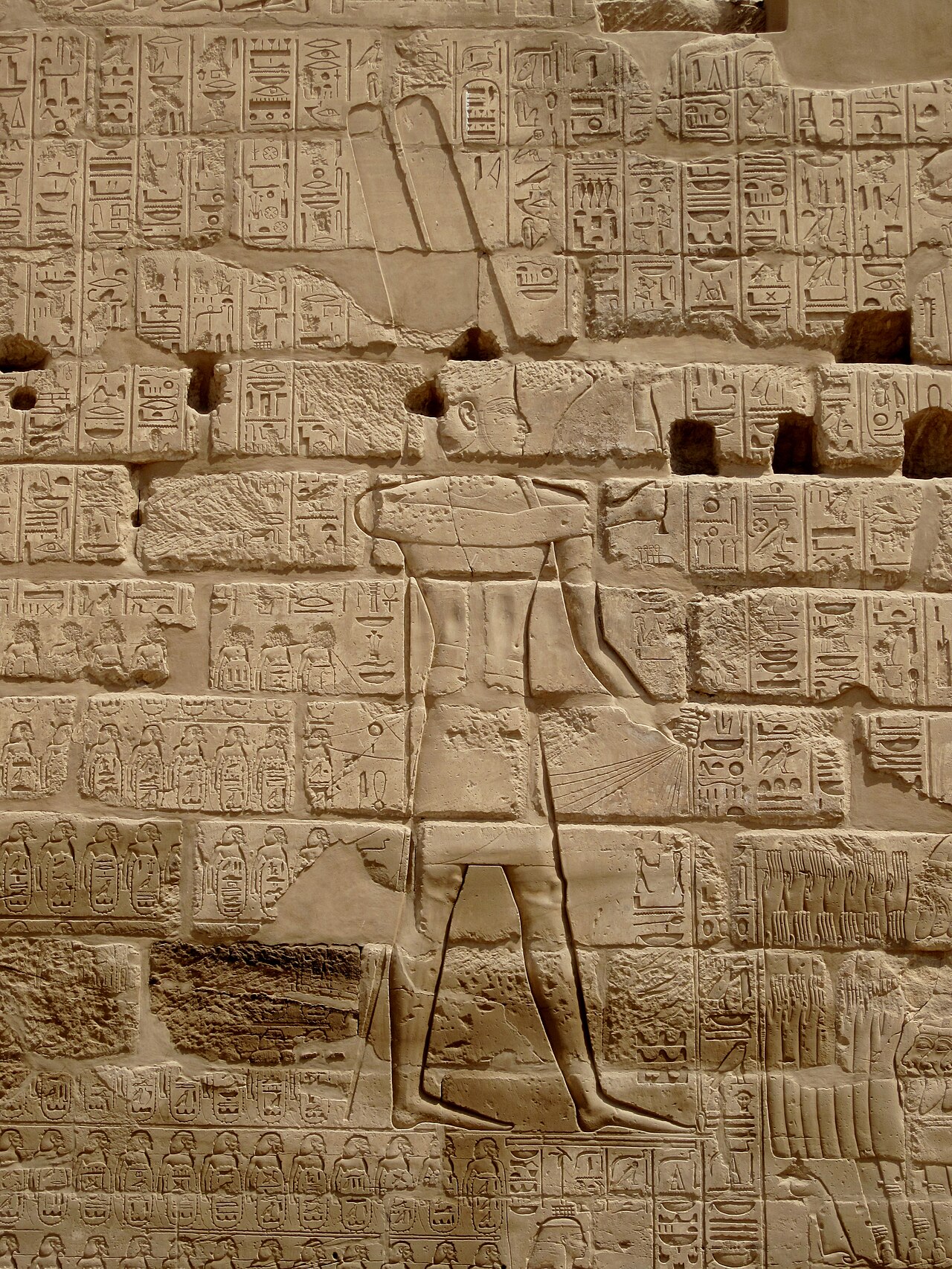
Authentic ancient artifactImage credit Source: Ancient Israel and Ancient Egypt (Cambridge Elements), on Shoshenq I ↗; K. Jansen-Winkeln, "Egypt and the North" (2015), on Shoshenq's campaign ↗
Unknown (debated)
Original Kings
No original survives.
Translated c. 2nd century BC
Septuagint, 3 Kingdoms (library text: Giguet's French)
How the site knows this: Known here only through a translation.
Sésac, roi d'Égypte, marcha contre Jérusalem.
One Greek text (Vaticanus type) via Giguet's French; not checked against a critical Greek edition.
c. AD 400
Jerome's Vulgate
How the site knows this: Read in the site's library text: Clementine Vulgate (1592 edition).
ascendit Sesac rex Ægypti in Jerusalem
AD 1008
Masoretic Text (Leningrad Codex)
How the site knows this: Read in the site's library text: Westminster Leningrad Codex, a digital transcription of the Leningrad Codex.
עָלָה שׁוּשַׁק (שִׁישַׁק) מֶלֶךְ־מִצְרַיִם עַל־יְרוּשָׁלָ͏ִם
Shushaq (read Shishaq) king of Egypt came up against Jerusalem
The consonants read Shushaq; the vowels and margin read Shishaq. Both are close to the Egyptian name Shoshenq (the n was not always written).
1611
King James Bible
How the site knows this: Read in the site's library text: King James Version (1769 text).
Shishak king of Egypt came up against Jerusalem
What changed, and why
The identification of Shishak with Shoshenq I is widely accepted and is one of the anchors of biblical chronology. The two records agree that a pharaoh campaigned in Rehoboam's time; they differ in focus (Kings: Jerusalem's treasures; Karnak: towns in Israel and the Negev).
What the evidence shows
- All checked witnesses agree on this verse.
- Shishak is Shoshenq I.
Source: Ancient Israel and Ancient Egypt (Cambridge Elements), on Shoshenq I ↗
- Karnak names Jerusalem.
Sources
Related lessons
- Jeroboam, Rehoboam and Shishak →Jeroboam's son Abijah falls sick. His wife disguises herself and goes to the blind prophet Ahijah, who knows her at once and announces the end of Jeroboam's house; the child dies as she reaches home. In Judah, Rehoboam's people build high places. In Rehoboam's fifth year Shishak king of Egypt takes the treasures of the temple and the palace, including Solomon's gold shields, which are replaced with bronze.
- Historical Investigation: The Divided Monarchy Outside the Bible →With the divided kingdom, the biblical story begins to meet outside records. An Egyptian pharaoh lists towns in Israel; a Moabite king names Omri; an Assyrian king names Ahab at Qarqar. These texts confirm names, dates and powers, and they also differ from Kings in what they emphasize.