"On that night could not the king sleep, and he commanded to bring the book of records of the chronicles; and they were read before the king. And it was found written, that Mordecai had told of Bigthana and Teresh." "What honour and dignity hath been done to Mordecai for this?" "There is nothing done for him."
"Who is in the court?" Haman has just come to speak about hanging Mordecai on the gallows. The king asks: "What shall be done unto the man whom the king delighteth to honour?" "Now Haman thought in his heart, To whom would the king delight to do honour more than to myself?"
Haman answers: let the royal apparel the king wears be brought, "and the horse that the king rideth upon, and the crown royal which is set upon his head," and let one of the most noble princes array the man and lead him on horseback through the city, proclaiming: "Thus shall it be done to the man whom the king delighteth to honour."
"Make haste, and take the apparel and the horse, as thou hast said, and do even so to Mordecai the Jew, that sitteth at the king's gate: let nothing fail of all that thou hast spoken." Haman does it. Then he hurries home "mourning, and having his head covered."
His wise men and Zeresh his wife say: "If Mordecai be of the seed of the Jews, before whom thou hast begun to fall, thou shalt not prevail against him, but shalt surely fall before him." While they are still talking, the king's eunuchs come to hurry Haman to Esther's banquet.
A sleepless king
The Greek says "the Lord took sleep from the king" (library's Greek: "le Seigneur éloigna du roi le sommeil"); the Hebrew says only that the king could not sleep. Rabbinic readers took "the king" in this verse as a hint of the King of the universe (Megillah 15b). It is the book's central hinge: from here every plot turns back on its maker.
Royal records
Persian kings kept records of benefactors (Herodotus 8.85, 8.90 mentions scribes recording deeds during the battle of Salamis). Ezra 4:15 and 6:1–2 also speak of searching royal archives. The Persepolis tablets show the scale of Persian record-keeping. Mordecai's entry is known only from Esther.
A crowned horse?
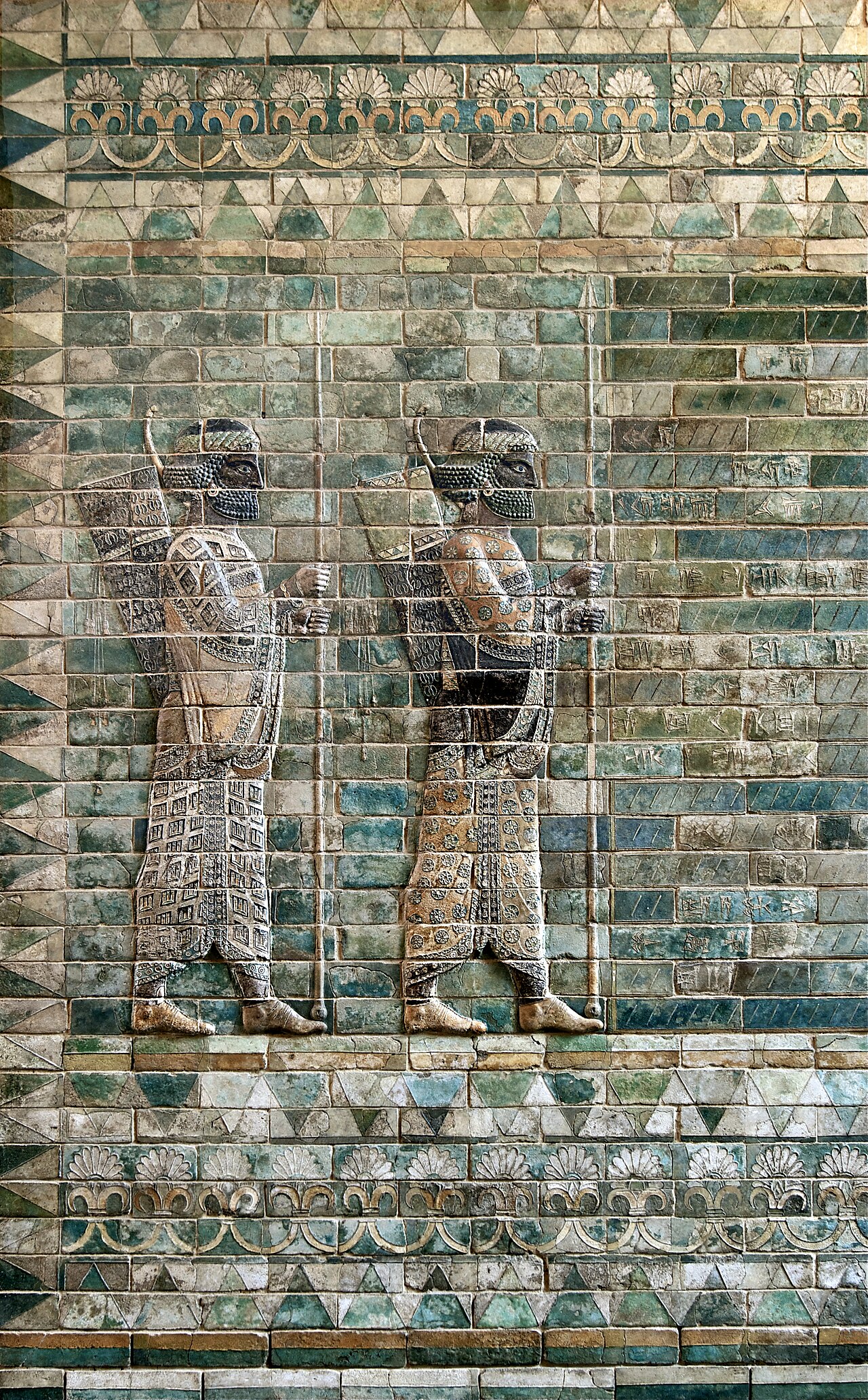
6:8 can be read as the crown placed on the king's head, or as a crown placed on the horse's head. Assyrian and Persian reliefs show royal horses with crest-like headdresses (topknots). The library's Greek (Giguet) has no crown at all.
Reversals
The book is built on reversals (9:1, venahafokh hu, "it was turned to the contrary"): Haman plans Mordecai's death and must honor him; he builds a stake for Mordecai and dies on it; the day planned for the Jews' destruction becomes the day of their deliverance. Joseph (Genesis 41:42–43, robed and paraded) and Daniel are similar court tales.
What the evidence shows
- The Hebrew says the king could not sleep; the Greek says the Lord took his sleep. Greek via Giguet.
- Persian kings recorded and rewarded benefactors.
Continue the journey
Journey of a PassageEsther 6:8: A crown on the king's head, or on the horse?"The horse that the king rideth upon, and the crown royal which is set upon his head." "His" may be the king or the horse.More from this lesson
Echoes Across Civilizations
Optional: how other ancient peoples told similar stories. Open one to compare, then come back to the lesson.
The outsider at the king's courtAramaic / Assyrian · Egyptian · Greek
Did other ancient peoples tell stories of a wise outsider endangered and vindicated at a foreign court?
- Aramaic / Assyrian: The Story of Ahiqar Possible historical contact
- Egyptian: The Story of Sinuhe Resemblance only
- Greek: Herodotus' Persian court stories Resemblance only
Why this matters to the rest of Scripture
- Joseph in royal robes on the king's chariot.
- Darius cannot sleep.
- "Whoso diggeth a pit shall fall therein."