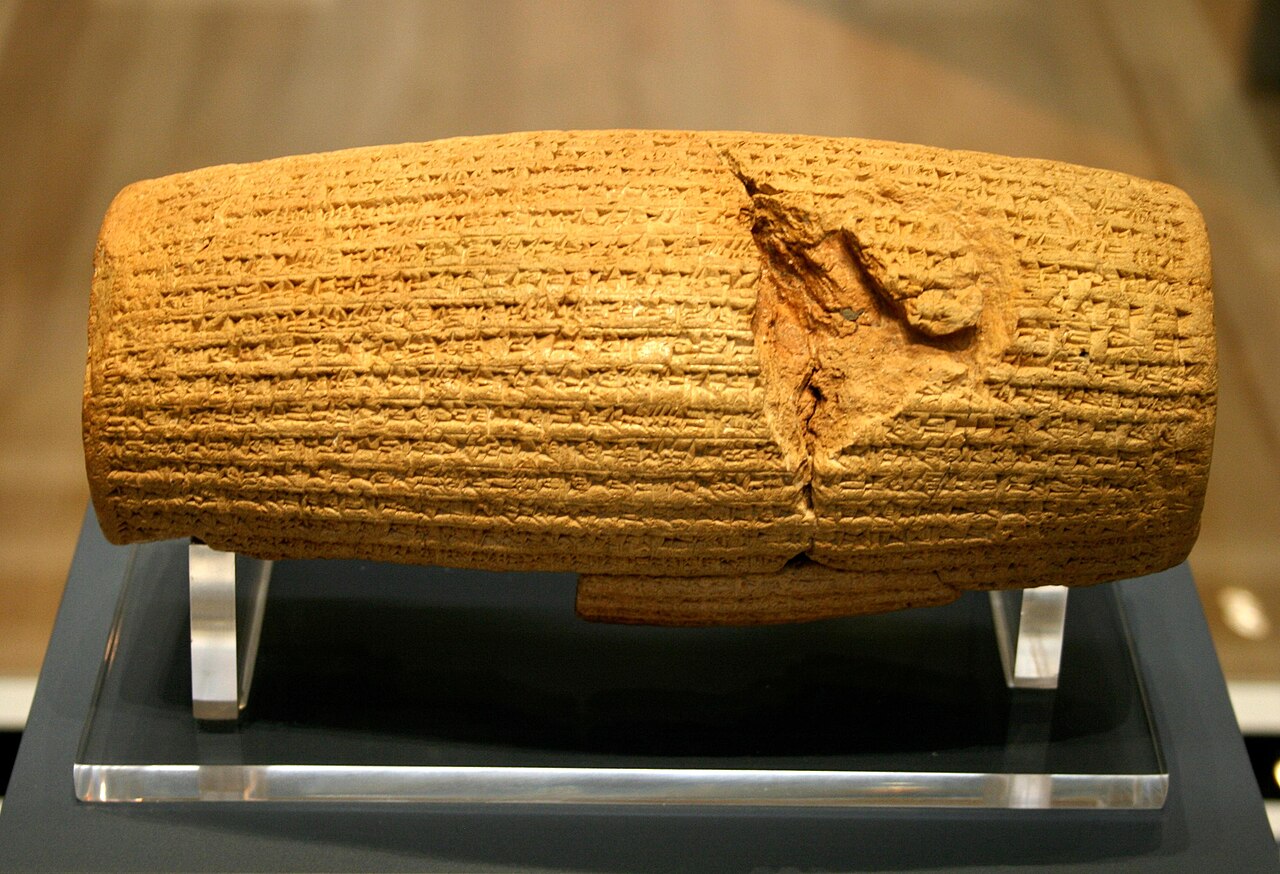
In 539 BC, Cyrus the Great of Persia conquered Babylon. His policy was to let deported peoples return home and rebuild their temples. Many Judeans went back to Jerusalem, and by about 516 BC a new, more modest Temple stood on the old site.
Decades later, a priest and scribe named Ezra arrived from Babylon, "a ready scribe in the law of Moses." Nehemiah 8 describes a dramatic scene: the whole people gathers in a square in Jerusalem, Ezra stands on a wooden platform and reads from the book of the law from early morning until midday, and Levites explain the meaning so everyone understands. The people weep, then celebrate.
From this point, Jewish life increasingly revolved around the written Scriptures, read in public, studied, taught, and copied. Jewish tradition remembers Ezra as the one who gathered the sacred books and restored the law.
A new kind of Hebrew letter
In the Persian period, Jews gradually adopted the square Aramaic script for writing Hebrew, the letters still used in Hebrew Bibles today. The older Paleo-Hebrew script was not forgotten: some Dead Sea Scrolls, including a Leviticus scroll, were still written in it centuries later.
Jews far from Jerusalem
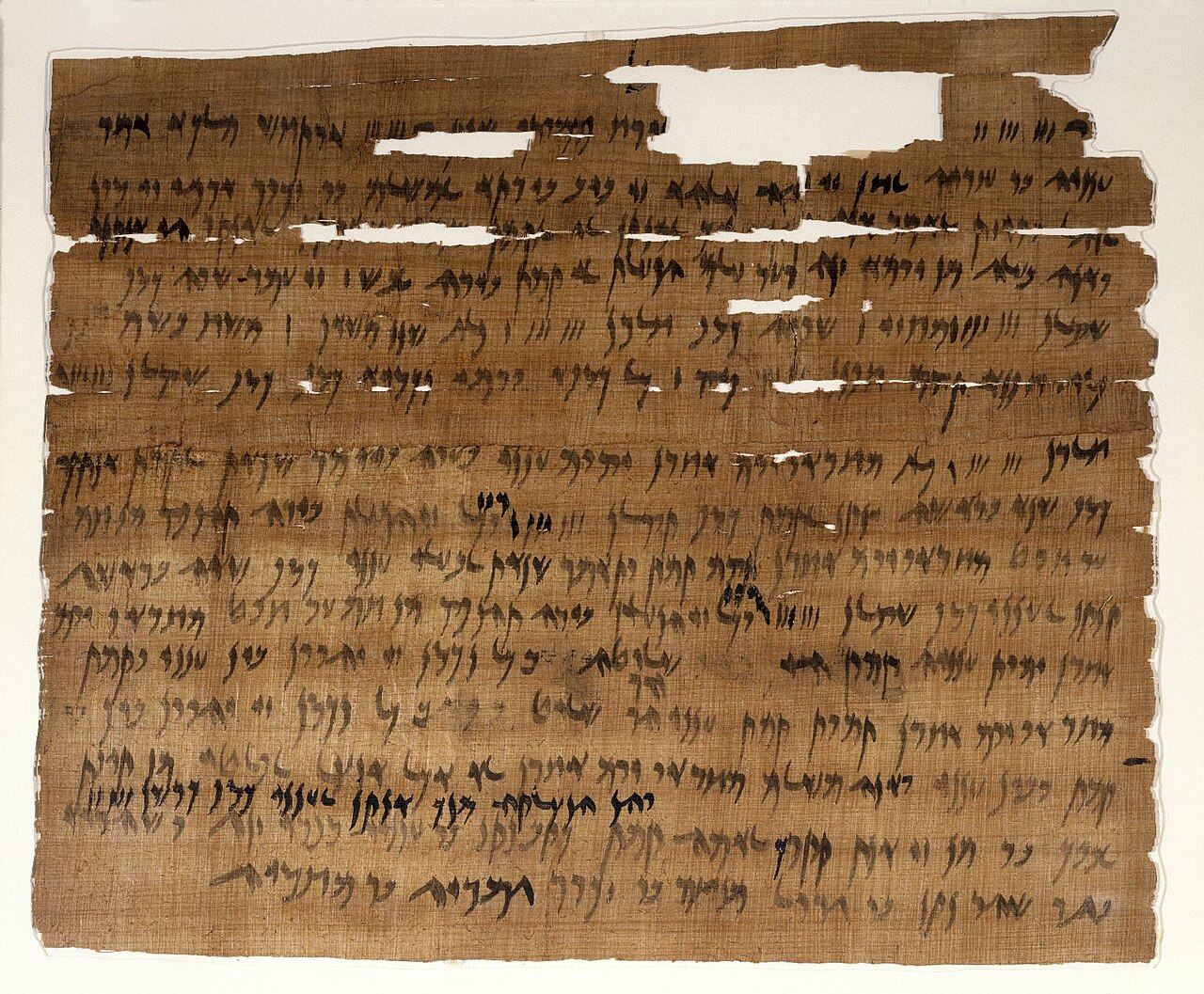
Papyri from Elephantine, an island in Egypt's Nile, preserve the letters of a Jewish military community in the 5th century BC. One letter (419 BC) gives instructions for keeping the Feast of Unleavened Bread, showing Passover-season observance far from Jerusalem.
What the evidence shows
- Persia allowed deported peoples to return and rebuild temples. The Cyrus Cylinder describes this policy, though it does not mention the Jews by name.
- A Jewish community in Egypt kept the Feast of Unleavened Bread in the 5th century BC. Elephantine papyri.
- Ezra read the law publicly in Jerusalem. Known from Nehemiah 8; the date of Ezra's mission is debated.
- The Torah reached essentially its final form by the Persian period. Held across traditional and critical scholarship, for different reasons.
Continue the journey
Connected elsewhere in ScriptureCyrus, the Proclamation and the VesselsEzra 1:1–4: Cyrus' decree allowing the return.More from this lesson
Connections
- Cyrus' decree allowing the return.
- Ezra "prepared his heart to seek the law of the LORD, and to do it, and to teach."
- "They read in the book in the law of God distinctly, and gave the sense."
Sources to explore
Overviews are a starting point. Each links onward to the primary sources and specialist studies behind it.