Isaiah 2: Swords into Plowshares
The mountain of the LORD's house, the nations streaming to Zion, and the day that humbles all pride
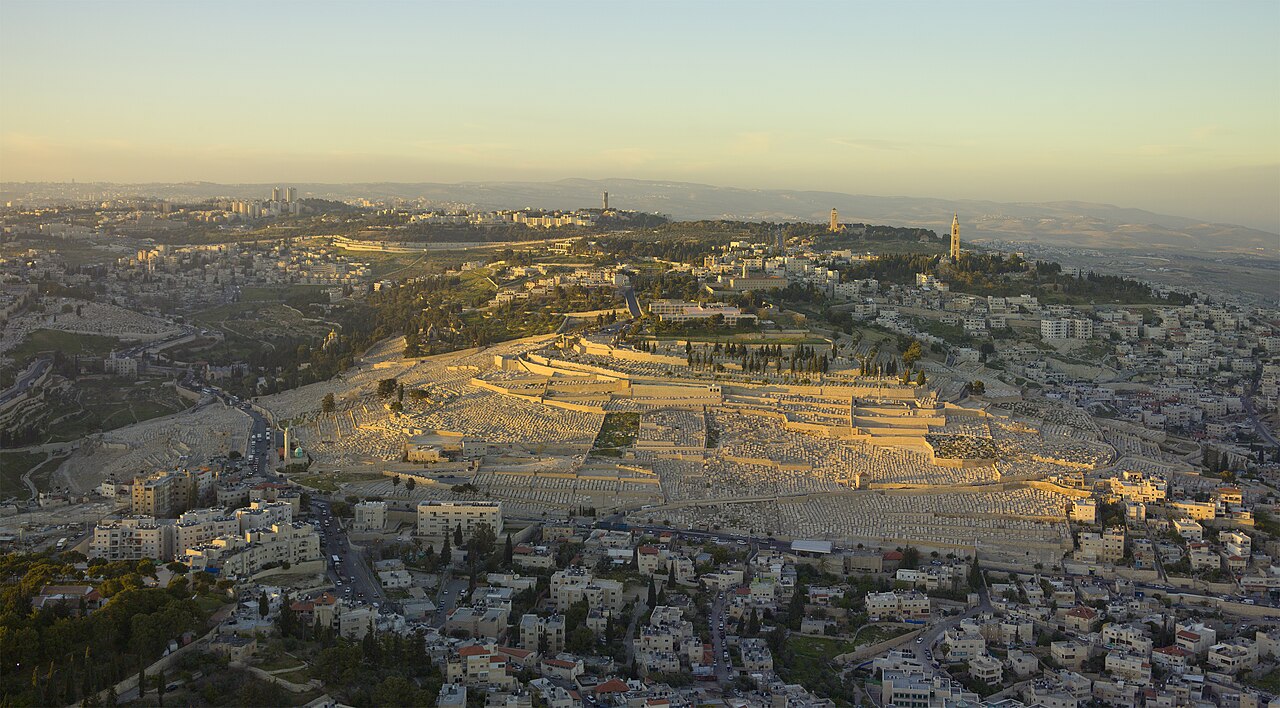
"The word that Isaiah the son of Amoz saw concerning Judah and Jerusalem. And it shall come to pass in the last days, that the mountain of the LORD's house shall be established in the top of the mountains, and shall be exalted above the hills; and all nations shall flow unto it" (2:1–2). Rivers run down mountains; here nations flow up one.
"And many people shall go and say, Come ye, and let us go up to the mountain of the LORD, to the house of the God of Jacob; and he will teach us of his ways, and we will walk in his paths: for out of Zion shall go forth the law, and the word of the LORD from Jerusalem. And he shall judge among the nations, and shall rebuke many people: and they shall beat their swords into plowshares, and their spears into pruninghooks: nation shall not lift up sword against nation, neither shall they learn war any more" (vv. 3–4).
"O house of Jacob, come ye, and let us walk in the light of the LORD" (v. 5). But the present is different: the land is full of soothsayers like the Philistines, of silver and gold, of horses and chariots, "their land also is full of idols; they worship the work of their own hands" (vv. 6–8).
"For the day of the LORD of hosts shall be upon every one that is proud and lofty… upon all the cedars of Lebanon… upon every high tower, and upon every fenced wall, and upon all the ships of Tarshish… And the loftiness of man shall be bowed down… and the LORD alone shall be exalted in that day. And the idols he shall utterly abolish" (vv. 12–18). People will flee to the caves of the rocks and cast their idols "to the moles and to the bats" (vv. 19–21). "Cease ye from man, whose breath is in his nostrils: for wherein is he to be accounted of?" (v. 22).
| Verses | What it says | What to notice |
|---|---|---|
| 2:1 | A second heading: the word Isaiah saw concerning Judah and Jerusalem | Marks 2–4 (or 2–12) as a collection. |
| 2:2–4 | The last days: Zion's mountain raised; nations stream to learn; swords into plowshares | Nearly identical to Micah 4:1–3. |
| 2:5 | House of Jacob, let us walk in the light of the LORD | Bridge from vision to present. |
| 2:6–9 | Diviners, foreign alliances, silver and gold, horses and chariots, idols | Wealth and military power named with idolatry. |
| 2:10–11 | Hide in the rock from the terror of the LORD; human pride brought low | Refrain (also vv. 17, 19, 21). |
| 2:12–17 | The day of the LORD against cedars, oaks, mountains, towers, walls, ships, ornaments | Ten objects of pride. |
| 2:18–21 | Idols vanish; people hide in caves and throw idols to moles and bats | Compare Revelation 6:15–16. |
| 2:22 | Stop trusting mortals, whose breath is in their nostrils | Absent from the library's Greek (see Research). |
Iron tools and weapons
"Plowshares" (ittim) are probably iron plow points or mattocks; "pruninghooks" (mazmerot) are vine-knives. In the Iron Age, the same smiths made tools and weapons, and the same metal could be reworked (1 Samuel 13:19–21). Joel 3:10 reverses the image: "beat your plowshares into swords." A sculpture titled "Let Us Beat Swords into Plowshares" (1959), given by the Soviet Union, stands in the gardens of the United Nations in New York: a modern reception of Isaiah 2:4.
Ships of Tarshish
"Ships of Tarshish" (2:16) were large ocean-going trading ships, named after a distant western port (perhaps in Spain or the western Mediterranean); the phrase came to mean any great merchant ship (1 Kings 10:22). Here they stand for the pride of trade and wealth.
Isaiah 2:2–4 and Micah 4:1–3
The two passages are almost word for word the same; Micah adds "they shall sit every man under his vine and under his fig tree" (Micah 4:4). Explanations: Isaiah borrowed from Micah; Micah from Isaiah; both from an older Jerusalem song; or an editor placed a shared oracle in both books. Isaiah and Micah were contemporaries. The site treats this as two literary witnesses to one oracle, not as a manuscript variant.
"In the last days"
Be'acharit ha-yamim means "in the latter part of the days" or "in days to come": the future, not necessarily the end of the world (compare Genesis 49:1). Later Jewish and Christian readers heard messianic and eschatological meaning in it; the Hebrew phrase allows a range of time horizons.
2:22 in the Greek
The library's Greek has no 2:22 (its file leaves the slot empty), consistent with the Old Greek lacking the verse. Some scholars regard the verse as a later scribal comment; the Great Isaiah Scroll is reported to contain it. Whether the Greek omission reflects its Hebrew source or the translator is a C check (IS-C, Ziegler's edition).
What the evidence shows
- Isaiah 2:2–4 and Micah 4:1–3 are nearly identical.
- Isaiah copied Micah (or Micah copied Isaiah). Several explanations; direction unknown.
- The library's Greek lacks 2:22. The file's slot is empty; a C check on the Old Greek is needed.Source: The site's library: Westminster Leningrad Codex, KJV, Clementine Vulgate, Giguet's French of the Greek
- "Last days" in 2:2 can only mean the end of the world. The phrase means "days to come."
Continue the journey
Journey of a PassageIsaiah 2:2–4: Swords into plowshares: Isaiah and MicahThe nations streaming to Zion's mountain and beating swords into plowshares.More from this lesson
Why this matters to the rest of Scripture
- The same oracle, with the vine and fig tree.
- "Beat your plowshares into swords": the reverse image.
- Peoples coming to seek the LORD in Jerusalem.
- People hiding in caves and rocks from the face of God.
- Luke 24:47; Acts 1:8The word going out from Jerusalem to the nations: later Christian reception.