Isaiah 34: The Day of the LORD's Vengeance
The heavens rolled up like a scroll, a sword over Edom, and a land given to wild creatures
"Come near, ye nations, to hear… For the indignation of the Lord is upon all nations… And all the host of heaven shall be dissolved, and the heavens shall be rolled together as a scroll: and all their host shall fall down, as the leaf falleth off from the vine" (34:1–4).
"For my sword shall be bathed in heaven: behold, it shall come down upon Idumea… for the Lord hath a sacrifice in Bozrah, and a great slaughter in the land of Idumea… For it is the day of the Lord's vengeance, and the year of recompences for the controversy of Zion" (vv. 5–8).
"The satyr shall cry to his fellow; the screech owl (lilit) also shall rest there, and find for herself a place of rest… Seek ye out of the book of the Lord, and read: no one of these shall fail, none shall want her mate" (vv. 14–16).
| Verses | What it says | What to notice |
|---|---|---|
| 34:1–4 | Nations summoned; wrath on all armies; the slain unburied; heaven's host dissolves, the sky rolled like a scroll, stars falling like leaves | Echoed in Mark 13:25 and Revelation 6:13–14. |
| 34:5–7 | God's sword, drunk in heaven, falls on Edom; a sacrifice in Bozrah of lambs, goats, rams, wild oxen | Bozrah: Edom's capital (Buseirah, in southern Jordan). |
| 34:8 | The day of vengeance, the year of recompense for Zion's cause | Compare 61:2; 63:4. |
| 34:9–10 | Streams to pitch, dust to sulfur; burning night and day; smoke forever; no one passes through | Sodom imagery (Genesis 19:24, 28). |
| 34:11–15 | Pelican and porcupine (?), owl and raven possess it; the measuring line of chaos (tohu) and plumb line of emptiness (bohu); jackals, ostriches, desert creatures, goat-demons, lilit, the arrow-snake, kites | Tohu and bohu: the words of Genesis 1:2. |
| 34:16–17 | Seek in the book of the LORD and read: none missing, each with its mate; God has allotted them the land forever | A reference to a written collection of prophecy. |
Edom and Bozrah
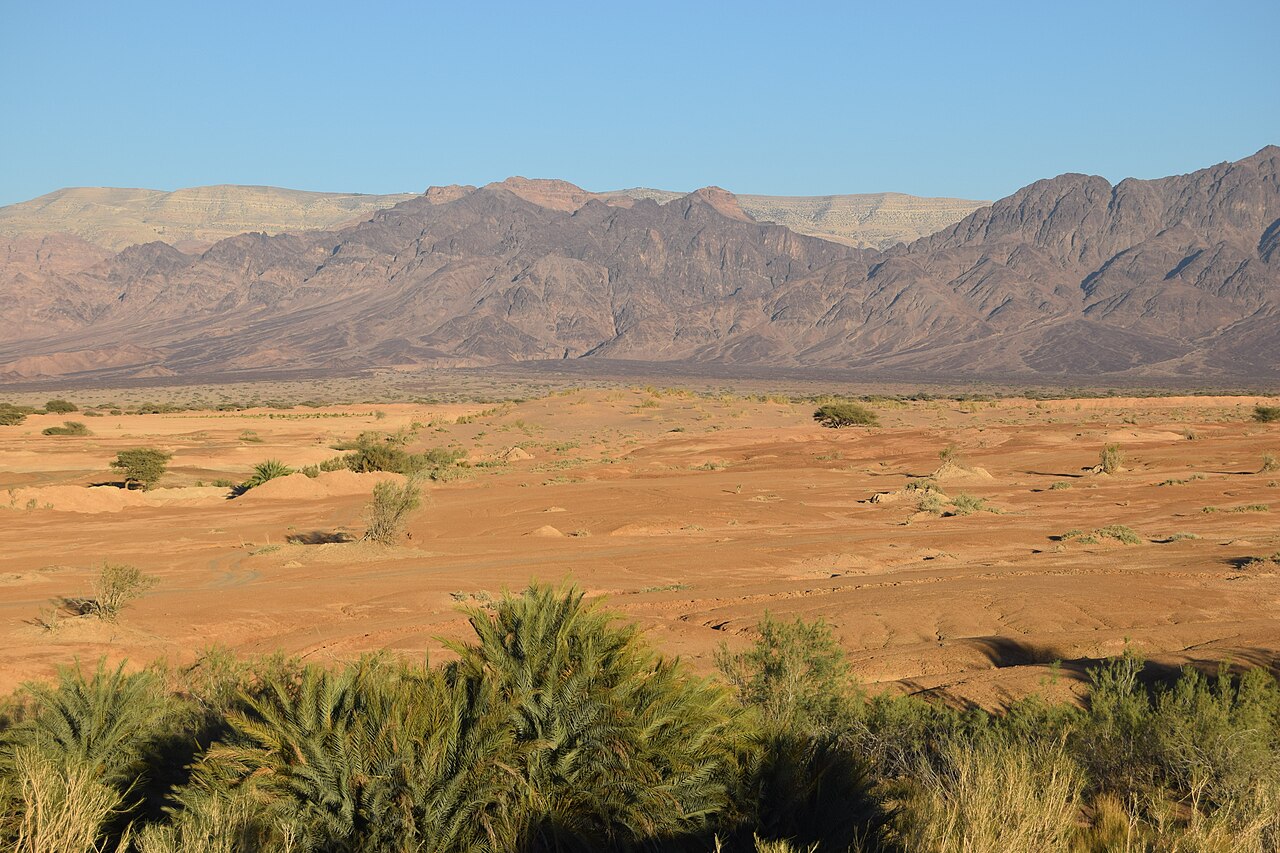
Edom lay south and east of the Dead Sea; its capital Bozrah (Buseirah) was excavated by C.-M. Bennett in the 1970s and flourished in the 8th–6th centuries BC under Assyrian rule. After Babylon destroyed Jerusalem in 586 BC, Edomites were remembered as having joined in (Psalm 137:7; Obadiah 10–14; Lamentations 4:21–22) and moved into southern Judah (later Idumea). Edom's kingdom faded in the 6th–5th centuries; Arab Nabataeans later held its land. Isaiah 34 belongs with other anti-Edom oracles (Isaiah 63:1–6; Jeremiah 49:7–22; Ezekiel 35; Malachi 1:2–5). The "everlasting" smoke is poetry of total judgment, not a description of the region's later history.
Lilit and the creatures of the ruin
Lilit (34:14) occurs only here in the Bible. It is related to Akkadian lilitu, a female night or wind demon. The KJV has "screech owl"; the Vulgate lamia (a female monster); the library's Greek "onocentaurs" (Giguet: "les onocentaures"); many modern translations "night creature" or "Lilith." In much later Jewish folklore (the medieval Alphabet of Ben Sira) Lilith became Adam's first wife, a figure the text knows nothing of. In the transcription, the Great Isaiah Scroll has the plural, liliyyot. The other creatures (qa'at, qippod, yanshuf, qippoz, dayyot) are uncertain; the site does not assign modern species.
Isaiah 34–35 and Isaiah 40–66
Chapters 34–35 share vocabulary and themes with 40–66 (vengeance and recompense, the highway, the desert in bloom, "the ransomed of the LORD shall return," 35:10 = 51:11). Many scholars think they were written or placed by the editors who joined the two halves of the book, so that chapters 36–39 stand between two pictures of judgment and restoration. Others see Isaiah's own anticipation of themes developed later.
Rolled up like a scroll
"The heavens shall be rolled together as a scroll (sefer)" (34:4): the sky as a written scroll rolled shut. Revelation 6:13–14 ("the stars of heaven fell unto the earth, even as a fig tree casteth her untimely figs… And the heaven departed as a scroll when it is rolled together") and Jesus' words in Mark 13:25 and Matthew 24:29 echo the verse. Revelation 14:11 and 19:3 (smoke rising forever) echo 34:10.
What the evidence shows
- Lilit is related to the Akkadian demon name lilitu.
- Isaiah 34:14 refers to Lilith, Adam's first wife. That legend is medieval.
- Bozrah was Edom's capital. Buseirah excavations; reported.
- Isaiah 34–35 was composed by the editors who joined Isaiah 1–39 and 40–66.
Continue the journey
Journey of a PassageIsaiah 34:14–15: Lilit: screech owl, lamia, onocentaur, Lilith"The satyr shall cry to his fellow; the screech owl also shall rest there." The Hebrew lilit, a night creature related to the Akkadian demon lilitu, became the KJV's "screech owl," the Vulgate's lamia, the library's Greek "onocentaurs," and in modern translations "night creature" or "Lilith." The Great Isaiah Scroll has the plural, liliyyot.More from this lesson
Why this matters to the rest of Scripture
- Isaiah 63:1–6; Obadiah; Psalm 137:7Edom's judgment.
- Revelation 6:13–14; 14:11; 19:3The sky rolled up; smoke forever.
- Tohu and bohu.
- Babylon's ruin, the same creatures.