Isaiah 9: Unto Us a Child Is Born
Light for Galilee of the nations, a royal child with four names, and God's hand stretched out still
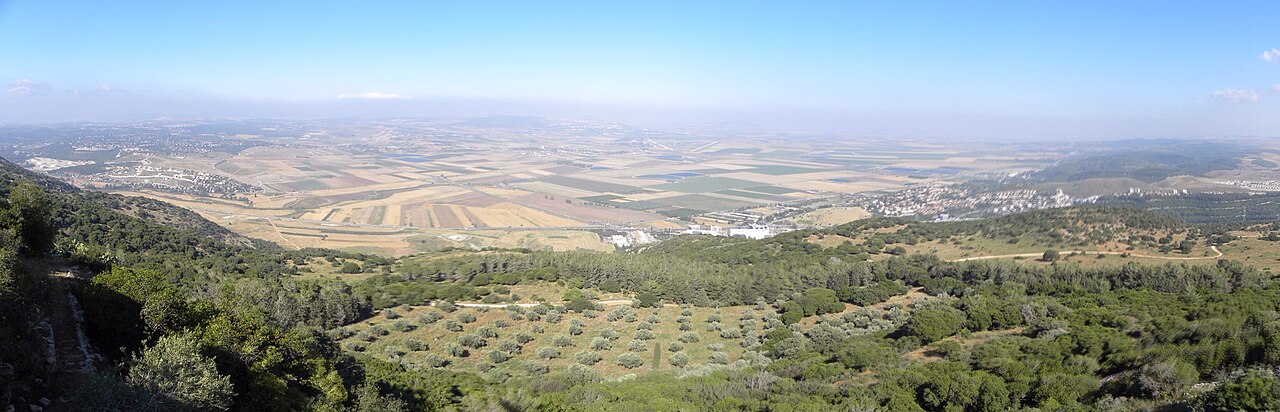
"Nevertheless the dimness shall not be such as was in her vexation, when at the first he lightly afflicted the land of Zebulun and the land of Naphtali, and afterward did more grievously afflict her by the way of the sea, beyond Jordan, in Galilee of the nations" (9:1). In 733–732 BC Tiglath-pileser III annexed these northern districts and made them Assyrian provinces. Isaiah promises reversal where the darkness fell first.
"The people that walked in darkness have seen a great light: they that dwell in the land of the shadow of death, upon them hath the light shined. Thou hast multiplied the nation, and not increased the joy" (vv. 2–3), or, as the Hebrew margin reads, "increased its joy" (see Research). "For thou hast broken the yoke of his burden, and the staff of his shoulder, the rod of his oppressor, as in the day of Midian" (v. 4).
"For unto us a child is born, unto us a son is given: and the government shall be upon his shoulder: and his name shall be called Wonderful, Counsellor, The mighty God, The everlasting Father, The Prince of Peace. Of the increase of his government and peace there shall be no end, upon the throne of David, and upon his kingdom, to order it, and to establish it with judgment and with justice from henceforth even for ever. The zeal of the LORD of hosts will perform this" (vv. 6–7).
Then judgment on Ephraim's pride: "The bricks are fallen down, but we will build with hewn stones: the sycomores are cut down, but we will change them into cedars" (v. 10). Aram and the Philistines devour Israel; leaders mislead; wickedness burns like fire; brother devours brother; "Manasseh, Ephraim; and Ephraim, Manasseh: and they together shall be against Judah. For all this his anger is not turned away, but his hand is stretched out still" (vv. 8–21).
| Verses | What it says | What to notice |
|---|---|---|
| 9:1 (Heb. 8:23) | Zebulun and Naphtali humbled, later glorified: the way of the sea, beyond Jordan, Galilee of the nations | The Assyrian provinces of 732 BC. |
| 9:2 (Heb. 9:1) | People in darkness see a great light | Quoted in Matthew 4:15–16. |
| 9:3 (Heb. 9:2) | You multiplied the nation, (not) increased its joy; joy as at harvest and spoil | A ketiv/qere: "not" written, "to it" read. |
| 9:4–5 | The yoke, the staff and the oppressor's rod broken as at Midian; boots and bloody cloaks burned | Gideon's victory (Judges 7). |
| 9:6 | A child born, a son given; government on his shoulder; four throne names | The Greek has "Angel of Great Counsel" (see Research). |
| 9:7 | Endless peace on David's throne, with justice and righteousness; the zeal of the LORD | Davidic covenant language (2 Samuel 7). |
| 9:8–12 | Stanza 1: pride ("we will rebuild with dressed stone"); Aram and Philistines devour Israel; refrain | The refrain links to 5:25. |
| 9:13–17 | Stanza 2: head and tail cut off; leaders mislead; refrain | "The ancient… is the head; the prophet that teacheth lies, he is the tail." |
| 9:18–21 | Stanza 3: wickedness burns like fire; civil war of Manasseh and Ephraim; refrain | Continues in 10:1–4. |
Galilee of the nations
Galil ha-goyim, the "district of the nations," was northern Galilee, where Israelites lived among Phoenicians and Arameans. Tiglath-pileser III's annals record taking Hazor, Kinnereth, Megiddo and the region and deporting its people (2 Kings 15:29 names Ijon, Abel-beth-maacah, Janoah, Kedesh, Hazor, Gilead and Galilee). Archaeology shows destruction layers at Hazor and other northern sites in this period. By Jesus' time Galilee was again largely Jewish.
Throne names
Egyptian pharaohs received a series of throne names at accession, and some scholars think Isaiah 9:6 echoes that custom: a coronation oracle for a Davidic king, perhaps at birth or enthronement (compare Psalm 2:7, "thou art my Son; this day have I begotten thee"). Others read it as birth announcement. Either way, the names are titles of the king's role as God's representative, which later readers heard as more than royal titles.
Isaiah's audience would hear an oracle for a Davidic king who would reverse Assyria's oppression of the north and rule with justice: many scholars think of Hezekiah, son of Ahaz, or of an ideal future king. The names may be read as sentences describing God ("a wonderful counselor is the mighty God; the father of eternity is a prince of peace") or as titles of the king ("Mighty God" as "godlike warrior"; compare Psalm 45:6). The Hebrew is debated.
Jewish interpretation: the Targum of Isaiah reads 9:5 (Hebrew numbering) as the messiah "in whose days peace will increase." Rabbinic and medieval commentators (Rashi, Kimchi) identified the child with Hezekiah and read the names as names of God spoken over him ("the Wonderful Counselor, the Mighty God, the Everlasting Father, calls his name Prince of Peace"). The Greek translators gave the child one name, "Angel (Messenger) of Great Counsel," and added "for I will bring peace upon the rulers." The Great Isaiah Scroll has the same names and writes "the Prince of the Peace" with the article.
Matthew 4:12–16 quotes 9:1–2 to explain Jesus' ministry in Galilee ("The people which sat in darkness saw great light"), following the Greek in part. The New Testament does not quote 9:6 directly; Luke 1:32–33 ("the throne of his father David… of his kingdom there shall be no end") echoes 9:7. Christians later read 9:6 of Jesus, especially "Mighty God," as a statement of his divinity.
Christian liturgy and music (Handel's Messiah, 1742) made 9:6 a Christmas text. Some modern readers apply the names to political leaders, which none of the ancient readings support. The site presents Isaiah's setting, the Jewish and Christian readings, and the textual differences separately.
9:3: "not increased the joy" or "increased its joy"?
The Masoretic Text writes lo' ("not") and reads lo ("to it"), a ketiv/qere note: "you have multiplied the nation, you have increased its joy" (qere) or "you have not increased the joy" (ketiv). The KJV follows the written "not"; most modern versions the read "its joy." The Great Isaiah Scroll writes lo' ("not"), like the ketiv. Many scholars suggest the original was haggilah, "the rejoicing," divided differently. A small example of how one word's reading is decided.
What the evidence shows
- Tiglath-pileser III annexed Galilee and the northern districts in 733–732 BC.
- Matthew 4:15–16 quotes Isaiah 9:1–2.
- The Greek of 9:6 names the child "Angel of Great Counsel."Source: The site's library: Westminster Leningrad Codex, KJV, Clementine Vulgate, Giguet's French of the Greek
- The child of 9:6 was Hezekiah. A traditional Jewish and modern scholarly view; others read an ideal or messianic king.
- Isaiah 9:6 names the messiah as God. Christian reading; the Hebrew names are debated.
- Hebrew 9:2 (English 9:3) has a ketiv/qere.Source: The site's library: Westminster Leningrad Codex, KJV, Clementine Vulgate, Giguet's French of the Greek
Continue the journey
Journey of a PassageIsaiah 9:1–2 (Hebrew 8:23–9:1): Galilee of the nations: "a great light""The people that walked in darkness have seen a great light." In Hebrew numbering this is 8:23–9:1.More from this lesson
Why this matters to the rest of Scripture
- Jesus in Galilee; Isaiah 9:1–2 quoted.
- The throne of David, a kingdom without end.
- Tiglath-pileser takes Galilee.
- The day of Midian.
- Psalm 2:7; 45:6–7Royal psalms: the king as God's son; "thy throne, O God."