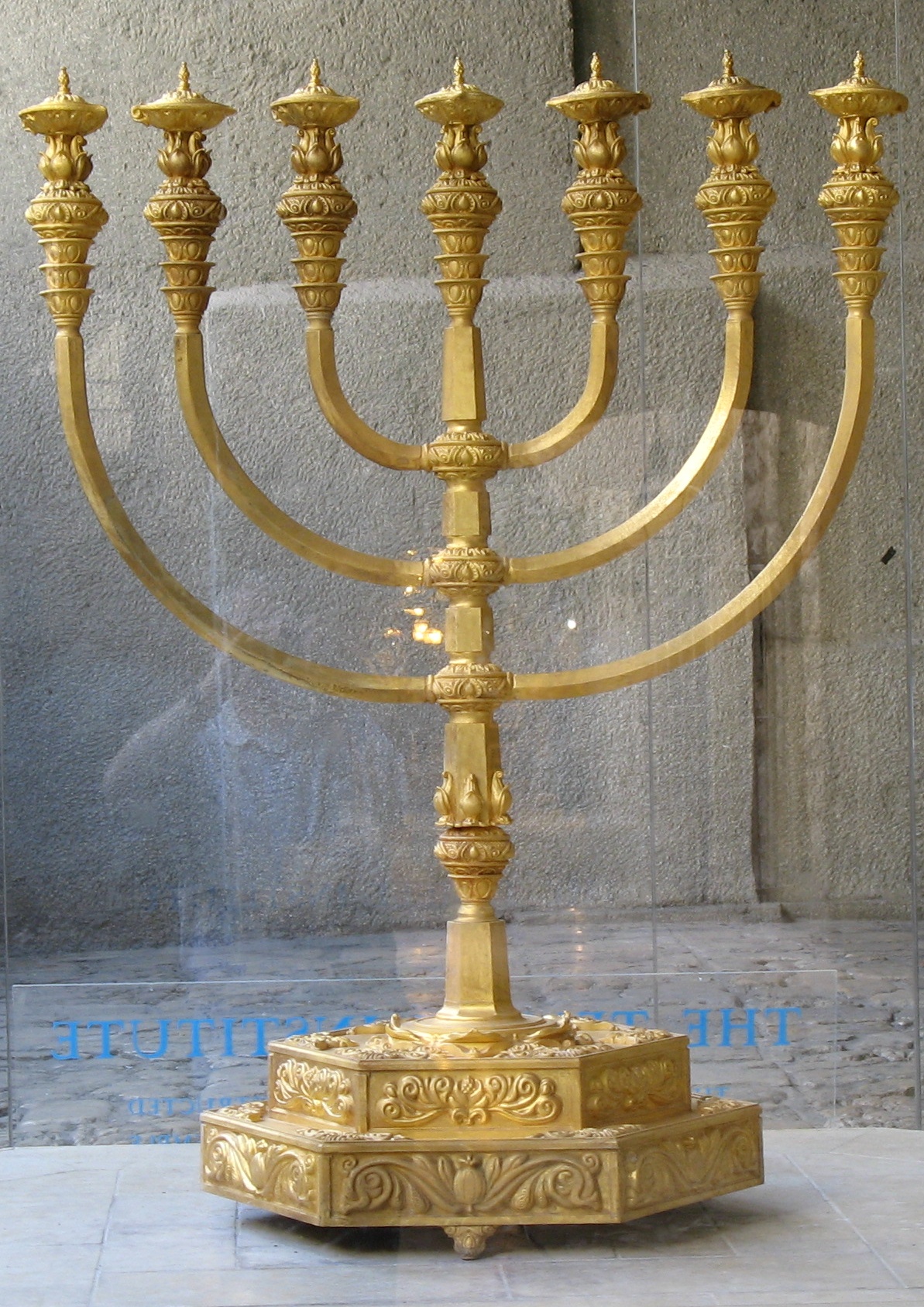
Isaiah 42: Behold My Servant
A servant who will not break a bruised reed, a light to the nations, a new song, and a blind servant
"Behold my servant, whom I uphold; mine elect, in whom my soul delighteth; I have put my spirit upon him: he shall bring forth judgment to the Gentiles. He shall not cry, nor lift up, nor cause his voice to be heard in the street. A bruised reed shall he not break, and the smoking flax shall he not quench: he shall bring forth judgment unto truth. He shall not fail nor be discouraged, till he have set judgment in the earth: and the isles shall wait for his law" (42:1–4).
"I the Lord have called thee in righteousness, and will hold thine hand, and will keep thee, and give thee for a covenant of the people, for a light of the Gentiles; To open the blind eyes, to bring out the prisoners from the prison" (vv. 6–7).
"Sing unto the Lord a new song… The Lord shall go forth as a mighty man… I have long time holden my peace… now will I cry like a travailing woman" (vv. 10–14). "Who is blind, but my servant? or deaf, as my messenger that I sent?" (v. 19).
| Verses | What it says | What to notice |
|---|---|---|
| 42:1 | My servant, upheld and chosen, delighted in; my spirit on him; he will bring justice (mishpat) to the nations | The first "Servant Song" (Duhm's term): 42:1–4 (or 1–9). |
| 42:2–4 | He will not shout; a bruised reed he will not break, a dimly burning wick he will not quench; he will not grow dim or be crushed until justice is set on earth; coastlands await his teaching | Wordplay: he won't quench the dim wick, nor himself grow dim (kahah). |
| 42:5–9 | God the creator: I called you in righteousness, a covenant for the people, a light for the nations, to open blind eyes; I will not give my glory to another; former things done, new things declared | Who is addressed: the servant, or Cyrus? Interpreters differ. |
| 42:10–12 | Sing a new song from the ends of the earth, sea, coastlands, desert, Kedar, Sela | A hymn for all creation. |
| 42:13–17 | The LORD goes out like a warrior; long silent, now he cries out like a woman giving birth; he leads the blind on new roads | Male and female images side by side. |
| 42:18–25 | Hear, you deaf; look, you blind: who is blind but my servant? A people plundered; who gave Jacob to the spoiler? The LORD, against whom we sinned | The servant here is clearly Israel. |
Justice in royal ideology
Ancient Near Eastern kings claimed to establish justice (mishpat; Akkadian kittu u mesharu) for the weak: Hammurabi's prologue says he was called "to make justice appear in the land… so that the strong might not oppress the weak." Isaiah's servant carries out this royal task, but without a king's shouting proclamation or force, and for the nations, not one land.
Who is the servant of 42:1?
In Isaiah 41:8–9; 44:1–2, 21; 45:4 the servant is explicitly Israel/Jacob. The library's Greek reads 42:1 the same way: "Jacob my servant… Israel my chosen" (Giguet: "Jacob mon serviteur… Israël est mon élu"). The Hebrew of 42:1 names no one. Jewish interpreters have read the servant as Israel, the righteous within Israel, the prophet, or (Targum: "my servant the messiah") the messiah. Matthew 12:18–21 quotes 42:1–4 of Jesus' quiet healing ministry, in a form that agrees with neither the Hebrew nor the Greek exactly and leaves out Jacob and Israel; it ends with the Greek "in his name shall the Gentiles trust." The voice at Jesus' baptism ("in whom I am well pleased," Mark 1:11) echoes 42:1 together with Psalm 2:7. These readings are not interchangeable; "Who Is the Servant?" (in preparation for the next release) will map them all.
The Great Isaiah Scroll
Described from a transcription: in 42:1 the scroll reads "his justice" for "justice"; in 42:4 it reads a form meaning "they will inherit" (or "cause to inherit") where the Masoretic Text has "they will wait for" his teaching. The Cave 4 copy 4Q62 has the Masoretic "wait." Each reading is weighed on its own; the older copy is not assumed better.
Light to the nations
"A light of the Gentiles" (42:6; 49:6) appears in Simeon's song over the infant Jesus ("a light to lighten the Gentiles," Luke 2:32) and in Paul and Barnabas's words at Pisidian Antioch, where they apply 49:6 to their own mission (Acts 13:47). In Isaiah the phrase belongs to the servant's task; later writers applied it to Jesus and to the church.
What the evidence shows
- The library's Greek names the servant of 42:1 as Jacob/Israel. Giguet; C check against Ziegler.
- Matthew 12:18–21 quotes Isaiah 42:1–4.
- The servant of 42:1–4 is Israel. One of several readings; see the coming investigation.
- The Targum reads "my servant the messiah" in 42:1. Reported; C check.
Continue the journey
Journey of a PassageIsaiah 42:1–4: "Behold my servant": Hebrew, Greek and Matthew 12"Behold my servant, whom I uphold; mine elect, in whom my soul delighteth; I have put my spirit upon him: he shall bring forth judgment to the Gentiles." The Hebrew names no one; the library's Greek reads "Jacob my servant… Israel my chosen." Matthew 12:18–21 quotes the passage of Jesus in a form close to neither, without Jacob and Israel, ending with the Greek "in his name shall the Gentiles trust." The Great Isaiah Scroll reads "his justice" (v.More from this lesson
Echoes Across Civilizations
Optional: how other ancient peoples told similar stories. Open one to compare, then come back to the lesson.
The God who marches out to battleCanaanite (Ugarit) · Assyrian · Israelite
Did other ancient peoples sing of a god who comes from his mountain in storm, shaking the earth, with heaven fighting for his people?
- Canaanite (Ugarit): Baal the storm god Shared literary world
- Assyrian: Royal inscriptions of the storm god Adad Resemblance only
- Israelite: "YHWH of Teman" Possible historical contact
Also covered: A battle in the sky?, clearly labeled as a modern theory.
Compare side by side →Why this matters to the rest of Scripture
- Jesus withdraws, heals, and tells them not to make him known.
- Mark 1:11; Matthew 3:17"In whom I am well pleased."
- Luke 2:32; Acts 13:47A light to the Gentiles.
- Isaiah 49:1–6; 50:4–9; 52:13–53:12The other Servant Songs.