Isaiah 7: The Sign of Immanuel
Ahaz at the conduit, a son named "A remnant shall return," and a child called "God with us"
"And it came to pass in the days of Ahaz the son of Jotham… that Rezin the king of Syria, and Pekah the son of Remaliah, king of Israel, went up toward Jerusalem to war against it, but could not prevail against it. And it was told the house of David, saying, Syria is confederate with Ephraim. And his heart was moved, and the heart of his people, as the trees of the wood are moved with the wind" (7:1–2).
"Then said the LORD unto Isaiah, Go forth now to meet Ahaz, thou, and Shearjashub thy son, at the end of the conduit of the upper pool in the highway of the fuller's field; and say unto him, Take heed, and be quiet; fear not, neither be fainthearted for the two tails of these smoking firebrands" (vv. 3–4). The two kings planned to put "the son of Tabeal" on Judah's throne (v. 6). "It shall not stand, neither shall it come to pass… If ye will not believe, surely ye shall not be established" (vv. 7–9): in Hebrew, im lo ta'aminu ki lo te'amenu, "if you do not stand firm (in faith), you will not stand firm."
"Ask thee a sign of the LORD thy God; ask it either in the depth, or in the height above. But Ahaz said, I will not ask, neither will I tempt the LORD" (vv. 11–12). Isaiah's reply is sharp: "Hear ye now, O house of David; Is it a small thing for you to weary men, but will ye weary my God also?" (v. 13).
"Therefore the Lord himself shall give you a sign; Behold, a virgin shall conceive, and bear a son, and shall call his name Immanuel. Butter and honey shall he eat, that he may know to refuse the evil, and choose the good. For before the child shall know to refuse the evil, and choose the good, the land that thou abhorrest shall be forsaken of both her kings" (vv. 14–16).
"The LORD shall bring upon thee, and upon thy people, and upon thy father's house, days that have not come… even the king of Assyria" (v. 17). God will whistle for the fly of Egypt and the bee of Assyria; "In the same day shall the Lord shave with a razor that is hired… by the king of Assyria" (vv. 18–20). Vineyards worth a thousand silver pieces will become briers and thorns, good only for grazing (vv. 21–25).
| Verses | What it says | What to notice |
|---|---|---|
| 7:1–2 | Rezin and Pekah attack Jerusalem; Ahaz and his people shake like trees | The Syro-Ephraimite war, c. 734 BC (2 Kings 16:5). |
| 7:3 | Isaiah and Shear-jashub meet Ahaz at the conduit of the upper pool, Fuller's Field road | The same place where the Assyrian official later stands (36:2). |
| 7:4–6 | Fear not these two smoking stubs; their plan to install the son of Tabeal | Tabeal: an unknown candidate, perhaps from Tyre or Transjordan. |
| 7:7–9 | It shall not stand; within 65 years Ephraim will be shattered; believe or you will not be established | Pun: ta'aminu / te'amenu. |
| 7:10–13 | Ask a sign, deep as Sheol or high as heaven; Ahaz refuses; Isaiah rebukes the house of David | Ahaz's piety masks his plan to appeal to Assyria (2 Kings 16:7). |
| 7:14 | The sign: the young woman (ha-almah) is pregnant (or will conceive) and will bear a son; Immanuel | See the passage page and the investigation. |
| 7:15–16 | Curds and honey; before he knows good from evil, the two kings' lands are deserted | A short time span: a few years. |
| 7:17–20 | Assyria will come: the fly of Egypt, the bee of Assyria, the hired razor | Shaving as humiliation (2 Samuel 10:4). |
| 7:21–25 | A cow and two sheep; curds and honey for the few left; vineyards to briers | Curds and honey: food of a depopulated, pastoral land. |
The Syro-Ephraimite war
Around 734–732 BC, Rezin of Damascus and Pekah of Israel tried to force Judah into an anti-Assyrian coalition. Ahaz instead sent tribute to Tiglath-pileser III and asked for help (2 Kings 16:5–9). Assyrian inscriptions of Tiglath-pileser list "Jehoahaz (Ahaz) of Judah" among tributaries and record the conquest of Damascus (732 BC) and the annexation of much of Israel. The external record confirms the international crisis; it does not record Isaiah's conversation.
The conduit of the upper pool
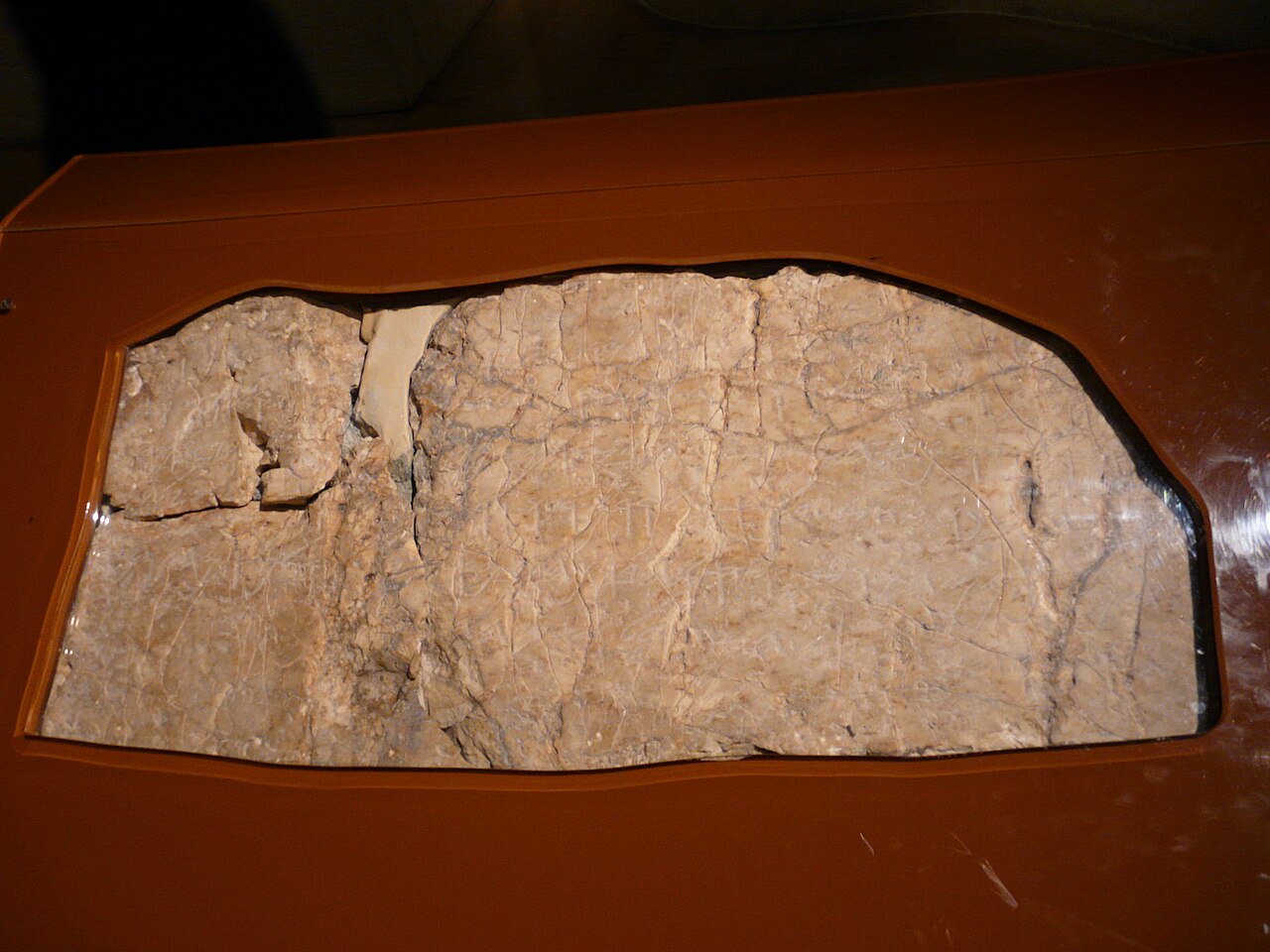
The "conduit of the upper pool in the highway of the fuller's field" (7:3; 36:2) was part of Jerusalem's water system outside the walls, probably on the north or in the Kidron area (location debated). Fullers washed and treated cloth with water, so their field was near a water source. Hezekiah later redirected the Gihon spring through the Siloam tunnel (2 Kings 20:20). No excavated channel is securely identified with Isaiah's conduit.
In 734 BC the sign answers Ahaz's crisis. Ha-almah is "the young woman" (the word means a young woman of marriageable age; it does not by itself specify virginity, for which Hebrew usually uses betulah). The article ("the") suggests a woman known to Isaiah and Ahaz: Ahaz's wife (and the child Hezekiah, though chronology is debated), Isaiah's wife (compare 8:3), or a woman present. Harah can mean "is pregnant" or "will be pregnant." The point is time: before the child can choose good and evil, Damascus and Samaria will be ruined (v. 16), which happened in 732 and 722 BC. The name "God is with us" recurs in 8:8, 10.
Jewish interpretation generally read the sign within Isaiah's time: the child was Hezekiah (a view Justin Martyr attributes to his Jewish interlocutor Trypho in the 2nd century AD) or a son of Isaiah. The Greek translators (3rd–2nd century BC) rendered almah as parthenos, a word that usually means "virgin" but can mean a young woman (Genesis 34:3 LXX uses it of Dinah after she was violated). The Great Isaiah Scroll reads ha-almah like the Masoretic Text, but "he (or one) will call" (ve-qara) instead of "she will call" (ve-qarat), and "YHWH" for "the Lord."
Matthew 1:22–23 quotes the verse in its Greek form, "Behold, a virgin (parthenos) shall be with child, and shall bring forth a son, and they shall call his name Emmanuel, which being interpreted is, God with us," and presents Jesus' virginal conception as its fulfillment. Matthew's "they shall call" differs from the Greek "you shall call" and the Hebrew "she shall call." Matthew reads Isaiah 7–9 as a whole (he quotes 9:1–2 in 4:15–16) and uses "fulfilled" (plēroō) in a sense that can include deeper or typological fulfillment, not only prediction. Luke 1:31 echoes the wording without citing Isaiah.
Christian tradition has often read 7:14 as a direct prediction of the virgin birth only; many Christian scholars now read it as a sign with an 8th-century fulfillment that Matthew sees filled out in Jesus (dual or typological fulfillment). Jewish polemic against the Christian reading has stressed the meaning of almah and the 8th-century context. Translation debates (RSV 1952 "young woman," KJV and NIV "virgin") have been heated. These are later debates; the site presents the Hebrew, the Greek, Matthew's text and the readings side by side.
7:9: faith and firmness
Im lo ta'aminu ki lo te'amenu: both verbs come from the root amn ("firm, reliable"; the source of "amen"). "If you do not stand firm in faith, you will not stand firm at all" (NRSV). The library's Greek reads "if you do not believe, neither will you understand," a reading Augustine made famous ("unless you believe, you will not understand"); the Vulgate has "you will not endure" (non permanebitis). The Great Isaiah Scroll is reported to repeat "you will not believe" (lo ta'aminu) in both halves. A small verse with a large afterlife.
What the evidence shows
- Isaiah 7 is set in the Syro-Ephraimite war (c. 734 BC).
- Almah means a young woman of marriageable age and does not by itself specify virginity.Source: R. G. Bratcher, "A Study of Isaiah 7:14," The Bible Translator (1958) ↗
- The Greek translates almah as parthenos.Source: The site's library: Westminster Leningrad Codex, KJV, Clementine Vulgate, Giguet's French of the Greek
- The Great Isaiah Scroll reads ha-almah and "he (or one) will call." In the transcription; image check open.Source: 1QIsa-a and 1QIsa-b: M. Abegg's transcription, ETCBC/CACCHT Dead Sea Scrolls dataset v2.0.5 (CC BY-NC 4.0), read by the site's script; images: Israel Museum / Leon Levy Digital Library; edition: DJD XXXII (2010)
- Matthew 1:23 quotes Isaiah 7:14 in its Greek form.
- Isaiah 7:14 had an 8th-century fulfillment. The context (vv. 15–16) points to Ahaz's time; many Christian readers hold a single or dual messianic fulfillment.
- Jesus' virginal conception fulfills Isaiah 7:14. The claim of Matthew and Christian faith.
Continue the journey
Journey of a PassageIsaiah 7:14–16: Almah, parthenos and Immanuel"Behold, a virgin (ha-almah, 'the young woman') shall conceive, and bear a son, and shall call his name Immanuel." Hebrew almah, Greek parthenos, Latin virgo; the Masoretic Text "she (or you) will call," the Great Isaiah Scroll "he (or one) will call," the Greek "you will call," Matthew 1:23 "they will call." The sign's time frame (vv.More from this lesson
Why this matters to the rest of Scripture
- Ahaz, Rezin and Pekah; Ahaz's appeal to Tiglath-pileser.
- Matthew's use of Isaiah 7:14.
- "Immanuel" and "God is with us" again.
- "Thou shalt conceive in thy womb, and bring forth a son": echo.
- Genesis 16:11; Judges 13:5Birth announcements with similar wording.