Isaiah 59: The Redeemer Shall Come to Zion
Hands full of blood, justice that cannot enter the gate, a confession in the dark, and God armed for battle
"Behold, the LORD's hand is not shortened, that it cannot save; neither his ear heavy, that it cannot hear: But your iniquities have separated between you and your God, and your sins have hid his face from you, that he will not hear. For your hands are defiled with blood, and your fingers with iniquity; your lips have spoken lies… None calleth for justice, nor any pleadeth for truth" (59:1–4).
"Their feet run to evil, and they make haste to shed innocent blood: their thoughts are thoughts of iniquity; wasting and destruction are in their paths. The way of peace they know not; and there is no judgment in their goings" (vv. 7–8). "Therefore is judgment far from us… we wait for light, but behold obscurity… We grope for the wall like the blind… we roar all like bears, and mourn sore like doves… And judgment is turned away backward, and justice standeth afar off: for truth is fallen in the street, and equity cannot enter" (vv. 9–14).
"And the LORD saw it, and it displeased him that there was no judgment. And he saw that there was no man, and wondered that there was no intercessor: therefore his arm brought salvation unto him; and his righteousness, it sustained him. For he put on righteousness as a breastplate, and an helmet of salvation upon his head; and he put on the garments of vengeance for clothing… So shall they fear the name of the LORD from the west, and his glory from the rising of the sun" (vv. 15–19).
"And the Redeemer shall come to Zion, and unto them that turn from transgression in Jacob, saith the LORD. As for me, this is my covenant with them, saith the LORD; My spirit that is upon thee, and my words which I have put in thy mouth, shall not depart out of thy mouth, nor out of the mouth of thy seed… from henceforth and for ever" (vv. 20–21).
| Verses | What it says | What to notice |
|---|---|---|
| 59:1–2 | The LORD's hand is not too short, his ear not too dull; your iniquities separate you from God | Answers the complaint of 58:3 and 50:2 ("is my hand shortened?"). |
| 59:3–4 | Hands with blood; lips with lies; no one sues justly or pleads honestly | Court language: tsedeq and emunah in lawsuits. |
| 59:5–6 | Hatching vipers' eggs, weaving spiders' webs; works of violence | Plans that produce harm and cover nothing. |
| 59:7–8 | Feet run to evil, hurry to shed innocent blood; no way of peace | Quoted in Romans 3:15–17 (from the Greek) in Paul's catena on universal sin. |
| 59:9–11 | So justice is far from us; we hope for light and walk in darkness; we grope like the blind; we growl like bears and moan like doves | The speaker changes to "we": a communal confession. |
| 59:12–13 | Our transgressions are many; we know them: rebelling, denying, speaking oppression | Confession of the whole community, like Nehemiah 9 and Daniel 9. |
| 59:14–15a | Justice turned back; righteousness stands far off; truth stumbles in the square; honesty cannot enter; whoever turns from evil is plundered | The "square" (rechov) is the public space near the gate where cases were heard. |
| 59:15b–16 | The LORD saw no justice; no man, no one to intervene (mafgia); his own arm saved | Mafgia: the verb of 53:12 ("made intercession"). |
| 59:17–19 | Righteousness as breastplate, salvation as helmet, vengeance as clothing, zeal as cloak; he repays; from west and east they will fear | The divine warrior. Ephesians 6:14–17 and 1 Thessalonians 5:8 give the armor to believers. |
| 59:20 | A redeemer will come to Zion, to those in Jacob who turn from transgression | Romans 11:26: "out of Zion." |
| 59:21 | My covenant: my spirit on you and my words in your mouth will not depart from you or your descendants forever | In prose; addressed to a singular "you" (the prophet? the people?). |
Justice at the gate
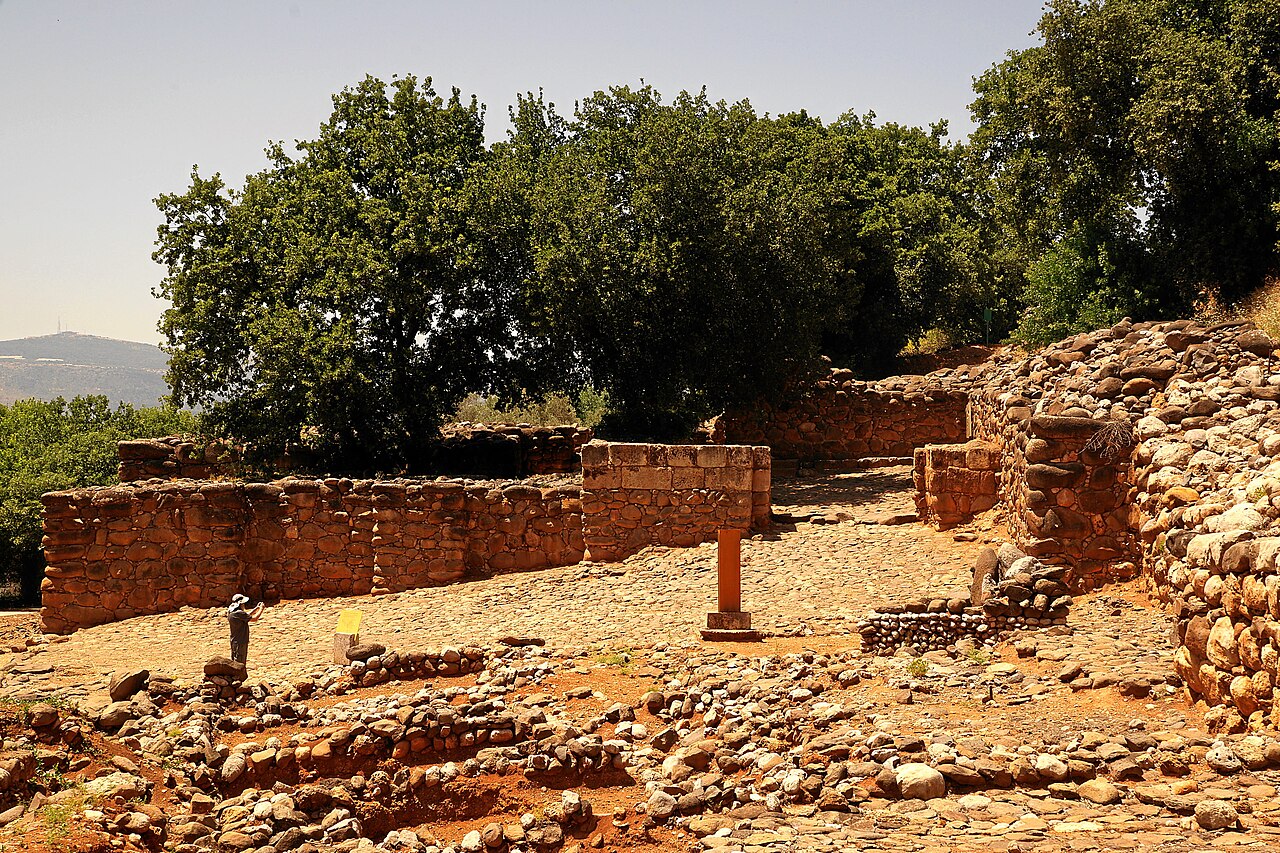
In Israelite towns legal cases were heard by elders at the city gate and in the adjoining square (Deuteronomy 21:19; Ruth 4:1–11; Amos 5:10, 15). Excavated gates, such as those at Tel Dan, Megiddo and Gezer, have benches and open plazas. When Isaiah 59:14 says that "truth is fallen in the street, and equity cannot enter," it pictures justice personified, unable to get through the gate where justice was done.
The divine warrior's armor
God dresses for battle in 59:17: righteousness as breastplate, salvation as helmet, vengeance as garment, zeal as cloak. The Wisdom of Solomon 5:17–20 (1st century BC) develops the image; Paul gives "the breastplate of faith and love; and for an helmet, the hope of salvation" to believers (1 Thessalonians 5:8), and Ephesians 6:14–17 "the breastplate of righteousness… the helmet of salvation." Each writer changes the image: in Isaiah God fights because no human will; in the letters believers wear the armor. The same warrior returns, stained, in 63:1–6.
Romans 11:26–27
Paul quotes 59:20–21 to support "all Israel shall be saved": "There shall come out of Sion the Deliverer, and shall turn away ungodliness from Jacob: For this is my covenant unto them, when I shall take away their sins." The Hebrew has "to Zion" and "to those who turn from transgression"; the library's Greek has "for the sake of Zion" and "he will turn away ungodliness"; Paul has "out of Zion" and adds Isaiah 27:9. Each change shifts who acts and where the redeemer comes from. See the passage page.
Spirit and word for ever
Verse 21 promises that God's spirit and words will remain in the mouth of the addressee and his descendants "from henceforth and for ever." It has been read of the prophet and his disciples (compare 8:16; 50:4), of the people as bearers of revelation, and, in Christian reading, of the Spirit given to the church. The text does not specify.
What the evidence shows
- Romans 3:15–17 quotes Isaiah 59:7–8.
- Romans 11:26 quotes Isaiah 59:20 with "out of Zion."
- Ephesians 6 and 1 Thessalonians 5 adapt the armor of Isaiah 59:17.
- Isaiah 59:9–15 is a communal confession.
Continue the journey
Journey of a PassageIsaiah 59:20–21: "The Redeemer shall come to Zion": to Zion, for Zion, out of Zion (Romans 11:26)"And the Redeemer shall come to Zion, and unto them that turn from transgression in Jacob, saith the Lord." The Hebrew says the redeemer comes to Zion for those in Jacob who repent.More from this lesson
Echoes Across Civilizations
Optional: how other ancient peoples told similar stories. Open one to compare, then come back to the lesson.
The God who marches out to battleCanaanite (Ugarit) · Assyrian · Israelite
Did other ancient peoples sing of a god who comes from his mountain in storm, shaking the earth, with heaven fighting for his people?
- Canaanite (Ugarit): Baal the storm god Shared literary world
- Assyrian: Royal inscriptions of the storm god Adad Resemblance only
- Israelite: "YHWH of Teman" Possible historical contact
Also covered: A battle in the sky?, clearly labeled as a modern theory.
Compare side by side →Why this matters to the rest of Scripture
- "Their feet are swift to shed blood."
- "There shall come out of Sion the Deliverer."
- The armor of God.
- The warrior returns.