Isaiah 21: Watchman, What of the Night?
Babylon is fallen, a question from Seir, and caravans in the Arabian desert
"The burden of the desert of the sea. As whirlwinds in the south pass through; so it cometh from the desert, from a terrible land. A grievous vision is declared unto me… Go up, O Elam: besiege, O Media… Therefore are my loins filled with pain… The night of my pleasure hath he turned into fear unto me" (21:1–4).
"Prepare the table, watch in the watchtower, eat, drink: arise, ye princes, and anoint the shield. For thus hath the Lord said unto me, Go, set a watchman, let him declare what he seeth… And, behold, here cometh a chariot of men, with a couple of horsemen. And he answered and said, Babylon is fallen, is fallen; and all the graven images of her gods he hath broken unto the ground. O my threshing, and the corn of my floor" (vv. 5–10).
"The burden of Dumah. He calleth to me out of Seir, Watchman, what of the night? Watchman, what of the night? The watchman said, The morning cometh, and also the night: if ye will enquire, enquire ye: return, come" (vv. 11–12).
| Verses | What it says | What to notice |
|---|---|---|
| 21:1–2 | The desert of the sea; a harsh vision; Elam and Media go up | "Desert of the sea": southern Mesopotamia (the "Sealand") or a riddle-name for Babylon. |
| 21:3–4 | The prophet's body convulses like a woman in labor; his longed-for twilight turns to terror | Prophetic suffering: compare Jeremiah 4:19; Habakkuk 3:16. |
| 21:5 | Set the table, eat, drink; rise, princes, oil the shield | A feast interrupted by war (later linked with Belshazzar's feast, Daniel 5). |
| 21:6–9 | Post a lookout; riders in pairs, donkeys, camels; the lookout cries; Babylon is fallen, fallen; its idols shattered | The cry repeated in Revelation 14:8 and 18:2. |
| 21:10 | O my threshed and winnowed one: I have told you what I heard | Israel as grain on the threshing floor. |
| 21:11–12 | Dumah: a voice from Seir, "Watchman, what of the night?" Morning comes, and night too; ask again | Dumah: an Arabian oasis, and a pun on "silence"; Seir is Edom. |
| 21:13–15 | Arabia: Dedanite caravans camp in thickets; Tema brings water and bread to fugitives from the sword | Tema (Tayma) and Dedan (al-Ula): oases in northwest Arabia. |
| 21:16–17 | Within a year, like a hireling's year, Kedar's glory ends; few archers left | Kedar: a powerful Arab tribal confederation. |
Babylon, Elam and Media
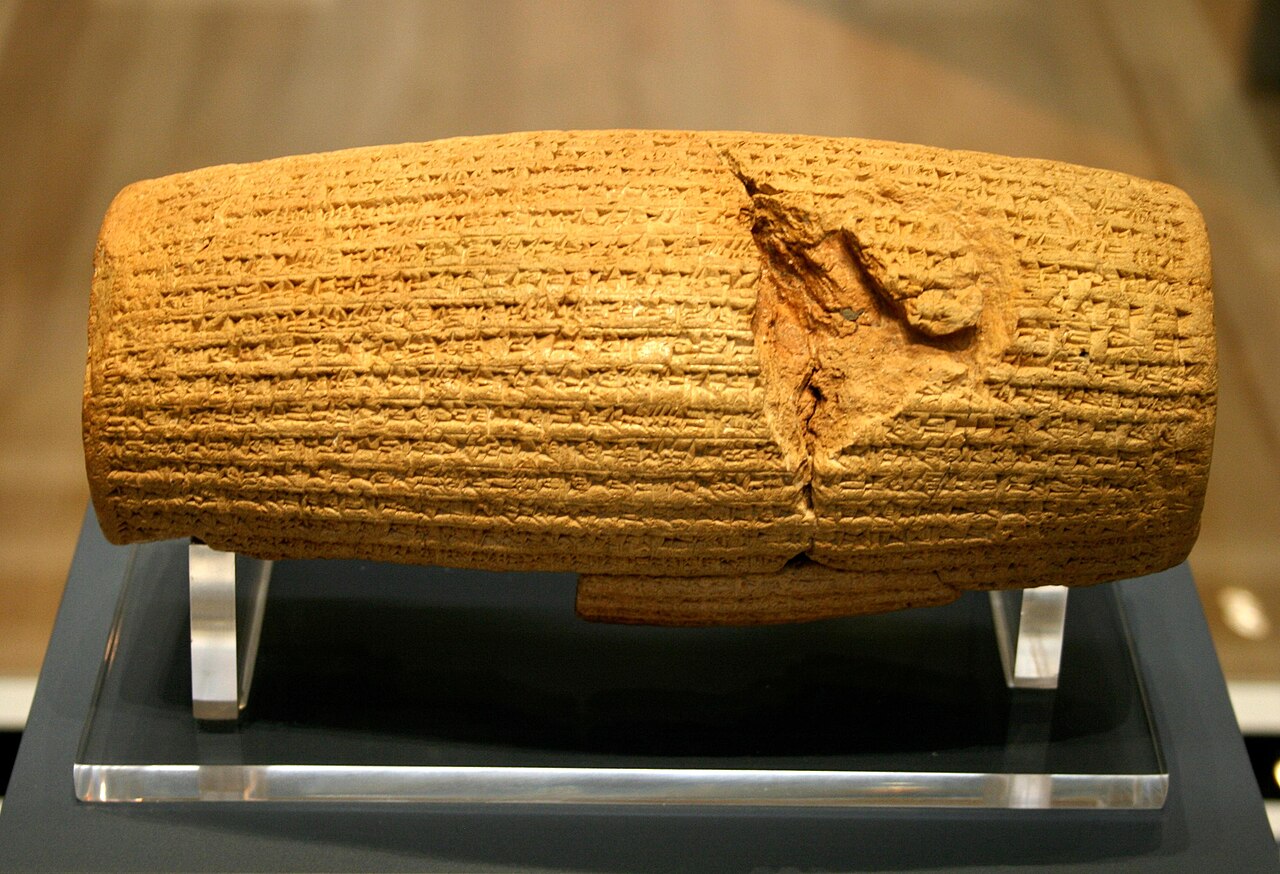
Elam (southwest Iran) and Media (northwest Iran) appear together as Babylon's attackers. In 539 BC Cyrus's Persians, heirs of Elam's land, with the Medes in their empire, took Babylon. But Elamites also fought beside Babylon against Assyria in Isaiah's own time (Merodach-baladan's revolts, 710 and 703–700 BC), and Sennacherib destroyed Babylon in 689. Scholars therefore date 21:1–10 either to the 8th–7th century (Babylon's fall to Assyria, a warning against trusting Babylon's revolt) or to the 540s (Babylon's fall to Cyrus). Nabonidus, Babylon's last king, spent about ten years at Tema in Arabia (c. 552–543 BC), which gives the Arabian oracles of vv. 13–17 another possible context.
A lion or the seer? (21:8)
The Masoretic Text reads "and he cried, A lion (aryeh)" (KJV). The Great Isaiah Scroll reads "and the seer (ha-ro'eh) cried," a reading that makes plain sense and differs by the order of a few letters (אריה / הראה). The library's Greek reads "call Uriah to the watchtower" (Giguet: "appelle Urie"), apparently reading a name from the same letters. Many modern translations follow the scroll: "Then the lookout called out." The Cave 4 copy 4Q55 is restored at this word in the transcription and cannot decide it.
"Babylon is fallen, is fallen"
Jeremiah 51:8 says "Babylon is suddenly fallen." Revelation 14:8 and 18:2 take up Isaiah's doubled cry ("Babylon is fallen, is fallen, that great city") for Rome or for the world-city opposed to God. Revelation adapts the wording and joins it with Jeremiah 51 and Isaiah 13:21; it is a later reuse in a new setting, not a copy of the oracle.
What the evidence shows
- The Masoretic Text of 21:8 reads "a lion"; the Great Isaiah Scroll reads "the seer." Transcription; image check open.
- Revelation 14:8 and 18:2 reuse the cry "Babylon is fallen, is fallen."
- Isaiah 21:1–10 describes Cyrus's conquest of Babylon in 539 BC. Others read it of Assyria's campaigns against Babylon (710–689 BC).
- Nabonidus lived at Tema for about ten years. Nabonidus Chronicle and Harran inscriptions; reported.
Continue the journey
Journey of a PassageIsaiah 21:8–9: A lion or the seer? "Babylon is fallen, is fallen""And he cried, A lion" (KJV, Masoretic aryeh).More from this lesson
Why this matters to the rest of Scripture
- Isaiah 13; 47Other oracles on Babylon.
- Jeremiah 51:8; Revelation 14:8; 18:2"Babylon is fallen."
- Another prophet on his watchtower.
- Genesis 25:3, 13–15Dedan, Kedar, Dumah and Tema in the genealogies.