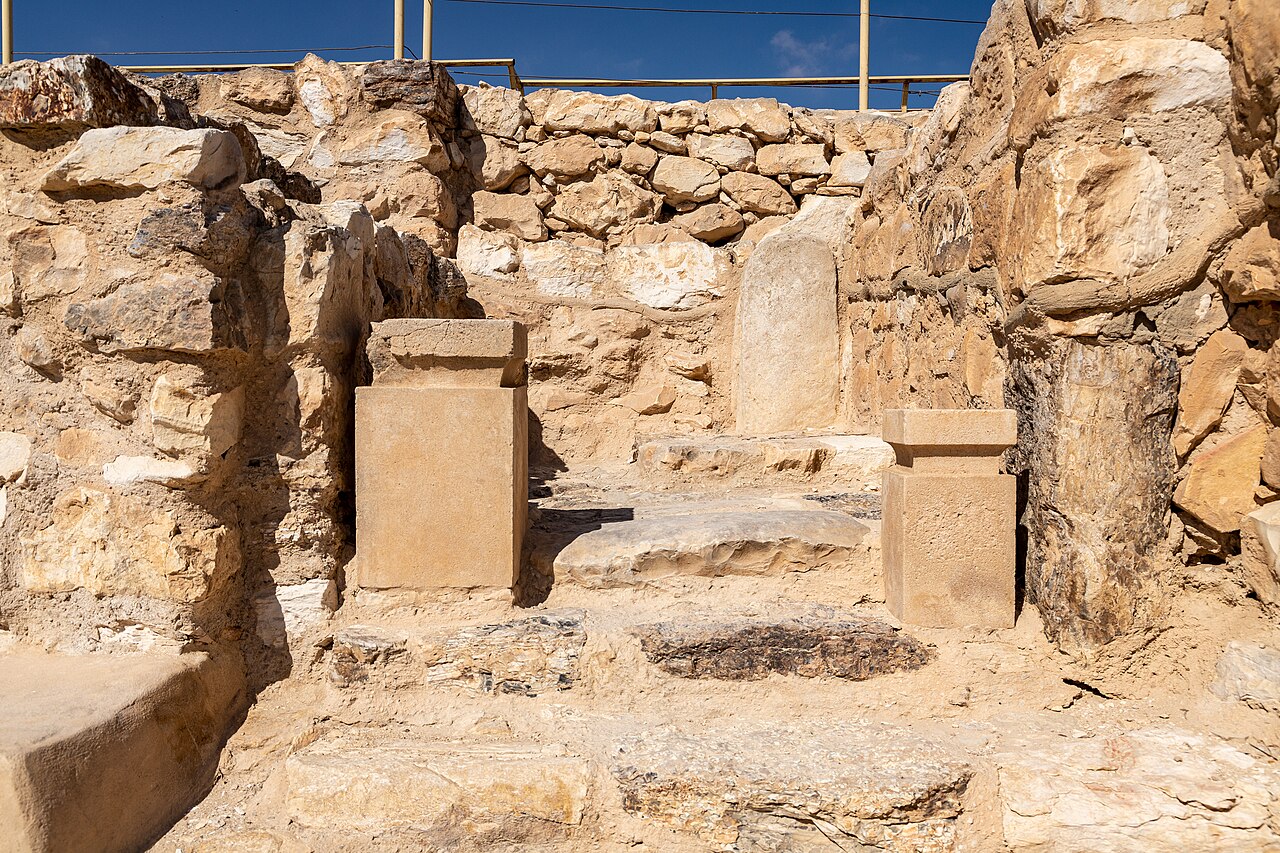
Isaiah 6: Holy, Holy, Holy
The throne vision, the seraphim, a burning coal, and a commission to a people who will not hear
"In the year that king Uzziah died I saw also the Lord sitting upon a throne, high and lifted up, and his train filled the temple. Above it stood the seraphims: each one had six wings; with twain he covered his face, and with twain he covered his feet, and with twain he did fly" (6:1–2).
"And one cried unto another, and said, Holy, holy, holy, is the LORD of hosts: the whole earth is full of his glory. And the posts of the door moved at the voice of him that cried, and the house was filled with smoke" (vv. 3–4). "Then said I, Woe is me! for I am undone; because I am a man of unclean lips, and I dwell in the midst of a people of unclean lips: for mine eyes have seen the King, the LORD of hosts" (v. 5).
"Then flew one of the seraphims unto me, having a live coal in his hand, which he had taken with the tongs from off the altar: and he laid it upon my mouth, and said, Lo, this hath touched thy lips; and thine iniquity is taken away, and thy sin purged. Also I heard the voice of the Lord, saying, Whom shall I send, and who will go for us? Then said I, Here am I; send me" (vv. 6–8).
"And he said, Go, and tell this people, Hear ye indeed, but understand not; and see ye indeed, but perceive not. Make the heart of this people fat, and make their ears heavy, and shut their eyes; lest they see with their eyes, and hear with their ears, and understand with their heart, and convert, and be healed" (vv. 9–10). "Then said I, Lord, how long? And he answered, Until the cities be wasted without inhabitant… But yet in it shall be a tenth… as a teil tree, and as an oak, whose substance is in them, when they cast their leaves: so the holy seed shall be the substance thereof" (vv. 11–13).
| Verses | What it says | What to notice |
|---|---|---|
| 6:1 | The year Uzziah died: the Lord enthroned, high and exalted; his robe fills the temple | About 740 BC. A vision set in the temple, or in a heavenly temple of which it is the image. |
| 6:2 | Seraphim with six wings: covering face, feet, flying | Saraph: "burning one"; elsewhere a fiery serpent (Numbers 21:6; Isaiah 14:29; 30:6). |
| 6:3 | Holy, holy, holy; the whole earth full of his glory | The Trisagion: threefold repetition expresses the superlative. |
| 6:4 | Doorposts shake, the house fills with smoke | Theophany signs (Exodus 19:18; 1 Kings 8:10–11). |
| 6:5 | Woe is me: unclean lips; I have seen the King | Seeing God's holiness exposes human impurity. |
| 6:6–7 | A coal from the altar on his lips; guilt removed, sin atoned (kipper) | Purification of the mouth that will speak. |
| 6:8 | Whom shall I send, who will go for us? Here am I, send me | "Us": the heavenly council (compare 1 Kings 22:19–22). |
| 6:9–10 | Hear but do not understand; make their heart fat, ears heavy, eyes shut, lest they turn and be healed | The hardening commission: quoted in all four Gospels and Acts. |
| 6:11–12 | How long? Until cities are desolate and the people far removed | Judgment through exile. |
| 6:13 | A tenth remains, burned again; a stump like a felled terebinth or oak: the holy seed | The last clause is absent from the library's Greek (see the passage page). |
Seraphim and Near Eastern iconography
In Egypt, the uraeus, a rearing winged cobra, protected the pharaoh's head; winged serpents appear on Judean seals and on royal seal impressions of the late 8th century. Isaiah's seraphim ("burning ones") may draw on this imagery of fiery, winged guardians, now humbly covering themselves before the true King. Six wings, two used for covering, express reverence. This is a comparison of images, not a claim that Isaiah saw Egyptian deities.
Temple, altar and coal
The coal comes from the altar (mizbeach): either the incense altar inside the temple or the altar of burnt offering, both places of atonement (Leviticus 16:12). Fire purifies; the coal on the lips is a ritual sign of the cleansing that makes Isaiah fit to speak for God.
In the 8th century BC, the commission explains in advance the result of Isaiah's preaching: Judah's leaders will not listen (see Ahaz in chapter 7), and judgment will come. Many scholars read it as written in retrospect, interpreting the prophet's failure as part of God's purpose; others take it as the original call. In either case it is hyperbolic prophetic speech, not a statement that God prevents willing people from repenting.
The Targum of Isaiah softens the commands into descriptions ("this people hears but does not understand"), and rabbinic tradition linked v. 10's "be healed" to repentance. The library's Greek also makes v. 10 descriptive: "the heart of this people has grown fat… lest they… turn to me and I heal them." The Great Isaiah Scroll's v. 10 is reported to read hashem ("make desolate/appalled") instead of hashmen ("make fat"), a one-letter difference.
Isaiah 6:9–10 is quoted or alluded to in Matthew 13:13–15, Mark 4:12, Luke 8:10, John 12:39–41 and Acts 28:25–27, and echoed in Romans 11:8. Matthew 13:14–15 and Acts 28:26–27 quote the Greek form (descriptive "has grown fat"); Mark 4:12 is a short adaptation ("lest at any time they should be converted, and their sins should be forgiven"); John 12:40 has its own form and adds "These things said Esaias, when he saw his glory, and spake of him" (12:41), reading the vision as a vision of Christ's glory. Each Gospel's wording stays separate.
Christian liturgy made v. 3 the Sanctus ("Holy, holy, holy, Lord God of hosts"), and Jewish liturgy made it the Kedushah; Revelation 4:8 adapts it. Trinitarian readings of the threefold "holy" and the "us" of v. 8 are later Christian theology; the Hebrew repetition expresses the superlative. Some modern preachers read v. 8 as a general call to mission, which is an application of the text, not its original setting.
6:13: "the holy seed" and the Greek
The last words of v. 13, "the holy seed shall be the substance thereof" (zera qodesh matstsavtah), are absent from the library's Greek (Giguet ends the verse with the falling acorn) and are commonly said to be absent from the Old Greek. The Great Isaiah Scroll is reported to read the verse with different wording in the middle ("cast out" for "stump"). Some scholars think the hopeful final clause is a later addition to an oracle of total judgment; others defend it as original. Its absence from the Greek is a fact of the Greek tradition; its origin is debated.
What the evidence shows
- Isaiah's vision is dated to the year Uzziah died (about 740 BC).
- Matthew 13:14–15 and Acts 28:26–27 quote Isaiah 6:9–10 in its Greek form.Source: The site's library: Westminster Leningrad Codex, KJV, Clementine Vulgate, Giguet's French of the Greek
- The Great Isaiah Scroll reads hashem ("make desolate") for hashmen ("make fat") in 6:10. In the transcription; image check open.Source: 1QIsa-a and 1QIsa-b: M. Abegg's transcription, ETCBC/CACCHT Dead Sea Scrolls dataset v2.0.5 (CC BY-NC 4.0), read by the site's script; images: Israel Museum / Leon Levy Digital Library; edition: DJD XXXII (2010)
- The final clause of 6:13 is absent from the Greek. Absent in the library's Greek; Ziegler check open.
- The threefold "holy" teaches the Trinity. A later Christian reading; the Hebrew repetition expresses the superlative.
Continue the journey
Journey of a PassageIsaiah 6:1–8: The throne vision: seraphim, "Holy, holy, holy," and the coalIsaiah sees the Lord enthroned and seraphim calling "Holy, holy, holy." The Great Isaiah Scroll differs in v.More from this lesson
Echoes Across Civilizations
Optional: how other ancient peoples told similar stories. Open one to compare, then come back to the lesson.
Serpents that healMidianite (probably) · Egypt · Greek
Did other ancient peoples use serpent images for healing or protection?
- Midianite (probably): The copper snake of the Timna shrine Possible historical contact
- Egypt: Snake-bite magic and the uraeus Possible historical contact
- Greek: The rod of Asclepius Resemblance only
The heavenly council and the nationsUgarit · Mesopotamia · Second Temple Judaism
Did other ancient peoples picture a high god ruling a council of divine beings who were assigned to the nations?
- Ugarit: El and "the sons of El" (bn ilm) Possible historical contact
- Mesopotamia: The assembly of the gods (Enuma Elish, Atrahasis) Resemblance only
- Second Temple Judaism: Angels over the nations (Daniel, Jubilees, 1 Enoch) Shared literary world
The assembly of heavenUgaritic · Babylonian
Did other peoples imagine a council of gods around a supreme god?
- Ugaritic: The assembly of El Shared literary world
- Babylonian: The assembly of the gods in Enuma Elish and Atrahasis Shared literary world
Why this matters to the rest of Scripture
- Micaiah sees the LORD enthroned with the host of heaven.
- Ezekiel's throne vision.
- Matthew 13:13–15; Mark 4:12; Luke 8:10; John 12:39–41; Acts 28:25–27The hardening text in the Gospels and Acts.
- "Holy, holy, holy, Lord God Almighty".
- Fiery serpents (seraphim) and the bronze serpent.