Isaiah 44: I Am the First and the Last
The Spirit on Jacob's offspring, the carpenter's god, and Cyrus my shepherd
"For I will pour water upon him that is thirsty, and floods upon the dry ground: I will pour my spirit upon thy seed… One shall say, I am the Lord's… and another shall subscribe with his hand unto the Lord" (44:3–5). "Thus saith the Lord the King of Israel… I am the first, and I am the last; and beside me there is no God" (v. 6).
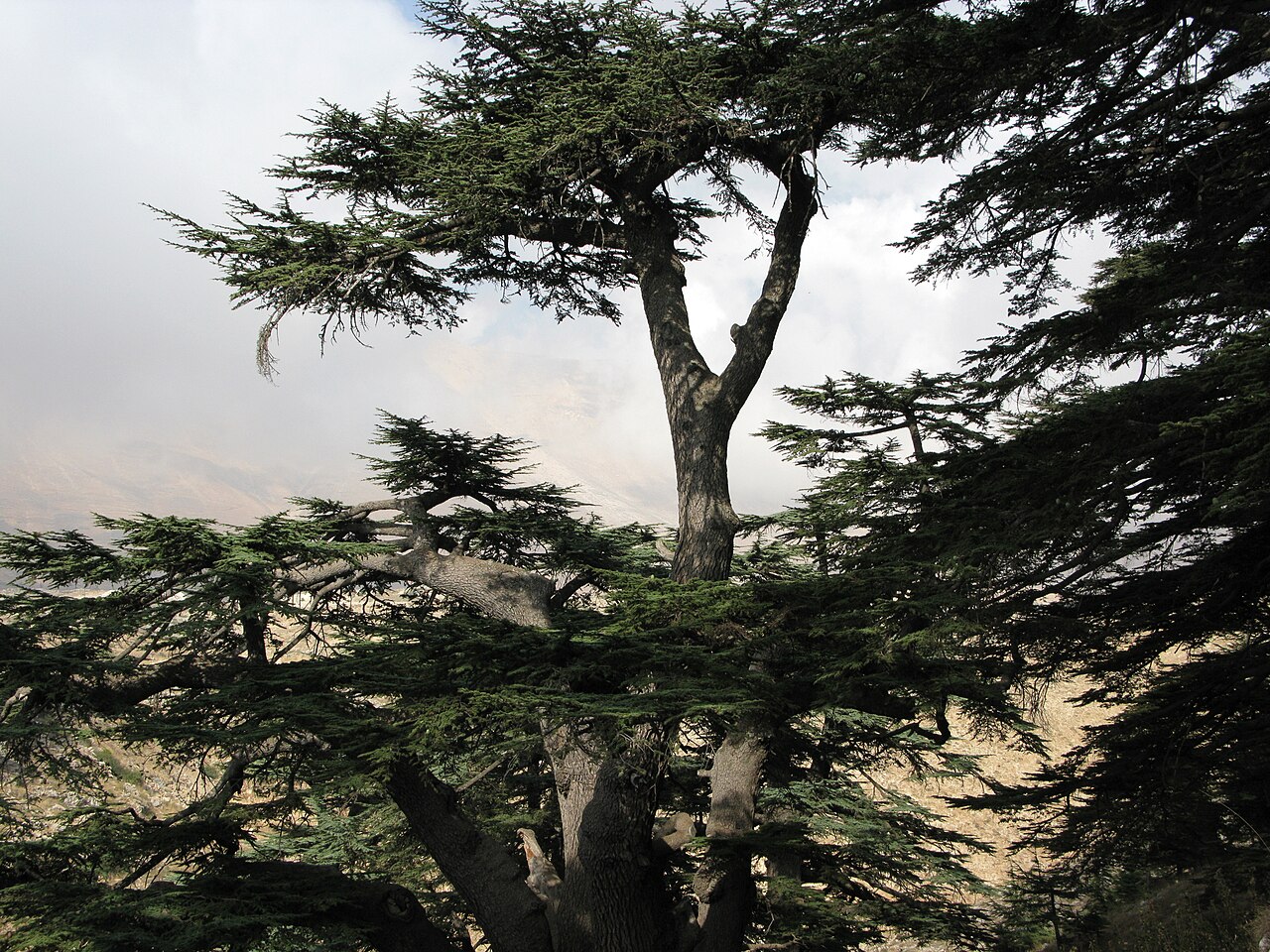
"He heweth him down cedars… He burneth part thereof in the fire; with part thereof he eateth flesh… yea, he warmeth himself, and saith, Aha, I am warm, I have seen the fire: And the residue thereof he maketh a god, even his graven image: he falleth down unto it, and worshippeth it, and prayeth unto it, and saith, Deliver me; for thou art my god" (vv. 14–17).
"He feedeth on ashes: a deceived heart hath turned him aside, that he cannot deliver his soul, nor say, Is there not a lie in my right hand?" (v. 20). "I am the Lord that maketh all things… That saith of Cyrus, He is my shepherd, and shall perform all my pleasure: even saying to Jerusalem, Thou shalt be built; and to the temple, Thy foundation shall be laid" (vv. 24–28).
| Verses | What it says | What to notice |
|---|---|---|
| 44:1–5 | Jacob my servant, Jeshurun: water on thirsty ground, my Spirit on your offspring; they will say "I am the LORD's," write it on their hands | Jeshurun: a poetic name for Israel (Deuteronomy 32:15; 33:5, 26). |
| 44:6–8 | The King and Redeemer: I am first and last; no God besides me; who announced the future? You are my witnesses; there is no Rock but me | Revelation 1:8, 17; 22:13 echo "first and last." |
| 44:9–11 | Idol makers are nothing; their witnesses see nothing; the craftsmen are only human | Contrast: Israel are God's witnesses. |
| 44:12–13 | The smith works with tongs and coals until he is hungry and faint; the carpenter measures and shapes a man's form for a shrine | A god made by a tired worker. |
| 44:14–17 | He plants a tree, the rain grows it; half for fuel to warm himself and bake bread; the rest he makes a god and prays: save me | The heart of the satire. |
| 44:18–20 | They do not know; no one thinks: shall I bow to a block of wood? He feeds on ashes; is there not a lie in my right hand? | Self-deception. |
| 44:21–23 | Remember, Israel, you are my servant; I have swept away your sins like a cloud; return; sing, heavens, earth, mountains, forest | A hymn interrupting the argument. |
| 44:24–28 | Your Redeemer, maker of all, stretched out the heavens alone; frustrates diviners; says to Jerusalem: be inhabited; to the deep: be dry; to Cyrus: my shepherd; to the temple: be founded | The first naming of Cyrus. |
Making and animating gods
Mesopotamian cult statues of wood, overlaid with gold and precious stones, were made in temple workshops and then brought to life in a night-long ritual called "washing of the mouth" (mis pi) and "opening of the mouth" (pit pi), known from 1st-millennium tablets from Nineveh and Babylon. In it the craftsmen's tools were thrown into a river and the craftsmen swore, "I did not make him; Ninagal, Kusibanda … made him" (reported; C. Walker and M. Dick, 2001). Isaiah's satire says exactly what the ritual denied: a human workman made it. This is an independently documented parallel in practice; it is not evidence that Isaiah knew or referred to a particular ritual text, and nothing in Isaiah 44 quotes one. See the Echo "Making and animating gods."
Cyrus named
"That saith of Cyrus, He is my shepherd" (44:28) and "to his anointed, to Cyrus" (45:1): the only places in the Bible where a future (or contemporary) foreign king is named in a prophecy of this kind (compare Josiah in 1 Kings 13:2). Traditional readers see a prediction by the 8th-century prophet; Josephus (Antiquities 11.5–7) says Cyrus himself read the prophecy "written 210 years before" and was moved to fulfill it. Most scholars date these chapters to the 540s, when Cyrus's rise was under way; a few propose that the name was added to an earlier text. The site presents all three and the evidence each relies on in "From Babylon to Cyrus."
Writing on the hand
"Another shall subscribe with his hand unto the LORD" (44:5): literally "write on his hand, 'Belonging to the LORD' (la-YHWH)." Slaves were sometimes marked with their owner's name (Babylonian and Elephantine documents mention slave marks; reported); here the mark is chosen, a sign of belonging. Leviticus 19:28 forbids cutting or marking the skin for the dead; whether 44:5 means a tattoo, ink or a metaphor is debated.
The scroll and the Greek
The Great Isaiah Scroll adds "his name" in 44:6 ("the LORD of hosts is his name"; described from a transcription). The library's Greek reads 44:28 "who says to Cyrus, Be wise (or: think)," not "my shepherd," apparently reading the Hebrew ro'i ("my shepherd") as a form of "think" (Giguet: "Sois prudent"), and has God himself lay the foundations of "my holy temple."
What the evidence shows
- Isaiah 44:28 names Cyrus as God's shepherd.
- Josephus says Cyrus read Isaiah's prophecy about himself. Antiquities 11.5–7.
- Cyrus read Isaiah's prophecy. Josephus's claim; no Persian source.
- Mesopotamian cult statues were animated by a mouth-washing ritual. Mis pi texts; reported.
- Isaiah 44 refers directly to the mis pi ritual texts. The parallel is in practice; no textual dependence is shown.
Continue the journey
Journey of a PassageIsaiah 44:6–8: "I am the first, and I am the last""Thus saith the Lord the King of Israel, and his redeemer the Lord of hosts; I am the first, and I am the last; and beside me there is no God." The Great Isaiah Scroll adds "his name" ("the LORD of hosts is his name").More from this lesson
Echoes Across Civilizations
Optional: how other ancient peoples told similar stories. Open one to compare, then come back to the lesson.
Making and animating godsBabylonian and Assyrian · Egyptian · Babylonian · Assyrian
How were cult statues made and brought to life in the ancient Near East, and how do the prophets' satires of idol-making compare?
- Babylonian and Assyrian: Mouth-washing and mouth-opening ritual (mis pi / pit pi) Possible historical contact
- Egyptian: Opening of the Mouth ritual Resemblance only
- Babylonian: The New Year (akitu) festival and the journeys of Marduk and Nabu Possible historical contact
- Assyrian: Esarhaddon's renewal of the gods of Babylon Possible historical contact
Why this matters to the rest of Scripture
- Jeremiah 10:1–16; Psalm 115:4–8Idols mocked.
- Revelation 1:8, 17; 22:13The first and the last.
- Cyrus's proclamation.
- Deuteronomy 32:15; 33:26Jeshurun.