Isaiah 29: Woe to Ariel
Jerusalem besieged and rescued, a sealed book, lip-worship, the potter and the clay, and the deaf who hear
"Woe to Ariel, to Ariel, the city where David dwelt! add ye year to year; let them kill sacrifices. Yet I will distress Ariel… And I will camp against thee round about… And thou shalt be brought down, and shalt speak out of the ground… and thy voice shall be, as of one that hath a familiar spirit, out of the ground" (29:1–4).
"And the multitude of all the nations that fight against Ariel… shall be as a dream of a night vision. It shall even be as when an hungry man dreameth, and, behold, he eateth; but he awaketh, and his soul is empty" (vv. 7–8).
"And the vision of all is become unto you as the words of a book that is sealed, which men deliver to one that is learned, saying, Read this, I pray thee: and he saith, I cannot; for it is sealed" (v. 11). "Forasmuch as this people draw near me with their mouth, and with their lips do honour me, but have removed their heart far from me, and their fear toward me is taught by the precept of men…" (v. 13).
"Shall the work say of him that made it, He made me not?… And in that day shall the deaf hear the words of the book, and the eyes of the blind shall see out of obscurity" (vv. 16–18).
| Verses | What it says | What to notice |
|---|---|---|
| 29:1–4 | Woe to Ariel, David's city; festivals year after year; God besieges it; its voice comes from the dust like a ghost's | Ariel: "altar hearth" (Ezekiel 43:15–16) or "lion of God." |
| 29:5–8 | Suddenly the foes become dust and chaff; God comes with thunder; the attackers vanish like a hungry man's dream | The pattern of 701 BC: threat, then sudden deliverance. |
| 29:9–12 | Stupor and blindness; prophets' eyes closed; the vision a sealed book to the literate and the illiterate | Writing, sealing and reading were real practices; here they are a metaphor. |
| 29:13–14 | Lip-service, fear of God learned by rote; so God will do wonders and the wise will lose their wisdom | Quoted by Jesus (Mark 7:6–7; Matthew 15:8–9) and Paul (1 Corinthians 1:19). |
| 29:15–16 | Woe to those who hide their plans from God: you turn things upside down, as if clay could judge the potter | Compare 45:9; Romans 9:20–21. |
| 29:17–21 | Lebanon a garden; the deaf hear, the blind see; the humble rejoice; the tyrant and scoffer gone, and those who pervert justice at the gate | Compare 35:5–6. |
| 29:22–24 | God who redeemed Abraham: Jacob no longer ashamed; the confused learn understanding | The only mention of Abraham's redemption in the Bible. |
Ariel and the altar hearth
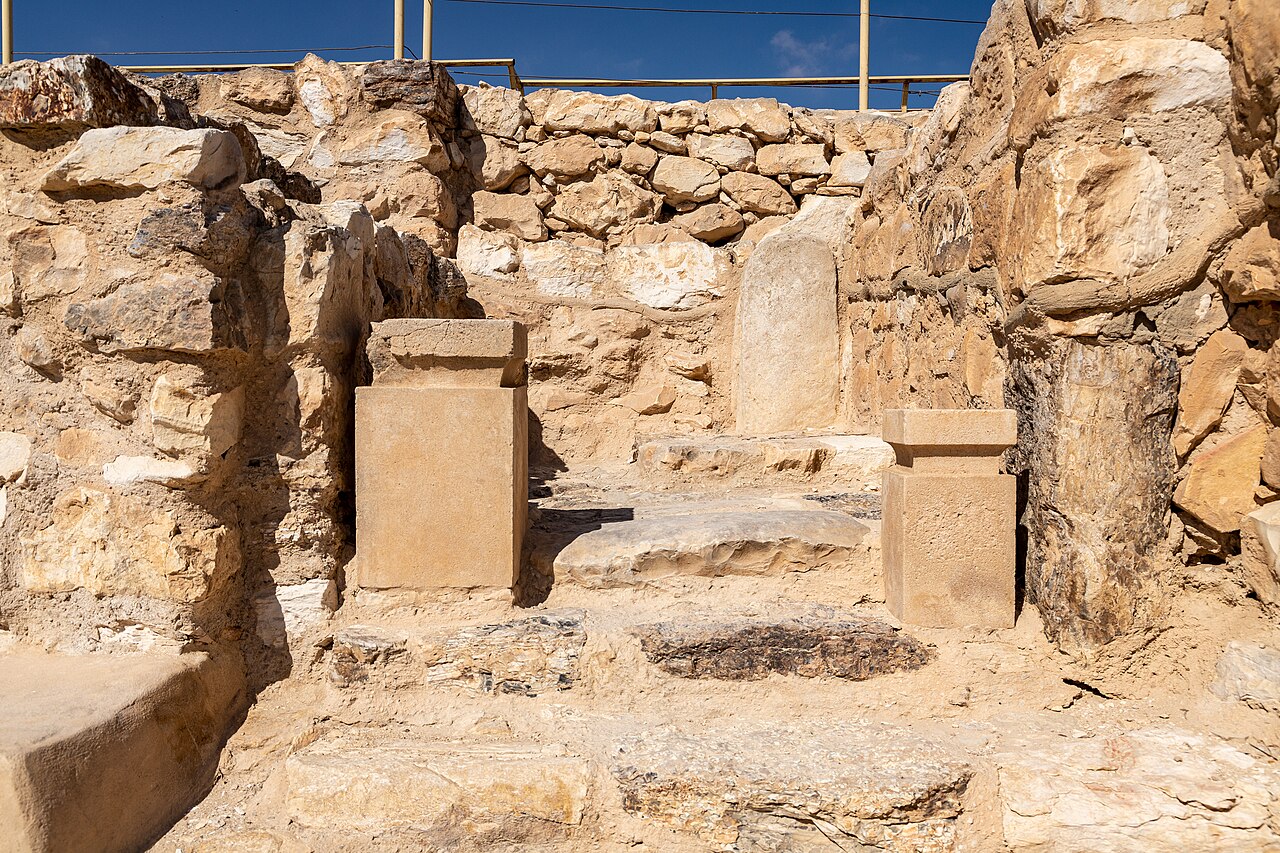
Ezekiel 43:15–16 calls the top of the altar the har'el or ari'el, the "altar hearth." The Mesha Stele (c. 840 BC) says Mesha took from Ataroth "the 'r'l of DWDH" and dragged it before Chemosh: probably an altar hearth (the meaning of DWDH is debated). Calling Jerusalem "Ariel" may mean "altar-hearth city": the place of sacrifice that will itself become "like an altar hearth," burning (v. 2). It may also play on "lion of God."
29:13 in the Gospels
Mark 7:6–7 and Matthew 15:8–9 report Jesus quoting 29:13 against the tradition of hand-washing: "This people honoureth me with their lips, but their heart is far from me. Howbeit in vain do they worship me, teaching for doctrines the commandments of men." The phrase "in vain do they worship me" follows the Greek; the Hebrew says "their fear of me is a commandment of men learned by rote." Each Gospel has its own wording and setting. The Great Isaiah Scroll reads "as a commandment of men" (described from a transcription). The saying addresses a dispute among Jews about tradition; it is not a judgment on Jewish worship as such, and the site reads it in that context.
The sealed book
Ancient documents were rolled, tied and sealed with clay bullae; hundreds of such seal impressions survive from Judah (see the Hezekiah bulla). In 29:11–12 the sealed book is a picture of a people who cannot understand God's word, not a physical scroll. Later apocalyptic writing used sealed books for hidden revelation (Daniel 12:4; Revelation 5).
What the evidence shows
- Mark 7:6–7 and Matthew 15:8–9 report Jesus quoting Isaiah 29:13 in a Greek form.
- The Mesha Stele mentions an 'r'l, probably an altar hearth. Reported; the meaning of DWDH is debated.
- "Ariel" in Isaiah 29 means "altar hearth." Also read as "lion of God."
- 1 Corinthians 1:19 quotes Isaiah 29:14.
Continue the journey
Journey of a PassageIsaiah 29:13–14: Lips near, heart far: Isaiah 29:13 in the Gospels"This people draw near me with their mouth, and with their lips do honour me, but have removed their heart far from me, and their fear toward me is taught by the precept of men." Mark 7:6–7 and Matthew 15:8–9 report Jesus quoting the verse, in a form that follows the Greek ("in vain do they worship me, teaching for doctrines the commandments of men").More from this lesson
Echoes Across Civilizations
Optional: how other ancient peoples told similar stories. Open one to compare, then come back to the lesson.
Calling up the deadMesopotamian · Greek · Israelite
Did other ancient peoples try to consult the dead, and how?
- Mesopotamian: Ghost-raising rituals and Gilgamesh XII Shared literary world
- Greek: The Odyssey, book 11 (the Nekyia) Resemblance only
- Israelite: Isaiah against necromancers Possible historical contact
Also covered: A hologram at En-dor?, clearly labeled as a modern theory.
Compare side by side →Why this matters to the rest of Scripture
- Mark 7:1–13; Matthew 15:1–9Jesus on tradition and the heart.
- 1 Corinthians 1:19; Romans 9:20–21The wisdom of the wise; the potter.
- The altar hearth.
- Isaiah 6:9–10; 35:5Blindness and deafness, then healing.