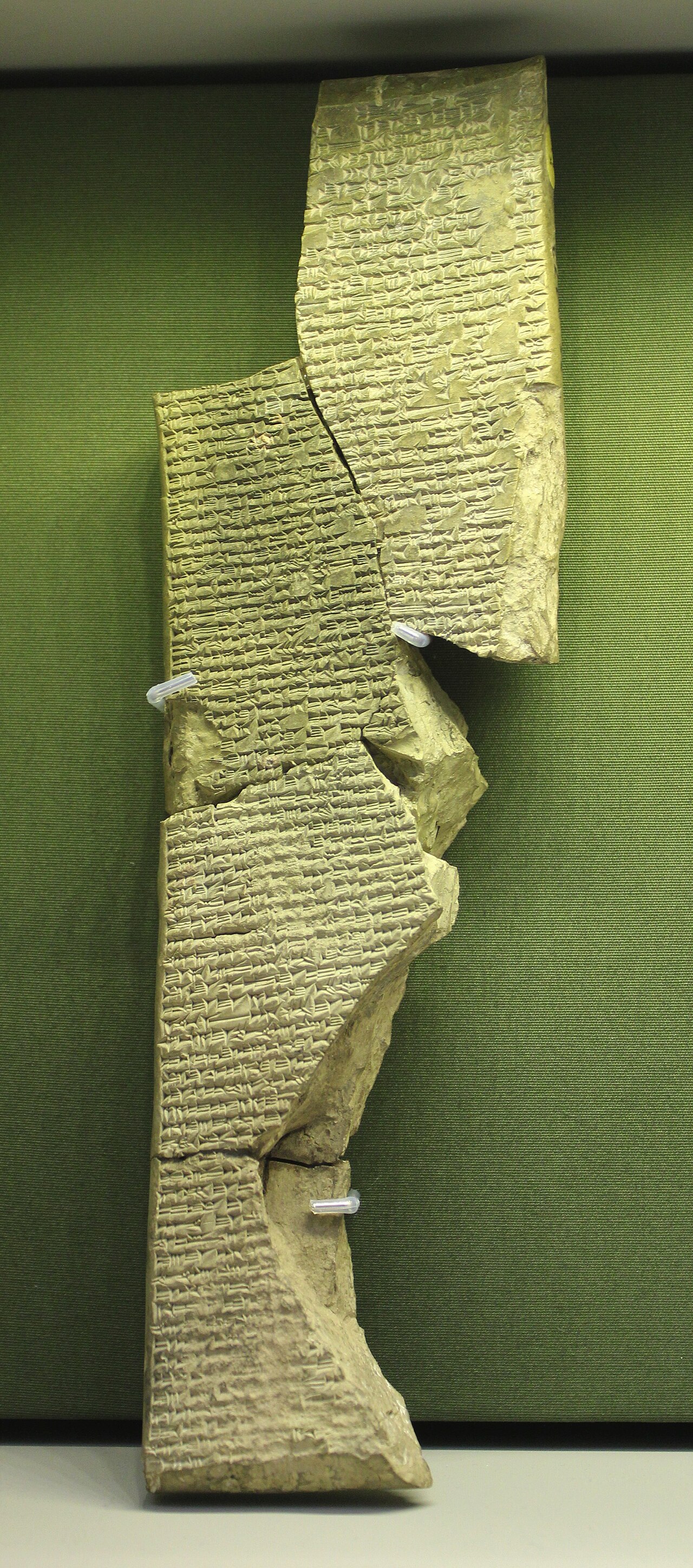
Investigation: The Holy One and the Sea Monsters
Seraphim, the heavenly council, the Creator, Rahab and Leviathan: ancient motifs and Isaiah's claims
"I saw also the Lord sitting upon a throne, high and lifted up, and his train filled the temple. Above it stood the seraphims: each one had six wings… And one cried unto another, and said, Holy, holy, holy, is the LORD of hosts" (6:1–3). "Also I heard the voice of the Lord, saying, Whom shall I send, and who will go for us?" (6:8).
"In that day the LORD with his sore and great and strong sword shall punish leviathan the piercing serpent, even leviathan that crooked serpent; and he shall slay the dragon that is in the sea" (27:1). "Awake, awake, put on strength, O arm of the LORD… Art thou not it that hath cut Rahab, and wounded the dragon? Art thou not it which hath dried the sea?" (51:9–10).
"I am the LORD, and there is none else, there is no God beside me… I form the light, and create darkness: I make peace, and create evil: I the LORD do all these things" (45:5–7).
| Isaiah | Closest ancient comparison | What the comparison shows | What it does not show |
|---|---|---|---|
| Seraphim with six wings above the throne (6:2, 6); a "fiery flying serpent" (saraph me'ofef, 14:29; 30:6) | Saraph also means a venomous serpent (Numbers 21:6–8; Deuteronomy 8:15). Egyptian art shows the winged uraeus cobra as a royal guardian; 8th-century Judahite and Israelite seals show winged serpents (reported) | Isaiah's seraphim are probably pictured as winged, fiery serpent-beings, a guardian type known in Judah's own art | That Isaiah copied an Egyptian image, or that the seraphim were thought of as Egyptian gods |
| The Lord on a high throne, his train filling the temple (6:1) | Assyrian palace reliefs and seals with enthroned kings and gods; the cherub throne of Jerusalem's temple (37:16; 1 Kings 6:23–28) | Throne imagery of the period; Isaiah's vision uses royal court conventions | A physical throne that Isaiah saw in the temple |
| A heavenly court: "who will go for us?" (6:8); plural commands "Comfort ye" (40:1–8); "the host of the high ones" (24:21) | The assembly of the gods at Ugarit (KTU texts: El presiding over "the sons of El"); the heavenly council of 1 Kings 22:19–22 and Psalm 82 | Israel shared the image of a God surrounded by a council; the prophet overhears it | That Isaiah believed in other gods equal to YHWH: in Isaiah the council has no other divine actors with their own will |
| "The mount of the congregation, in the sides of the north" (14:13) | Mount Zaphon (Jebel Aqra), home of Baal in Ugaritic myth | The tyrant of Babylon is mocked with Canaanite mythic geography | That the poem is a Canaanite myth; see "The Fallen Morning Star" |
| God stretches out the heavens, measures the waters, calls the stars by name (40:12, 22, 26; 42:5; 44:24; 45:12, 18) | Enuma Elish: Marduk splits Tiamat's body to make heaven and earth and fixes the stars' stations; Babylonian astral religion | Isaiah 40–48 addresses an audience living among Babylonian claims; it names the stars as God's creatures, not gods | That Isaiah borrowed from Enuma Elish directly (debated) |
| Rahab, the sea monster cut in pieces (51:9); Egypt as "Rahab who sits still" (30:7) | Psalm 89:10; Job 9:13; 26:12; the Babylonian victory over Tiamat; Baal's victory over Yam (Sea) at Ugarit | A combat-with-the-sea tradition known in Israel, here applied to the exodus (51:10) | A real creature; Rahab is a mythic name and, in 30:7, a nickname for Egypt |
| Leviathan "the piercing (fleeing) serpent… the crooked (twisting) serpent… the dragon in the sea" (27:1) | Ugaritic Baal cycle (KTU 1.5 I 1–3, 13th century BC): "Lotan, the fleeing serpent… the twisting serpent, the mighty one with seven heads" (reported; C check) | A near word-for-word parallel in phrasing: the strongest literary contact in the book with Canaanite myth | A biological animal or an excavated figure; Leviathan in Isaiah is the end-time enemy of God |
| "I form the light, and create darkness: I make peace, and create evil" (45:7) | Persian religion's opposed powers of truth and the lie (later Zoroastrian dualism); Babylonian gods of light and darkness | Some scholars read 45:7 as a deliberate rejection of any second power, in a Persian setting (proposal) | That the verse quotes or names any Persian doctrine |
The Holy One of Israel
"The Holy One of Israel" (qedosh yisra'el) is Isaiah's signature title for God: about 25 times in the book, in all three main parts (for example 1:4; 5:24; 12:6; 30:11–15; 37:23; 41:14; 43:3; 47:4; 48:17; 49:7; 54:5; 55:5; 60:9, 14), and only a handful of times elsewhere (2 Kings 19:22, the same oracle as Isaiah 37:23; Psalms 71:22; 78:41; 89:18; Jeremiah 50:29; 51:5). It joins the holiness that overwhelmed Isaiah in the temple (6:3, 5) with a relationship: holy, and Israel's. Its presence throughout the book is one argument used for the book's unity, whether as one author's style or as a tradition that its later writers continued (see "One Isaiah or Several?").
Shared motifs, distinctive claims
Genuine ancient motifs can stand beside distinctive Israelite theology without either cancelling the other. The parallels are real: Isaiah 27:1 uses the same epithets as a Ugaritic poem written centuries earlier, and the seraphim belong to an image-world that Judah's seal-cutters also used. What changes is the claim made with them. At Ugarit, Baal (or Anat) defeats Lotan to win kingship among the gods; in Isaiah the LORD's victory over Leviathan is placed "in that day," at the end of history, and the sea dragons are his creatures (compare Genesis 1:21, where God creates the great tanninim). In Babylon, Marduk makes the world from a defeated goddess; in Isaiah 40–48 the stars are counted and called by name like a commander's troops, and the gods of Babylon are carried on tired animals (46:1–2).
Monotheistic polemic in 40–48
Isaiah 40–48 contains the Bible's most explicit statements that there is no other god: "before me there was no God formed, neither shall there be after me" (43:10); "I am the first, and I am the last; and beside me there is no God" (44:6); "there is none else" (45:5, 6, 14, 18, 21, 22). They are made in the setting of Babylon's gods (Bel and Nebo, 46:1) and of idol-making (40:18–20; 44:9–20; see the Echo "Making and animating gods"). Many historians see in these chapters a decisive moment in the development of Israelite monotheism; others argue that the belief was older and is here stated in sharpened form. The site presents both as historical judgments; the text itself makes a claim about God, not about the history of religion.
No excavated dragon, no sun-god in the scroll
Readers sometimes meet claims that Leviathan or Rahab was a real animal, or that a particular artifact shows the creature Isaiah meant. Neither is supported. The dragon on Babylon's Ishtar Gate (the mushhushshu) is Marduk's emblem, not Leviathan; crocodile and whale identifications of Leviathan come from later readers of Job 41. Similarly, the winged sun disk and winged scarab on Hezekiah's royal seal impressions are royal symbols shared across the region; whether Judah's kings associated the LORD with solar imagery (compare 2 Kings 23:11) is debated, and Isaiah's text does not say so. The site shows the artifacts as comparisons, labeled as such.
In the 8th century, Isaiah's vision (6) uses Jerusalem's own temple imagery and the royal art of the period; in the exilic chapters, the creation and combat language answers Babylonian religion; the Leviathan oracle (27:1), in the "Isaiah Apocalypse" (24–27), places the defeat of chaos at the end.
The Targum reads the seraphim as angels and the "us" of 6:8 as God and his court. Jewish tradition developed Leviathan as the creature to be served at the banquet of the righteous in the age to come (b. Bava Batra 74b–75a; 2 Baruch 29:4; 1 Enoch 60:7–9, reported). The Kedushah of the synagogue liturgy joins Isaiah 6:3 with Ezekiel 3:12.
John 12:41 says Isaiah "saw his glory, and spake of him," applying the vision of chapter 6 to Jesus. Revelation 4:8 has four living creatures singing "Holy, holy, holy"; Revelation 12–13 has a seven-headed dragon and a beast from the sea, and 21:1 "no more sea."
Christian liturgy uses 6:3 as the Sanctus (the threefold "holy" was read of the Trinity by many church fathers, a later theological reading). Modern scholarship since H. Gunkel (Schöpfung und Chaos, 1895) has studied the combat myth across the Bible; the discovery of the Ugaritic texts (from 1929) supplied the Lotan parallel. Popular claims that Leviathan was a dinosaur or a surviving sea reptile have no basis in the text or in evidence.
What the evidence shows
- Isaiah 27:1 closely parallels the epithets of Lotan in the Ugaritic Baal cycle. KTU 1.5 I 1–3; C check against an edition.
- Saraph also means a venomous serpent in the Hebrew Bible. Numbers 21:6–8; Deuteronomy 8:15.
- Winged serpents appear on 8th-century Judahite seals. Reported; C check (ISA-C10 for images).
- Isaiah 40–48 borrows directly from Enuma Elish.
- Isaiah 45:7 answers Persian dualism. A proposal; the text names no doctrine.
- Leviathan in Isaiah is a real animal. A mythic enemy, as the Ugaritic parallel shows.
- "The Holy One of Israel" occurs in all three main parts of Isaiah.
Continue the journey
Journey of a PassageIsaiah 6:1–8: The throne vision: seraphim, "Holy, holy, holy," and the coalIsaiah sees the Lord enthroned and seraphim calling "Holy, holy, holy." The Great Isaiah Scroll differs in v.More from this lesson
Investigations
Optional deep dives: the ancient sources, the physical evidence, and every interpretation side by side, including unconventional ones, each labeled for what it is.
Behemoth and LeviathanBehemoth: hippopotamus (majority view) · Leviathan: disputed · Dinosaurs: not supported
What creatures do Job 40–41 describe?
Behemoth is most often identified as the hippopotamus; Leviathan as the crocodile, a whale, or the mythic sea-serpent known from Ugarit as Lotan. Later Jewish tradition made them primeval monsters. Some modern readers identify them as dinosaurs; the description as a whole and its ancient context do not support certainty.
Open the full investigation →Psalm 82: Who Are the "Gods"?Text: stable in the library's witnesses (D) · Original meaning: heavenly beings best supported, human judges possible · Divine-council background: supported
When God "judgeth among the gods," who is on trial: heavenly beings, the gods of the nations, human judges, or Israel?
Psalm 82 opens in a heavenly courtroom: "God (elohim) standeth in the congregation of El; he judgeth among the gods (elohim)." He condemns them for failing the poor and orphan, then pronounces: "I have said, Ye are gods… But ye shall die like men." Ancient Near Eastern texts describe a council of gods around a high god; the Bible pictures God's heavenly court in several places. Jewish and Christian readers have understood the "gods" as heavenly beings, as the gods of the nations, as human judges, or as Israel at Sinai. In John 10:34–36 Jesus quotes v. 6. No single reading is the uncontested original meaning.
Open the full investigation →Echoes Across Civilizations
Optional: how other ancient peoples told similar stories. Open one to compare, then come back to the lesson.
CreationBabylon · Egypt · India · K'iche' Maya
How did other ancient peoples tell the beginning of the world?
- Babylon: Enuma Elish Shared literary world
- Egypt: The Memphite Theology (Shabaka Stone) Resemblance only
- India: Rig Veda 10.129, the Hymn of Creation (Nāsadīya Sūkta) Resemblance only
- K'iche' Maya: Popol Vuh Resemblance only
Serpents that healMidianite (probably) · Egypt · Greek
Did other ancient peoples use serpent images for healing or protection?
- Midianite (probably): The copper snake of the Timna shrine Possible historical contact
- Egypt: Snake-bite magic and the uraeus Possible historical contact
- Greek: The rod of Asclepius Resemblance only
The heavenly council and the nationsUgarit · Mesopotamia · Second Temple Judaism
Did other ancient peoples picture a high god ruling a council of divine beings who were assigned to the nations?
- Ugarit: El and "the sons of El" (bn ilm) Possible historical contact
- Mesopotamia: The assembly of the gods (Enuma Elish, Atrahasis) Resemblance only
- Second Temple Judaism: Angels over the nations (Daniel, Jubilees, 1 Enoch) Shared literary world
The assembly of heavenUgaritic · Babylonian
Did other peoples imagine a council of gods around a supreme god?
- Ugaritic: The assembly of El Shared literary world
- Babylonian: The assembly of the gods in Enuma Elish and Atrahasis Shared literary world
Taming the sea and its monstersUgaritic (Canaanite) · Babylonian · Egyptian
Did other ancient peoples picture a god defeating or restraining the sea and a many-headed sea-serpent?
- Ugaritic (Canaanite): The Baal Cycle Shared literary world
- Babylonian: Enuma Elish Shared literary world
- Egyptian: Apophis, the chaos serpent Resemblance only
Why this matters to the rest of Scripture
- Psalm 74:12–17; 89:9–11God crushes the heads of Leviathan; Rahab broken.
- Job 26:12–13; 41Rahab smitten; Leviathan.
- God creates the great sea creatures.
- 1 Kings 22:19–22; Psalm 82The heavenly council.
- Revelation 4:8; 12–13"Holy, holy, holy"; the dragon.