Era 13 · The Early ChurchIsaiah
Investigation: Isaiah 53 in the New Testament
Seven writers, seven different uses: healing, unbelief, lawlessness, a roadside question, an example for slaves, and the sins of many
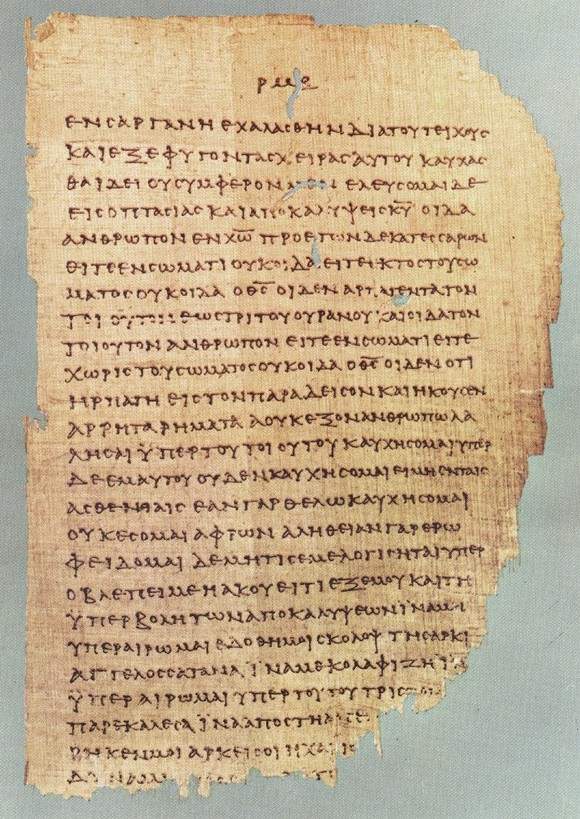
"Then Philip ran thither to him, and heard him read the prophet Esaias, and said, Understandest thou what thou readest? And he said, How can I, except some man should guide me?… The place of the scripture which he read was this, He was led as a sheep to the slaughter… In his humiliation his judgment was taken away… And the eunuch answered Philip, and said, I pray thee, of whom speaketh the prophet this? of himself, or of some other man? Then Philip opened his mouth, and began at the same scripture, and preached unto him Jesus" (Acts 8:30–35).
The official was a court treasurer of the Kandake (queen) of Kush, returning from worship in Jerusalem and reading aloud in his chariot from a scroll of Isaiah in Greek (Luke quotes the Greek text). He was a eunuch, someone Deuteronomy 23:1 excluded from the assembly and Isaiah 56:3–5 welcomed. Luke preserves his question as well as Philip's answer.
| New Testament text | Who quotes it | Isaiah verse | Form of the wording | What it is used for | Kind of use |
|---|---|---|---|---|---|
| Matthew 8:17 | The evangelist (narrator), not Jesus | 53:4 | Closer to the Hebrew ("took our infirmities, bore our sicknesses") than to the Greek ("bears our sins") | Jesus' healings and exorcisms at evening in Capernaum fulfill the prophecy | Formula quotation: healing, not atonement |
| Luke 22:37 | Jesus, in Luke's report of his words | 53:12 | "And he was reckoned among the lawless," close to the Greek | Jesus, at the Last Supper (Luke's report of his words), says this scripture must be fulfilled in him, as he speaks of swords | Words attributed to Jesus: being counted with criminals |
| Mark 15:28 (later addition) | A later scribe, in the narrator's voice | 53:12 | "And the scripture was fulfilled, which saith, And he was numbered with the transgressors" | Crucified between two thieves | Absent from the oldest manuscripts of Mark; added by later scribes, probably from Luke 22:37 (in the KJV, omitted in modern critical texts) |
| John 12:38 | The evangelist (narrator) | 53:1 | The Greek, with "Lord" | Despite Jesus' signs, many did not believe; paired with 6:10 (12:39–41) | Fulfillment of unbelief |
| Romans 10:16 | Paul | 53:1 | The Greek | Not all Israel has obeyed the gospel | Paul on unbelief toward the apostolic message |
| Romans 15:21 | Paul | 52:15 | The Greek | Paul's mission to preach where Christ has not been named | Applied to the apostle's mission, not to Jesus' death |
| Acts 8:32–33 | Luke, as narrator (the passage the official reads) | 53:7–8 | The Greek, word for word ("in his humiliation his judgment was taken away") | Philip preaches Jesus from the passage to the Ethiopian official | A scene of interpretation; Luke does not quote the atonement verses |
| 1 Peter 2:22–25 | The letter's author | 53:9, 5, 6, 12 | Woven quotations, mainly Greek ("who did no sin, neither was guile found in his mouth… by whose stripes ye were healed… as sheep going astray") | Slaves suffering unjustly are to follow Christ's example of non-retaliation; he bore our sins in his body on the tree | Example and atonement together |
| Mark 10:45; 14:24 | Jesus, in Mark's report (no citation) | 53:10–12 ("many") | "to give his life a ransom for many"; "my blood… shed for many" | Jesus interprets his death (Mark's report) | Allusion, debated |
| Acts 3:13, 26; 4:27, 30 | Peter and the church, in Luke's report | 52:13 | "his servant (pais) Jesus… glorified" | Peter's preaching and the church's prayer | Allusion to the servant's glorification |
| Romans 4:25 | Paul | 53:12 (Greek) | "delivered for our offences" | Jesus' death and resurrection for justification | Allusion |
| Hebrews 9:28 | The author of Hebrews | 53:12 | "to bear the sins of many" | Christ's once-for-all offering | Allusion with near-quotation |
| Philippians 2:7–9 | Paul (perhaps quoting an earlier hymn) | 52:13; 53:12 | "form of a servant… obedient unto death… highly exalted" | Christ's humiliation and exaltation | Allusion, debated |
Matthew 8:17: healing
Matthew applies 53:4 not to Jesus' death but to his healing ministry: "Himself took our infirmities, and bare our sicknesses." His wording follows the Hebrew (choli, "sickness"; makh'ov, "pain") more closely than the Greek, which spiritualizes the verse ("bears our sins"). Matthew's use is one of the clearest cases where an evangelist works from a Hebrew-like text. It shows that early Christians applied the song to more than the crucifixion.
Luke 22:37: counted with the lawless
In Luke's account of the Last Supper, Jesus says: "this that is written must yet be accomplished in me, And he was reckoned among the transgressors: for the things concerning me have an end." This is the only explicit quotation of Isaiah 53 attributed to Jesus in the Gospels. Its point is narrow: he will be treated as a criminal. Whether it reflects Jesus' own words or Luke's interpretation is debated among historians. Luke then narrates his crucifixion between two criminals (23:32–33).
Two kinds of evidence: Luke 22:37 and Matthew 8:17
These two quotations are often listed together, but they are different kinds of evidence. Luke 22:37 is an explicit quotation that Luke places in Jesus' own mouth: Jesus is reported to say that this scripture must be fulfilled in him. It is evidence for how Luke presents Jesus understanding his coming death, and historians debate whether it goes back to Jesus himself. Matthew 8:17 is the evangelist's quotation, spoken in the narrator's voice ("that it might be fulfilled which was spoken by Esaias the prophet"). It is evidence of how Matthew interpreted Jesus' healing activity; it is not a claim that Jesus quoted Isaiah. The site keeps the same distinction throughout: words the Gospels attribute to Jesus, words of the narrator, and connections later Christians drew with his life.
Mark 15:28: a verse added by scribes
The KJV's Mark 15:28 ("And the scripture was fulfilled, which saith, And he was numbered with the transgressors") is not in the oldest Greek manuscripts of Mark (Sinaiticus, Vaticanus and others) and is omitted by modern critical editions, including the library's Greek New Testament, where the verse is empty. It appears to have been added later, from Luke 22:37. This is a New Testament textual variant about an Old Testament quotation: a reminder that the Isaiah–Jesus connection itself has a transmission history.
Acts 8: a scene of interpretation
Luke tells that the official read 53:7–8 in Greek and asked whether the prophet spoke of himself or of someone else; Philip "began at the same scripture, and preached unto him Jesus" (8:35). Luke quotes the Greek exactly, including "in his humiliation his judgment was taken away," which differs from the Hebrew. Luke does not quote the verses about bearing sins, and he does not say what Philip said about them. The scene shows early Christian interpretation as a conversation about an open question, answered with Jesus. It also shows a Kushite eunuch, someone at the margins of Israel's assembly, as one of the first converts (compare Isaiah 56:3–5).
1 Peter 2:21–25: an example for slaves
1 Peter addresses household slaves suffering unjust treatment (2:18–20) and points to Christ: "who did no sin, neither was guile found in his mouth: who, when he was reviled, reviled not again… who his own self bare our sins in his own body on the tree… by whose stripes ye were healed. For ye were as sheep going astray." It weaves 53:9, 5, 6 and 12 into a single portrait. The letter combines Christ as example (non-retaliation) and Christ as sin-bearer. Its pastoral setting, slaves told to endure, raises ethical questions that the site notes and does not erase.
John 12:38 and Romans 10:16: unbelief
Both quote 53:1 ("Lord, who hath believed our report?") to explain why many did not believe: John of Jesus' signs, Paul of the apostles' preaching. John adds 6:10 and says Isaiah "saw his glory, and spake of him" (12:41). In both, the song's first line is about the reception of a message, not about suffering.
Isaiah 52:13–53:12 describes an unnamed servant's suffering, death, burial and vindication, confessed by a "we" who misjudged him (see "The Fourth Servant Song, Phrase by Phrase").
Before and alongside Christianity, Jewish readers applied the song's language to the faithful wise (Daniel 11–12), to the righteous sufferer (Wisdom 2–5), to Israel, and in some sources to the messiah, usually without the suffering (Targum). No pre-Christian Jewish text is known that applies the song to a messiah who would die for others' sins; claims that Qumran texts (4Q491c, 4Q541) do so are debated.
The New Testament writers claim that Jesus fulfills the song, and they apply different phrases for different purposes: healing (Matthew), being counted with criminals (Luke), unbelief (John, Paul), the apostolic mission (Romans 15), a conversion scene (Acts 8), and suffering, example and atonement (1 Peter; Hebrews; Mark's "for many"). These are claims of faith, made from the evidence of Jesus' life and death as the writers understood it.
Historians can establish the crucifixion of Jesus under Pilate and the very early Christian use of scripture to interpret it (1 Corinthians 15:3–4, "according to the scriptures"). They can compare the wording of each quotation with the Hebrew and Greek, as this page does. They cannot establish whether the song was a prediction of Jesus; and whether Jesus himself interpreted his death through Isaiah 53 is debated (Luke 22:37; Mark 10:45).
What the evidence shows
- Matthew 8:17 applies Isaiah 53:4 to Jesus' healings.
- Luke 22:37 is the only explicit quotation of Isaiah 53 attributed to Jesus in the Gospels.
- Matthew 8:17 is a quotation by Jesus. It is the evangelist's narrative quotation about Jesus' healings.
- Mark 15:28 is absent from the oldest manuscripts of Mark.
- Acts 8:32–33 quotes the Greek of Isaiah 53:7–8.
- 1 Peter 2:22–25 quotes or alludes to Isaiah 53:5, 6, 9 and 12.
- Jesus understood his death through Isaiah 53.Source: M. D. Hooker, Jesus and the Servant (1959)
- Pre-Christian Judaism expected a messiah who would die for sins, based on Isaiah 53. No clear pre-Christian text; some Qumran readings are debated.
Continue the journey
Journey of a PassageIsaiah 53:1–3: "Who hath believed our report?… despised and rejected""Who hath believed our report?… He is despised and rejected of men; a man of sorrows, and acquainted with grief." John 12:38 and Romans 10:16 quote v.More from this lesson
Why this matters to the rest of Scripture
- Philip and the Ethiopian official.
- "According to the scriptures."
- Eunuchs welcomed.
- "Beginning at Moses and all the prophets."