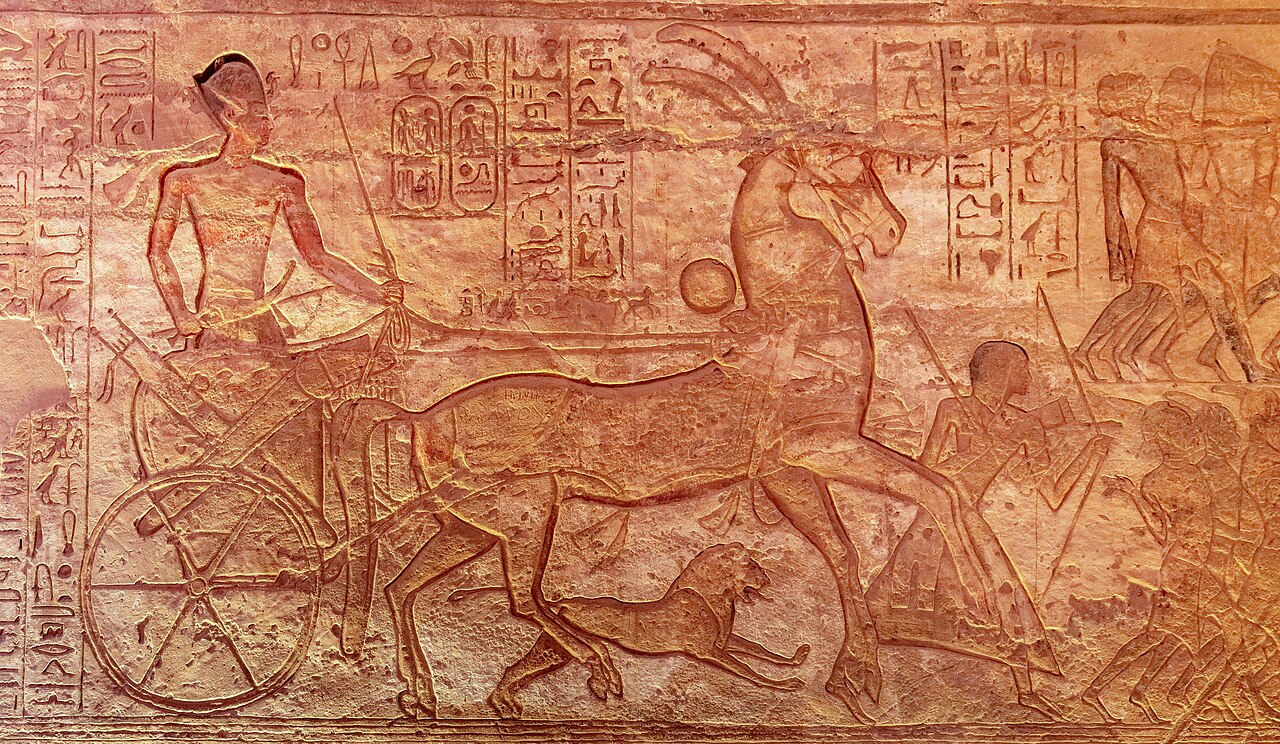
Isaiah 31: Their Horses Flesh, and Not Spirit
Woe to those who trust in Egypt's cavalry; God as a lion and as hovering birds over Jerusalem
"Woe to them that go down to Egypt for help; and stay on horses, and trust in chariots, because they are many; and in horsemen, because they are very strong; but they look not unto the Holy One of Israel, neither seek the Lord!… Now the Egyptians are men, and not God; and their horses flesh, and not spirit" (31:1–3).
"Like as the lion and the young lion roaring on his prey, when a multitude of shepherds is called forth against him, he will not be afraid of their voice… so shall the Lord of hosts come down to fight for mount Zion… As birds flying, so will the Lord of hosts defend Jerusalem; defending also he will deliver it; and passing over he will preserve it" (vv. 4–5).
"Then shall the Assyrian fall with the sword, not of a mighty man; and the sword, not of a mean man, shall devour him" (v. 8).
| Verses | What it says | What to notice |
|---|---|---|
| 31:1 | Woe to those who go to Egypt for horses and chariots and do not look to the Holy One | Egypt and Kush were famed for horses. |
| 31:2–3 | God is wise too; Egyptians are human, not divine; horses are flesh, not spirit; helper and helped fall together | Flesh/spirit: a contrast between creaturely and divine power. |
| 31:4 | Like a lion growling over prey, undeterred by shepherds, God comes down to fight on Mount Zion | Ambiguous: fighting for Zion or against it? Most read "for." |
| 31:5 | Like hovering birds God shields Jerusalem; protects, delivers, passes over, rescues | Pasoach, "passing over": the Passover verb (Exodus 12:13, 23). |
| 31:6–7 | Turn back to him; throw away silver and gold idols | A call to repentance. |
| 31:8–9 | Assyria will fall by a sword not of man; its officers flee from the banner; God's fire is in Zion, his furnace in Jerusalem | Fulfilled, in the book's narrative, in 37:36. |
Horses and chariots
Assyrian kings boasted of horses taken in tribute; Egyptian and Kushite horses were prized (Sennacherib's and later Assyrian texts mention Kushite horses; reported). Deuteronomy 17:16 warns the king not to "multiply horses" or return to Egypt for them; Psalm 20:7: "Some trust in chariots, and some in horses: but we will remember the name of the LORD our God."
Lion and birds
The two images seem to clash: a lion is a predator, birds are protectors. Some read v. 4 as God attacking Zion ("fight against," the same Hebrew preposition can mean "upon"), followed by protection in v. 5. Others read both as protection: God guards Zion as fiercely as a lion guards its prey. The Passover verb in v. 5 connects Jerusalem's deliverance with the exodus.
Political theology
Isaiah 31 is often read as a timeless rejection of military planning. In context it is a prophet's judgment on a specific alliance that meant rebellion against Assyria and reliance on Egypt rather than on God (compare 2 Kings 18:20–21). The site presents it as political theology of its moment, applied in many ways since.
What the evidence shows
- Isaiah 31:5 uses the verb of Passover (pasach).
- Isaiah 31 condemns all military preparation. It condemns reliance on the Egyptian alliance.
- 31:4 pictures God fighting for Zion. The preposition can mean "against" or "upon."
Continue the journey
Connected elsewhere in ScripturePsalm 20: Some Trust in ChariotsPsalm 20:7; Deuteronomy 17:16: Trust not in horses.More from this lesson
Why this matters to the rest of Scripture
- Psalm 20:7; Deuteronomy 17:16Trust not in horses.
- The LORD passes over.
- Isaiah 30:1–7; 36:6Egypt the useless helper.
- Assyria's fall by a sword not of man.