Isaiah 30: In Returning and Rest
Envoys to Egypt, a prophecy written down, quietness and trust refused, a teacher's voice, and Topheth prepared
"Woe to the rebellious children, saith the Lord, that take counsel, but not of me… That walk to go down into Egypt, and have not asked at my mouth; to strengthen themselves in the strength of Pharaoh, and to trust in the shadow of Egypt!" (30:1–2).
"Now go, write it before them in a table, and note it in a book, that it may be for the time to come for ever and ever: That this is a rebellious people… Which say to the seers, See not; and to the prophets, Prophesy not unto us right things, speak unto us smooth things, prophesy deceits" (vv. 8–10).
"For thus saith the Lord God, the Holy One of Israel; In returning and rest shall ye be saved; in quietness and in confidence shall be your strength: and ye would not. But ye said, No; for we will flee upon horses" (vv. 15–16).
"And therefore will the Lord wait, that he may be gracious unto you… thine eyes shall see thy teachers: And thine ears shall hear a word behind thee, saying, This is the way, walk ye in it, when ye turn to the right hand, and when ye turn to the left" (vv. 18–21). "For Tophet is ordained of old; yea, for the king it is prepared" (v. 33).
| Verses | What it says | What to notice |
|---|---|---|
| 30:1–5 | Woe to rebellious children who seek Egypt's shelter without asking God; officials at Zoan, envoys at Hanes | Zoan: Tanis; Hanes: probably Heracleopolis (Ahnas) or a Delta town. |
| 30:6–7 | Burden of the beasts of the Negev: donkeys and camels carry treasure through lion and serpent country to useless Egypt, "Rahab who sits still" | Rahab: the chaos monster (51:9), a name for Egypt (Psalm 87:4). |
| 30:8–11 | Write it on a tablet as a witness forever: a people who tell seers "see not" and want smooth words | A written prophecy as evidence for later. |
| 30:12–14 | Your guilt is a bulging wall that suddenly collapses, smashed like a pot | Not a sherd left to carry fire or water. |
| 30:15–17 | In returning and rest you shall be saved; in quietness and trust your strength; but you would not; you will flee on horses | The heart of Isaiah's political counsel (compare 7:4, 9). |
| 30:18–22 | God waits to be gracious; no more weeping; your teacher no longer hidden; a voice behind you: this is the way; idols thrown away | Teacher (moreh): God himself, or human teachers. |
| 30:23–26 | Rain, rich harvest, streams on every hill; moonlight like sunlight, sunlight sevenfold, when God binds his people's wound | Healing imagery. |
| 30:27–33 | God's name comes burning; a sieve for nations; songs as on a festival night; Assyria shattered; Topheth prepared for the king, its pyre lit by God's breath | Topheth: the burning place in the Valley of Hinnom. |
Embassy to Egypt
Hezekiah's revolt against Assyria (from about 705 BC) relied on Egyptian and Kushite support. Isaiah 30–31 condemns envoys sent to Egypt; Sennacherib's annals report that the kings of Egypt and the Kushite army came to help the rebels and were defeated at Eltekeh in 701 BC; the Rabshakeh mocks Egypt as "this broken reed" (36:6). The caravan of 30:6 carrying gifts through the Negev fits this diplomacy. Isaiah's opposition is to this alliance in this crisis; the text does not forbid diplomacy as such.
"In returning and rest" (30:15)
Shuvah ("returning") can mean repentance or turning back from the alliance; nachat ("rest") recalls 28:12, "This is the rest… yet they would not hear." Quietness (hashqet) and trust (bitchah) echo 7:4 ("be quiet; fear not"). The saying has become a classic of Jewish and Christian devotion. The library's Greek reads "when, having turned away, you lament, you will be saved" (Giguet: "Lorsque après t'être perverti tu te lamenteras, tu seras sauvé").
Topheth (30:33)
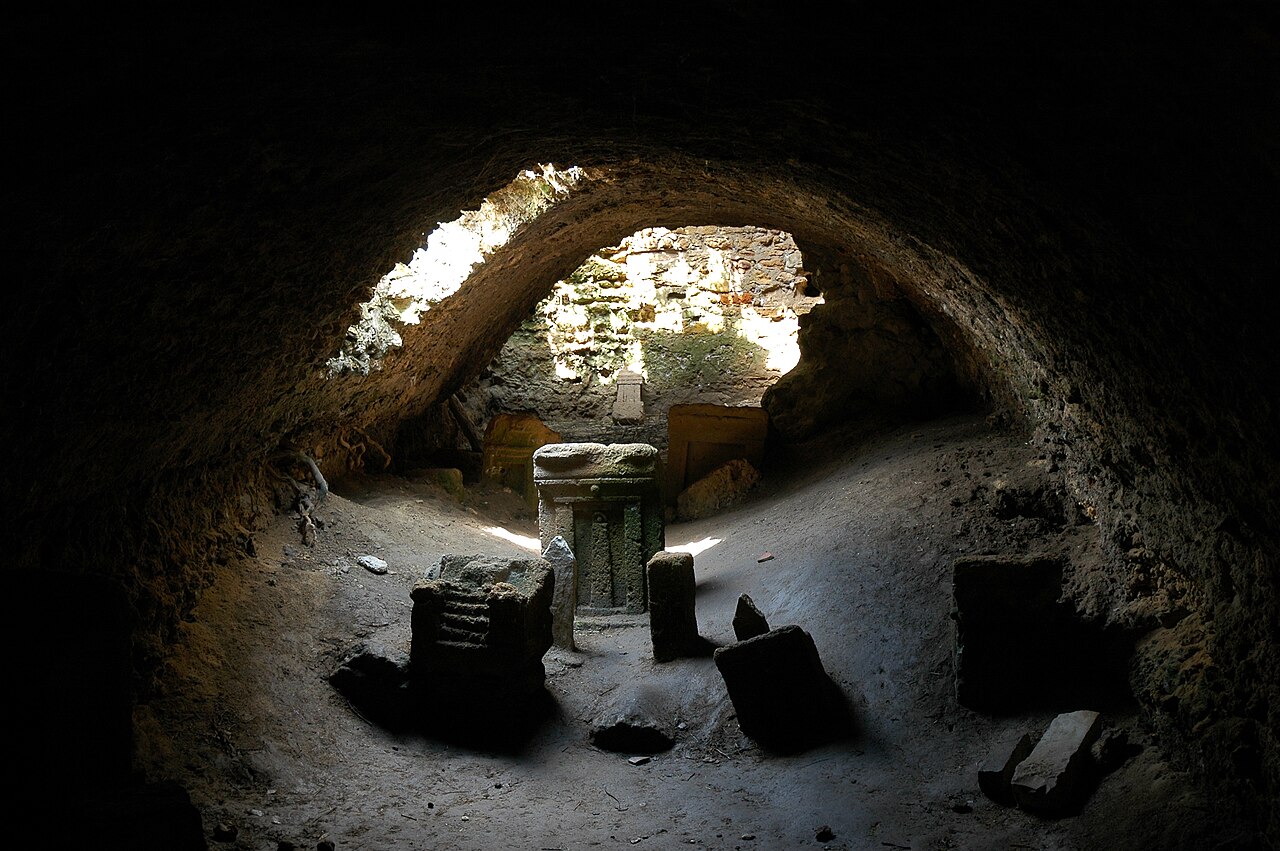
Topheth was the place in the Valley of Hinnom where children were burned as offerings (2 Kings 23:10; Jeremiah 7:31–32). "For the king (la-melekh) it is prepared" may pun on molekh, the sacrifice term. In Isaiah 30 God prepares a pyre for the Assyrian king: violent imagery of judgment on the oppressor, using the most horrifying place Judah knew. The valley later gave its name to Gehenna, the place of fiery judgment in Jewish and Christian tradition (compare 66:24).
What the evidence shows
- Isaiah 30–31 opposes Judah's alliance with Egypt.
- Egyptian and Kushite forces fought Sennacherib at Eltekeh in 701 BC. Sennacherib's annals; reported.
- Isaiah forbids all foreign alliances for all time. The oracle concerns this alliance in this crisis.
- Topheth in 30:33 refers to the Valley of Hinnom burning place.
Continue the journey
Journey of a PassageIsaiah 30:15–16: "In returning and rest shall ye be saved""In returning and rest shall ye be saved; in quietness and in confidence shall be your strength: and ye would not.More from this lesson
Echoes Across Civilizations
Optional: how other ancient peoples told similar stories. Open one to compare, then come back to the lesson.
Child sacrifice in crisisPhoenician / Punic · Greek
Did Israel's neighbors sacrifice children, and how does the Bible respond?
- Phoenician / Punic: The tophet of Carthage Shared literary world
- Greek: Iphigenia Resemblance only
Why this matters to the rest of Scripture
- Isaiah 7:4, 9; 28:12Quiet trust and rest.
- 2 Kings 18:21; Isaiah 36:6Egypt, the broken reed.
- Jeremiah 7:31–32; 2 Kings 23:10Topheth.
- Psalm 87:4; Isaiah 51:9Rahab as Egypt.