Isaiah 36: On Whom Dost Thou Trust?
Sennacherib takes Judah's cities and his envoy demands surrender at Jerusalem's wall
"Now it came to pass in the fourteenth year of king Hezekiah, that Sennacherib king of Assyria came up against all the defenced cities of Judah, and took them. And the king of Assyria sent Rabshakeh from Lachish to Jerusalem unto king Hezekiah with a great army. And he stood by the conduit of the upper pool in the highway of the fuller's field" (36:1–2).
"Thus saith the great king, the king of Assyria, What confidence is this wherein thou trustest?… Lo, thou trustest in the staff of this broken reed, on Egypt; whereon if a man lean, it will go into his hand, and pierce it… But if thou say to me, We trust in the Lord our God: is it not he, whose high places and whose altars Hezekiah hath taken away?… the Lord said unto me, Go up against this land, and destroy it" (vv. 4–10).
"Speak, I pray thee, unto thy servants in the Syrian language; for we understand it: and speak not to us in the Jews' language, in the ears of the people that are on the wall" (v. 11). "Then Rabshakeh stood, and cried with a loud voice in the Jews' language… Make an agreement with me by a present, and come out to me: and eat ye every one of his vine, and every one of his fig tree… Hath any of the gods of the nations delivered his land out of the hand of the king of Assyria?" (vv. 13–18).
"But they held their peace, and answered him not a word: for the king's commandment was, saying, Answer him not" (v. 21).
| Verses | What it says | What to notice |
|---|---|---|
| 36:1 | Hezekiah's 14th year: Sennacherib takes all Judah's fortified cities | Sennacherib's annals: 46 walled cities (701 BC). |
| 36:2–3 | The Rabshakeh comes from Lachish to the conduit of the upper pool; Eliakim, Shebna and Joah meet him | The same place as Isaiah's meeting with Ahaz (7:3). |
| 36:4–7 | What is your confidence? Egypt is a splintered reed; and the LORD? Hezekiah removed his high places | Hezekiah's reform (2 Kings 18:4) turned against him. |
| 36:8–10 | A wager: two thousand horses if you can find riders; the LORD himself sent me | Assyrian kings claimed the gods of conquered peoples had abandoned them. |
| 36:11–12 | Speak Aramaic, not Judean; the reply: I speak to the men on the wall, who will eat their own dung | Aramaic as the language of diplomacy. |
| 36:13–17 | In Hebrew: don't let Hezekiah deceive you; make peace, each under his vine and fig tree, until I deport you to a good land | Deportation presented as an offer (compare Micah 4:4). |
| 36:18–20 | Where are the gods of Hamath, Arpad, Sepharvaim? Did they save Samaria? | Cities conquered by Assyria. |
| 36:21–22 | Silence at the king's command; the officials report with torn clothes | Leads to Hezekiah's turn to Isaiah (37:1–7). |
What Isaiah leaves out
Isaiah 36–37 runs almost word for word with 2 Kings 18:13–19:37, with one large difference: Isaiah has nothing corresponding to 2 Kings 18:14–16, where Hezekiah sends to Lachish ("I have offended"), pays 300 talents of silver and 30 of gold, and strips the gold from the temple doors. Sennacherib's annals also report tribute (30 talents of gold, 800 of silver). Isaiah's version presents Hezekiah only as the king of faith. See "Jerusalem Besieged, 701 BC."
"In the fourteenth year"
If the campaign is 701 BC, Hezekiah's fourteenth year means he became king about 715 BC. But 2 Kings 18:1, 9–10 dates his accession to the third year of Hoshea of Israel (about 727/726 BC) and Samaria's fall to his sixth year. Scholars propose a coregency with Ahaz, an error in one of the numbers, or a dating of the illness (38:5, "fifteen years") that produced the number. The chronology of Judah's kings is a known problem; the site lists it rather than forcing a solution.
The Rabshakeh's speech
Rab-shaqeh is an Assyrian title, "chief cupbearer," a high official (2 Kings 18:17 adds the Tartan, commander-in-chief, and the Rabsaris, chief eunuch). Scholars have shown that the speech's themes fit Assyrian royal rhetoric: the claim that the enemy's own god sent the king, mockery of untrustworthy allies, offers of pleasant deportation, lists of conquered cities (P. Machinist; C. Cohen). That makes it historically plausible as the kind of thing an Assyrian envoy said. It does not make the text a transcript; it is a narrative composed by Judean writers, perhaps from memory and tradition.
Aramaic and Hebrew
"Syrian" (aramit) is Aramaic, by the 8th century the language of diplomacy across the Assyrian empire; "the Jews' language" (yehudit) is the Hebrew of Judah. This is one of the earliest references to Aramaic as an international language, and the officials' request shows that ordinary soldiers did not understand it.
What the evidence shows
- Sennacherib's annals claim 46 of Hezekiah's walled cities.Source: Sennacherib's annals: Rassam Cylinder (700 BC), Taylor Prism (691 BC, British Museum), Oriental Institute Prism (689 BC), Jerusalem Prism (Israel Museum); translations in RINAP 3 (A. K. Grayson and J. Novotny, 2012); Israel Museum, "The Assyrian Campaign in Judah as Told in the Sennacherib Prism" (2025–26) ↗
- Isaiah 36–37 omits the tribute of 2 Kings 18:14–16.
- The Rabshakeh's speech is a word-for-word record. Its themes fit Assyrian rhetoric; the wording is the Judean narrators'.
- Aramaic was the diplomatic language of the Assyrian empire.
Continue the journey
Journey of a PassageIsaiah 36:1–3 and 2 Kings 18:13–18: Two versions of 701 BC: what Isaiah leaves out"In the fourteenth year of king Hezekiah… Sennacherib king of Assyria came up against all the defenced cities of Judah, and took them." 2 Kings 18:13 has the same sentence, but then 2 Kings 18:14–16 adds Hezekiah's message to Lachish ("I have offended"), his tribute of 300 talents of silver and 30 of gold, and the stripping of the temple doors.More from this lesson
On the map
Location securely identified Probable identification Proposed or debated location Biblical route (roads schematic) Scholarly proposal
- Sennacherib's campaign, 701 BC (schematic). Schematic, following the order of the annals: Phoenicia, the Philistine coast (Ekron), Judah's cities (Lachish), and the blockade of Jerusalem, which was not taken.
Investigations
Optional deep dives: the ancient sources, the physical evidence, and every interpretation side by side, including unconventional ones, each labeled for what it is.
Sennacherib, Hezekiah and the Siege of LachishCampaign: documented · Lachish siege: documented · Jerusalem not taken: documented · Cause of withdrawal: unknown
What do Assyrian records and archaeology say about 701 BC?
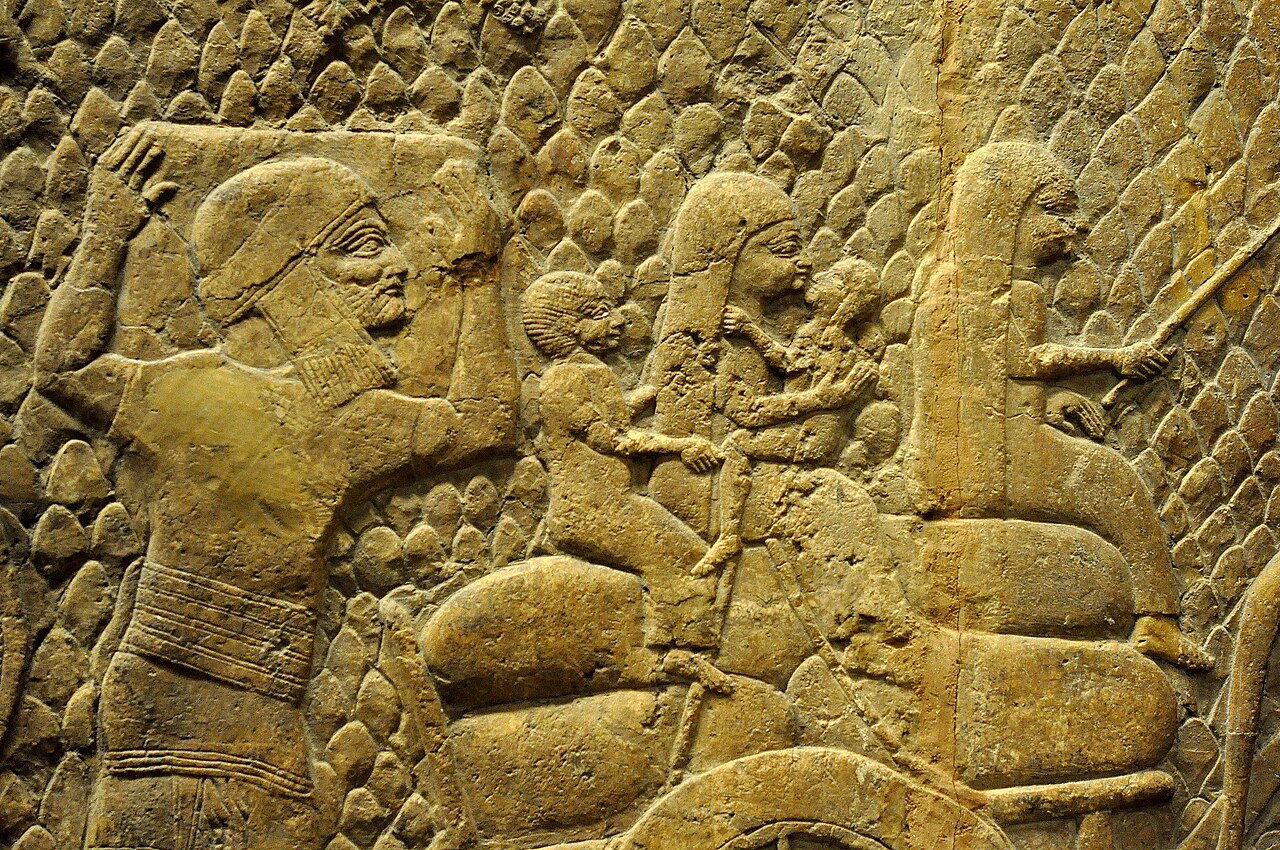
Sennacherib's annals claim he took 46 walled cities of Judah, shut Hezekiah in Jerusalem "like a bird in a cage," and received tribute. His palace reliefs show the siege of Lachish; excavations at Lachish found the siege ramp and destruction. Neither text nor relief claims Jerusalem fell. Why Sennacherib withdrew is not explained by Assyrian sources.
Open the full investigation →Why this matters to the rest of Scripture
- The parallel account, with the tribute.
- The Chronicler's version.
- The same conduit, a generation earlier.
- Isaiah 30:1–7; 31:1–3Isaiah's own verdict on Egypt.