Ugaritic Baal Cycle (KTU 1.5 i 1–3)
- Language
- Ugaritic
- Composed
- 14th–13th century BC
- Oldest surviving copy
- Clay tablets from Ugarit
- Status
- Not scripture
Lotan "the fleeing serpent, the twisting serpent, the mighty one with seven heads."
Ancient Mysteries & Interpretations
Behemoth is most often identified as the hippopotamus; Leviathan as the crocodile, a whale, or the mythic sea-serpent known from Ugarit as Lotan. Later Jewish tradition made them primeval monsters. Some modern readers identify them as dinosaurs; the description as a whole and its ancient context do not support certainty.
Behemoth: hippopotamus (majority view) · Leviathan: disputed · Dinosaurs: not supported
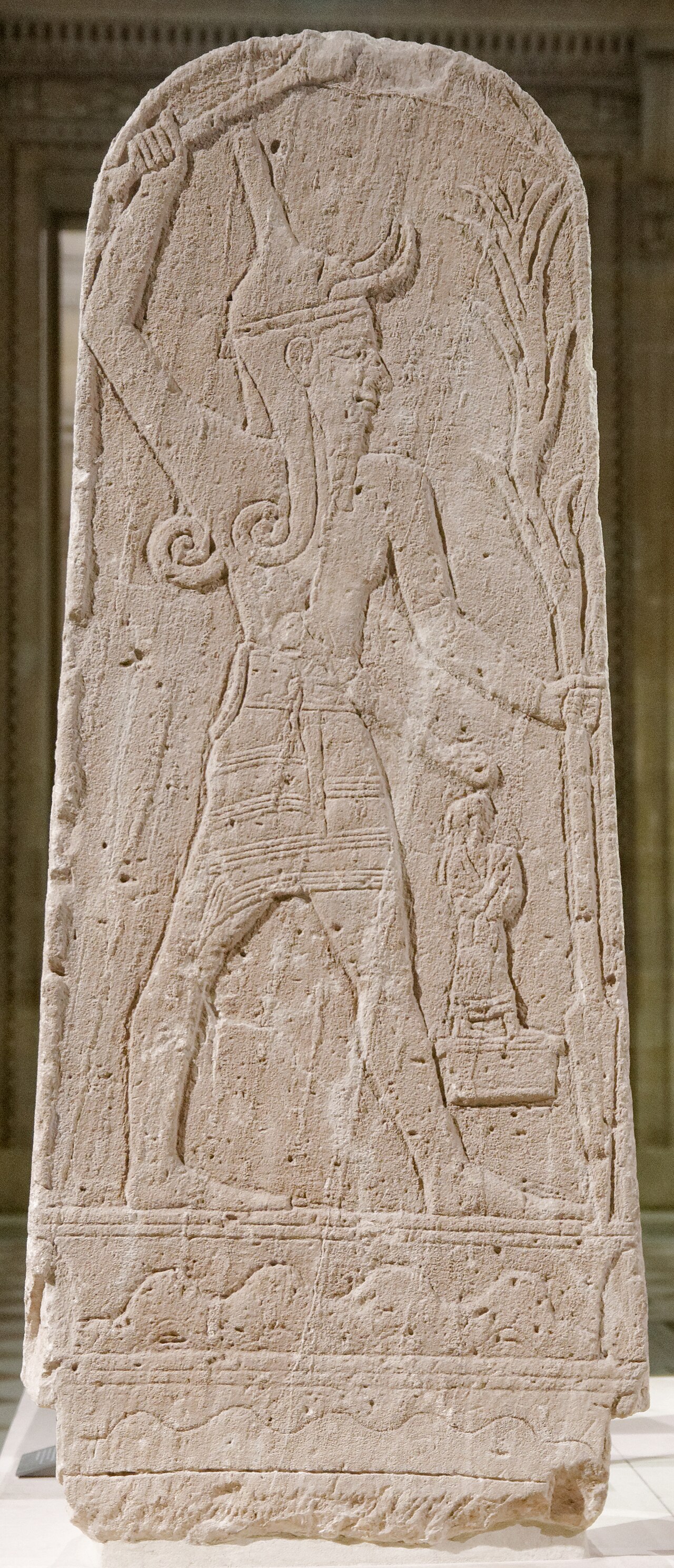
Psalm 74:13–14; 104:26
"Behold now behemoth, which I made with thee; he eateth grass as an ox" (Job 40:15). "Canst thou draw out leviathan with an hook?" (Job 41:1).
Lotan "the fleeing serpent, the twisting serpent, the mighty one with seven heads."
Behemoth and Leviathan as primeval monsters.
Egyptian reliefs of hippopotamus hunts; crocodile cults (Sobek); no object identified as Leviathan.
Scholarly reconstruction
Real Nile animals described poetically.
Scholarly reconstruction
Spouting and a boiling deep suggest a whale.
Source: M. V. Fox, "Behemoth and Leviathan," Biblica 93 (2012) 261–267 ↗
Scholarly reconstruction
Mythic creatures subdued by God, as at Ugarit.
Modern speculative theory
Modern proposal based on size and "tail like a cedar."
Assessment: Not supported by the full description or ancient context.
Real animals, especially Nile creatures, are described with mythic colour to show what only God controls.
What the evidence shows