Era 2 · The Family of AbrahamGenesis
Dinah, Bethel, and the Twelve Tribes
Violence at Shechem, Rachel's death, and the family of Esau
Dinah, Leah's daughter, "went out to see the daughters of the land." Shechem, the son of the local ruler Hamor, sees her, "took her, and lay with her, and defiled her." Afterward, Genesis says, he loved her and asked his father to get her for him as a wife.
Hamor proposes intermarriage between the two peoples. Dinah's brothers answer "deceitfully": only if every male in the city is circumcised. The men of Shechem agree. On the third day, when they are in pain, Simeon and Levi, Dinah's full brothers, take their swords, kill every male, and bring Dinah out of Shechem's house. The other brothers plunder the city, its flocks, its women and children.
Jacob's response is about danger, not justice: "Ye have troubled me to make me to stink among the inhabitants of the land." The brothers have the last word: "Should he deal with our sister as with an harlot?" Dinah herself never speaks in the story. Her silence is part of what Genesis tells us: her experience was decided by men on every side.
God sends Jacob back to Bethel. Jacob tells his household, "Put away the strange gods that are among you," and buries the idols and earrings under the oak near Shechem. At Bethel God appears again, confirms the name Israel, and renews the promise of nations and kings. Deborah, Rebekah's old nurse, dies and is buried under an oak called "the oak of weeping."
On the road toward Ephrath (Bethlehem), Rachel goes into hard labor. As she is dying she names her son Ben-oni, "son of my sorrow." Jacob names him Benjamin, "son of the right hand." Jacob sets up a pillar on her grave. Soon after, Reuben sleeps with Bilhah, his father's concubine, an act that will cost him his firstborn's place (49:4).
Genesis now lists the twelve sons of Jacob by their mothers: Leah's six, Rachel's two, Bilhah's two, Zilpah's two. Isaac dies at 180, "old and full of days," and his sons Esau and Jacob bury him together. Chapter 36 then traces Esau's descendants, the chiefs and kings of Edom.
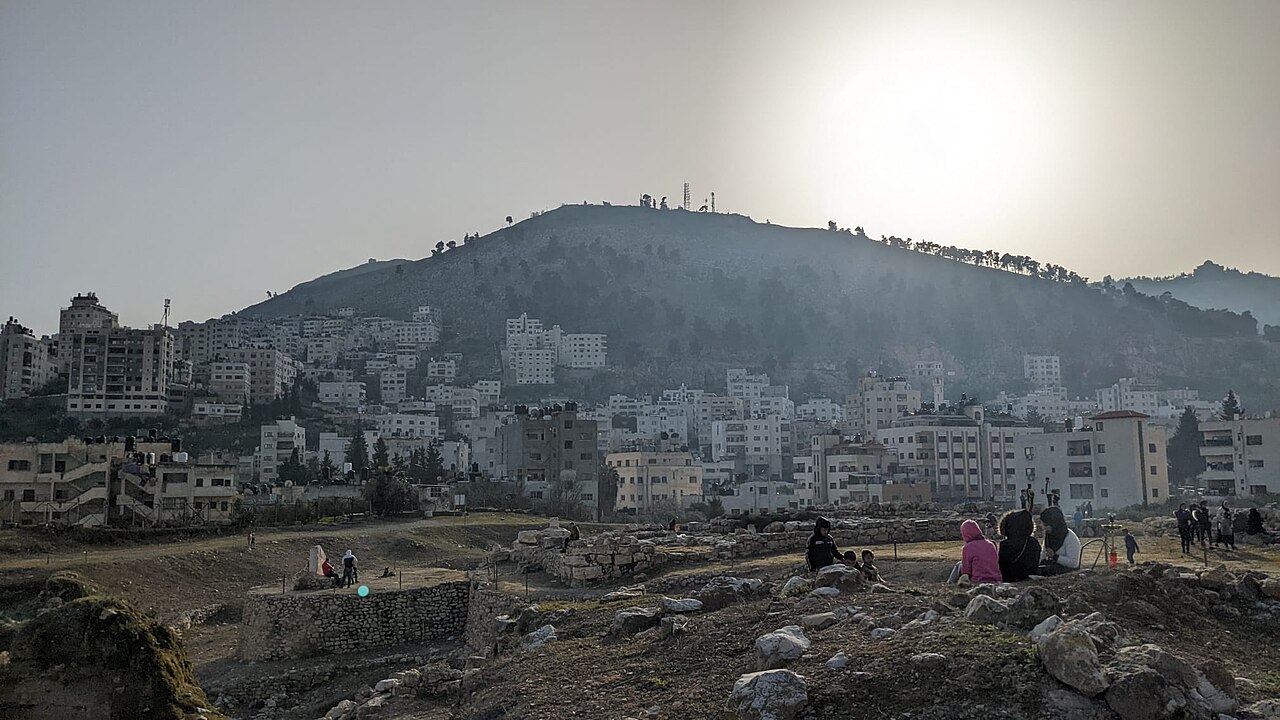
Shechem
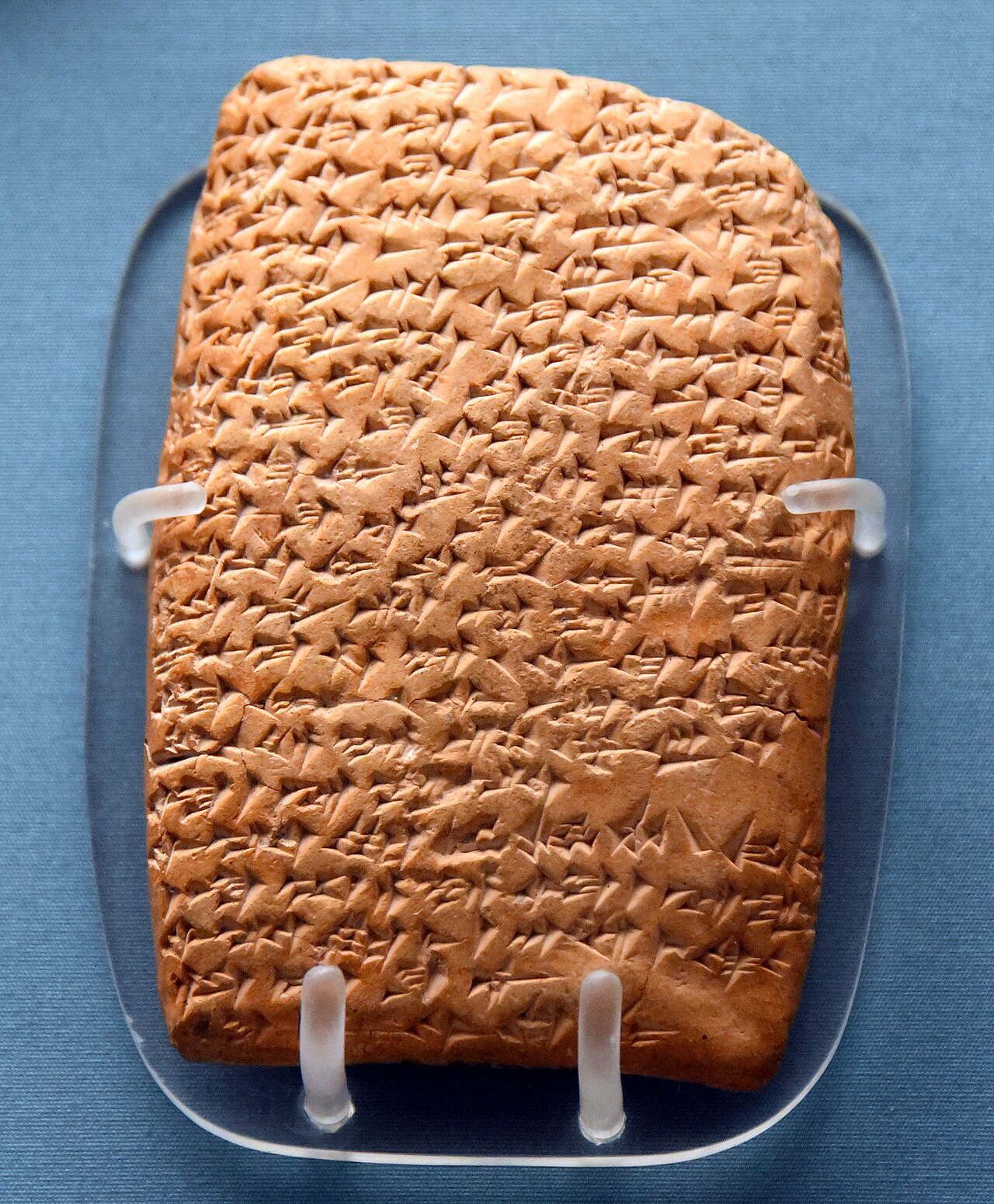
Shechem is Tell Balata, beside modern Nablus, in the pass between Mount Gerizim and Mount Ebal. Excavations found a strongly fortified Middle Bronze Age city with massive walls, gates, and a large temple-fortress. In the 14th century BC the Amarna letters show a ruler of Shechem named Labayu causing trouble for his neighbors and Egypt's governors. Shechem was a powerful city long before Israel's monarchy, as Genesis presents it.
Rachel's tomb
Genesis 35:19 places Rachel's burial on the way to Ephrath, which is Bethlehem; a domed shrine near Bethlehem has marked the traditional site for many centuries, and Matthew 2:18 recalls "Rachel weeping for her children." 1 Samuel 10:2, however, places Rachel's tomb on the border of Benjamin, north of Jerusalem, so some scholars suggest a northern location. The tradition is ancient; the exact place is uncertain.
How fixed were the twelve tribes?
Lists of Israel's tribes vary. Sometimes Joseph appears as one tribe, sometimes as two (Ephraim and Manasseh). Levi receives no territory. Moses' blessing in Deuteronomy 33 omits Simeon; Revelation 7 omits Dan. The number twelve stays constant even when the names shift.
The Case for the Biblical Account
Scripture's account
The Shechem massacre, Jacob's return to Bethel, Rachel's death, Isaac's burial and Esau's descendants (Genesis 34–36).
What evidence would we expect?
A significant city at Shechem in the patriarchal period; Edomite clans and later kings; tribal traditions with some variation.
The discoveries
Middle Bronze fortifications and temple at Tell Balata; Shechem's ruler Labayu in the Amarna letters; Edomite settlement and later kingdom; varying tribal lists within the Bible itself.
Testing the discoveries
Genesis 36:31 lists the kings of Edom who reigned "before there reigned any king over the children of Israel." That phrase looks back from a time when Israel had kings. It is one of several notes many readers take as later additions or as signs of later composition.
The strongest reconstruction
Shechem was a major city that Israel's ancestors could have encountered; Israel's memory of violent conflict there and its tribal structure are preserved in family form.
What remains possible
That chapter 34 preserves a real early clash at Shechem; that it reflects later tribal history; or that both are woven together.
"Before there reigned any king"
Many conservative scholars accept that inspired editors added clarifying notes to Moses' work, like updating place names. Genesis 36:31 would be one such note.
Some traditional readers note that Genesis 17:6 and 35:11 already promise kings to Abraham and Jacob, so the phrase could look forward to that promise.
Critical scholarship sees the verse as evidence that Genesis reached its form during or after the monarchy.
What the evidence shows
- Shechem was a large fortified city in the Middle Bronze Age.
- A ruler of Shechem, Labayu, appears in the 14th-century BC Amarna letters.Source: Amarna letters EA 252–254: Labayu of Shechem writes to Pharaoh, in W. Moran, The Amarna Letters (1992); The Amarna Letters, 14th century BC (Center for Online Judaic Studies) ↗
- Genesis 36:31 was written from a time when Israel had kings. Explained as a later note, as prophecy, or as evidence of later composition.
- Rachel's tomb is at the traditional site near Bethlehem.
Continue the journey
Connected in this bookJacob's Final BlessingsGenesis 49:5–7: Jacob's final word on Simeon and Levi: "Cursed be their anger, for it was fierce."More from this lesson
Why this matters to the rest of Scripture
- Jacob's final word on Simeon and Levi: "Cursed be their anger, for it was fierce."
- "Rachel weeping for her children."
- "A voice was heard in Ramah… Rahel weeping for her children."
- Joshua gathers the tribes at Shechem to renew the covenant.
- Hebrew, Greek, and Samaritan →Shechem's Mount Gerizim became the Samaritans' holy mountain and the home of their Torah.
Sources to explore
Overviews are a starting point. Each links onward to the primary sources and specialist studies behind it.