Era 2 · The Family of AbrahamGenesis
Visitors, Judgment, and Sodom
Hospitality at Mamre, intercession, and fire on the plain
In the heat of the day, Abraham sees three men standing near his tent by the oaks of Mamre. He runs to meet them, bows, and begs them to stay. He hurries to Sarah for fresh bread, runs to the herd for a calf, and stands by them under the tree while they eat. It is the Bible's great picture of hospitality.
"Where is Sarah thy wife?" one asks, and promises that by this time next year she will have a son. Sarah, listening at the tent door, laughs to herself: she is long past the age of children. "Is any thing too hard for the LORD?" Sarah, afraid, denies it: "I laughed not." "Nay; but thou didst laugh." Her laughter is heard, and not condemned.
As the men set out toward Sodom, God speaks: "Shall I hide from Abraham that thing which I do?" The cry against Sodom and Gomorrah is great. Abraham stands before the LORD and bargains with astonishing boldness: "Shall not the Judge of all the earth do right?" Fifty righteous people, forty-five, forty, thirty, twenty, ten. Each time God agrees: for ten He will not destroy it.
Two angels reach Sodom at evening. Lot, sitting in the gate, insists they stay in his house. That night the men of the city, "both old and young," surround the house and demand the visitors be brought out to them. Lot refuses, and then offers his own two daughters instead, a horrifying offer the story records without approving. The angels pull Lot inside and strike the crowd blind.
Lot's sons-in-law think he is joking. At dawn the angels take Lot, his wife and his daughters by the hand and lead them out, "the LORD being merciful unto him." "Look not behind thee." They reach the small town of Zoar as the sun rises, and the LORD rains brimstone and fire on Sodom and Gomorrah. Lot's wife looks back and becomes a pillar of salt. Early the next morning Abraham looks toward the plain and sees smoke going up "as the smoke of a furnace."
The chapter ends darkly. Hiding in a cave, Lot's daughters, believing no men are left, make their father drunk and conceive by him. Their sons become the fathers of Moab and Ammon. Genesis tells it plainly, without comment.
Where were the cities of the plain?
Genesis places Sodom in "the plain of Jordan," near Zoar, by the "salt sea" (the Dead Sea). This region is part of the Jordan Rift, the lowest place on earth's land surface, along a major earthquake fault. Its geology includes salt, sulfur, and bitumen (asphalt): Genesis 14:10 mentions bitumen pits, and Romans and Greeks wrote about asphalt floating on the Dead Sea.
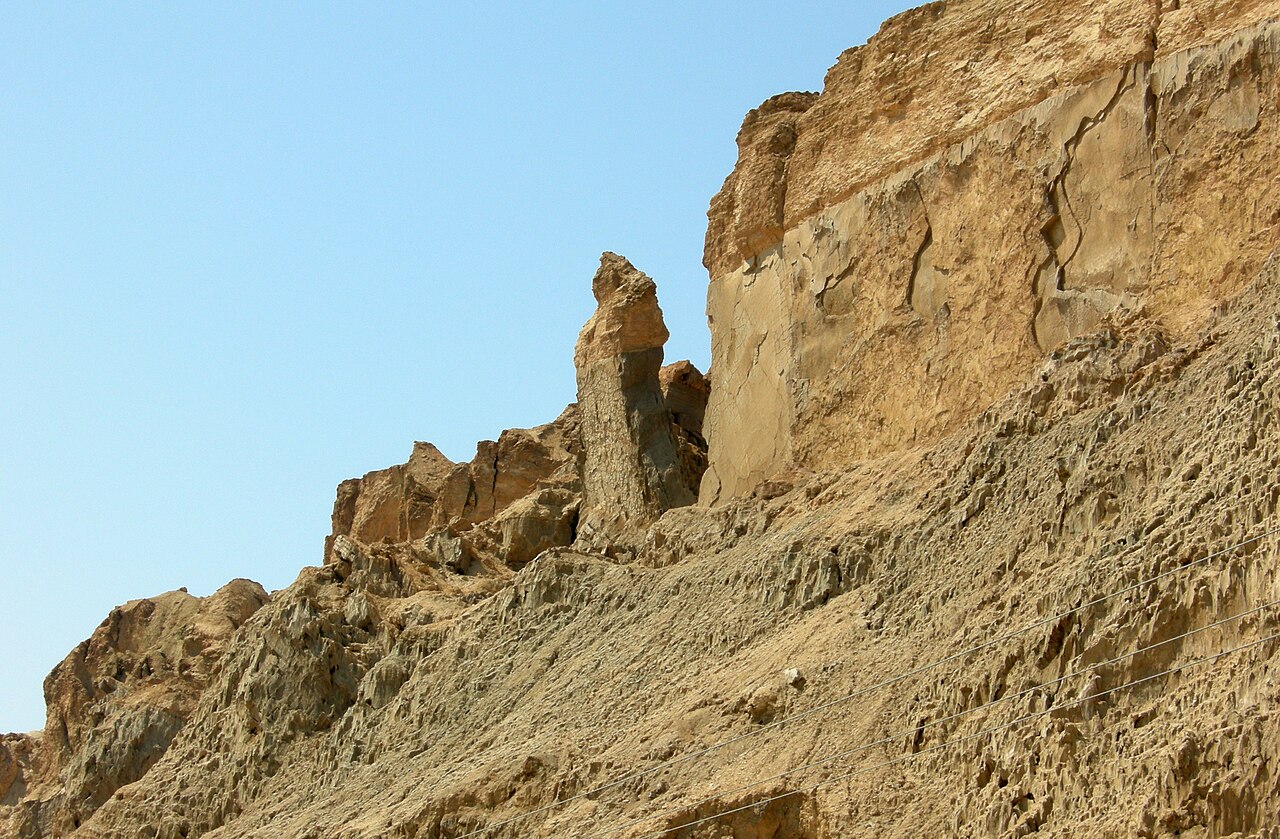
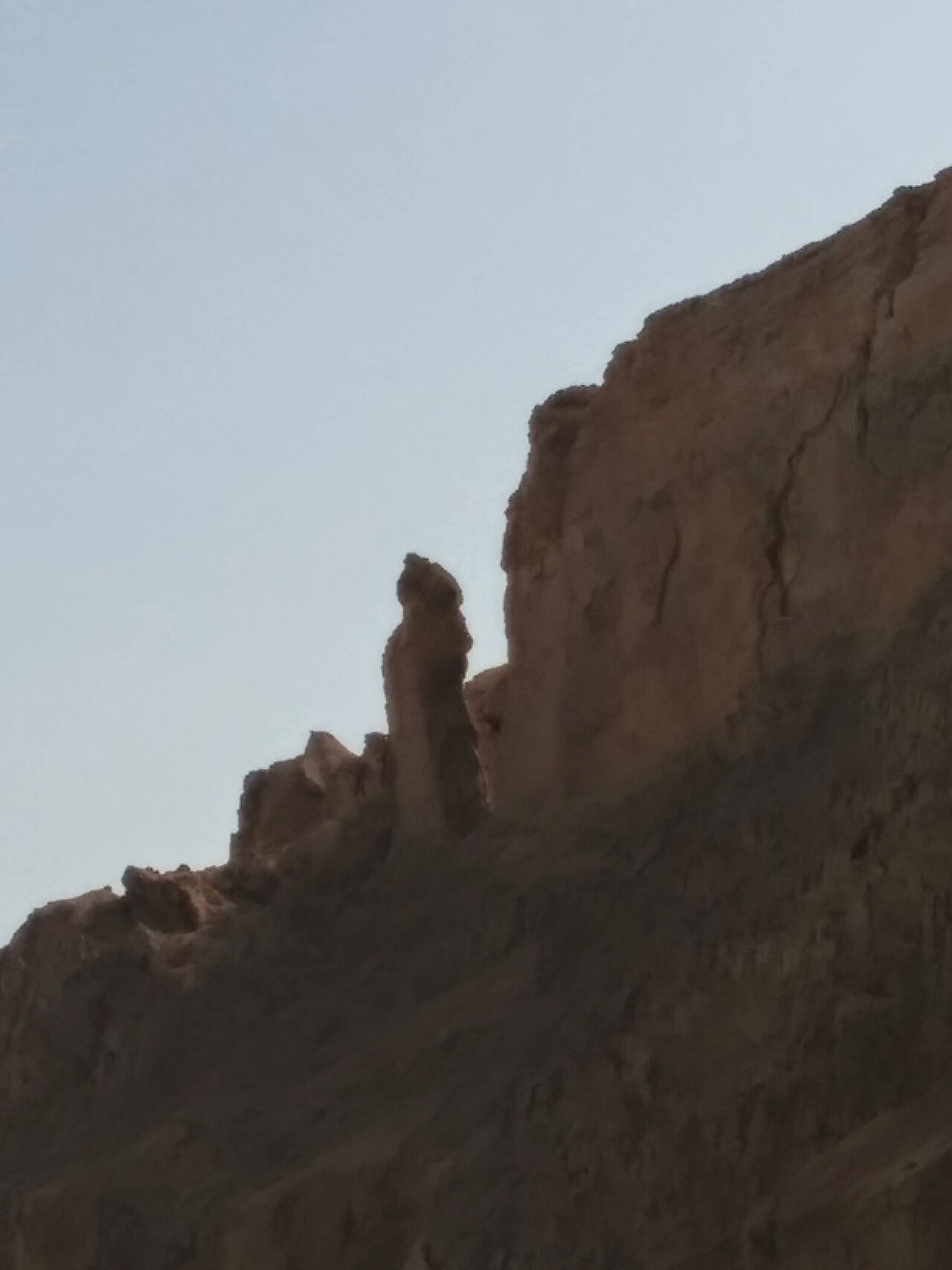
At Mount Sodom (Jebel Usdum), on the southwest shore, a mountain of almost pure rock salt erodes into pillars, one of which is popularly called "Lot's Wife." It is a natural formation, not evidence for the story, but it shows how this landscape shaped the memory of Lot's family.
Three candidate sites
Two Early Bronze Age towns southeast of the Dead Sea, excavated by Walter Rast and Thomas Schaub. Bab edh-Dhra had a walled town and an enormous cemetery; Numeira was burned and abandoned. Both ended in the later third millennium BC. Supporters see the southern cities of the plain; the main problem is chronology, since the destructions come centuries before the usual dates for Abraham.
A large city northeast of the Dead Sea, excavated by Steven Collins, who argues that Genesis 13:10 points to the northern Jordan plain. The city was destroyed around 1650 BC. A 2021 paper claimed a Tunguska-sized cosmic airburst destroyed it; Scientific Reports retracted that paper in April 2025 over problems with its data and analysis. The site and its destruction remain real; the airburst explanation is not established.
Many scholars think the cities may lie under the shallow southern basin of the Dead Sea, or that no surviving site can be matched with confidence. Absence of an identified site is not evidence the cities never existed.
The Case for the Biblical Account
Scripture's account
God destroys Sodom and Gomorrah with fire and brimstone from heaven, sparing Lot (Genesis 19).
What evidence would we expect?
Destroyed Bronze Age cities near the Dead Sea; signs of intense burning; a date that fits the patriarchal period; a geology able to produce such a catastrophe.
The discoveries
Burned and abandoned Early Bronze Age towns at Bab edh-Dhra and Numeira; a destroyed Middle Bronze Age city at Tall el-Hammam; a geology of faults, bitumen and sulfur deposits.
Testing the discoveries
Each site has a dating problem relative to the usual patriarchal chronology. The headline airburst theory for Tall el-Hammam was retracted in 2025. Neither site has an inscription naming it.
The strongest reconstruction
Real towns on the Dead Sea plain were destroyed by fire and abandoned in the Bronze Age, in a region where earthquakes and combustible deposits make sudden catastrophe plausible. Genesis remembers such a judgment and gives it its moral meaning.
What remains possible
That one of the candidate sites is Sodom; that the cities lie under the Dead Sea; or that the story preserves the memory of a catastrophe no longer traceable.
How to read the Tall el-Hammam headlines
In 2021 a team published a paper arguing that an exploding meteor flattened Tall el-Hammam and may lie behind the Sodom story. It drew worldwide attention. Other scientists challenged the analysis, the journal added an editor's note in 2023, and in April 2025 it retracted the paper, citing errors in the mineral and chemical analyses and in the comparison with Tunguska. Several authors disagreed with the retraction. The lesson: a dramatic claim needs its evidence checked before it is used as proof, including for the Bible.
What the evidence shows
- Bab edh-Dhra and Numeira were destroyed and abandoned in the later third millennium BC.Source: Rast & Schaub, Bâb edh-Dhrâ': Excavations at the Town Site 1975–1981 (Harvard Semitic Museum) ↗
- Tall el-Hammam was a large Middle Bronze Age city destroyed around 1650 BC.
- A cosmic airburst destroyed Tall el-Hammam. The main scientific paper was retracted in April 2025.Source: Retraction Note, Scientific Reports (April 2025): Tall el-Hammam airburst paper ↗; Retraction Watch report on the Tall el-Hammam retraction (April 2025) ↗
- The Dead Sea region's geology could produce a fiery catastrophe.Source: D. Neev & K. O. Emery, The Destruction of Sodom, Gomorrah, and Jericho (Oxford, 1995)
- Any of these sites is the biblical Sodom.
- God judged Sodom and showed mercy to Lot.
Continue the journey
Echoes Across CivilizationsDivine visitors and the test of hospitalityDo other ancient stories tell of heavenly visitors who test hospitality, spare the hospitable, and destroy the rest?More from this lesson
Echoes Across Civilizations
Optional: how other ancient peoples told similar stories. Open one to compare, then come back to the lesson.
Divine visitors and the test of hospitalityRome (Greek myth) · Greece
Do other ancient stories tell of heavenly visitors who test hospitality, spare the hospitable, and destroy the rest?
- Rome (Greek myth): Philemon and Baucis (Ovid, Metamorphoses 8) Resemblance only
- Greece: Homer, Odyssey 17 Resemblance only
Why this matters to the rest of Scripture
- Sodom's sin: "pride, fulness of bread… neither did she strengthen the hand of the poor and needy."
- Jesus: "Remember Lot's wife."
- "Some have entertained angels unawares."
- Lot, "vexed with the filthy conversation of the wicked."
Sources to explore
- Rast & Schaub, Bâb edh-Dhrâ': Excavations at the Town Site 1975–1981 (Harvard Semitic Museum) ↗
- Retraction Note, Scientific Reports (April 2025): Tall el-Hammam airburst paper ↗
Overviews are a starting point. Each links onward to the primary sources and specialist studies behind it.