Era 2 · The Family of AbrahamGenesis
Jacob's Ladder and His Family
A stairway to heaven, two sisters, and twenty years with Laban
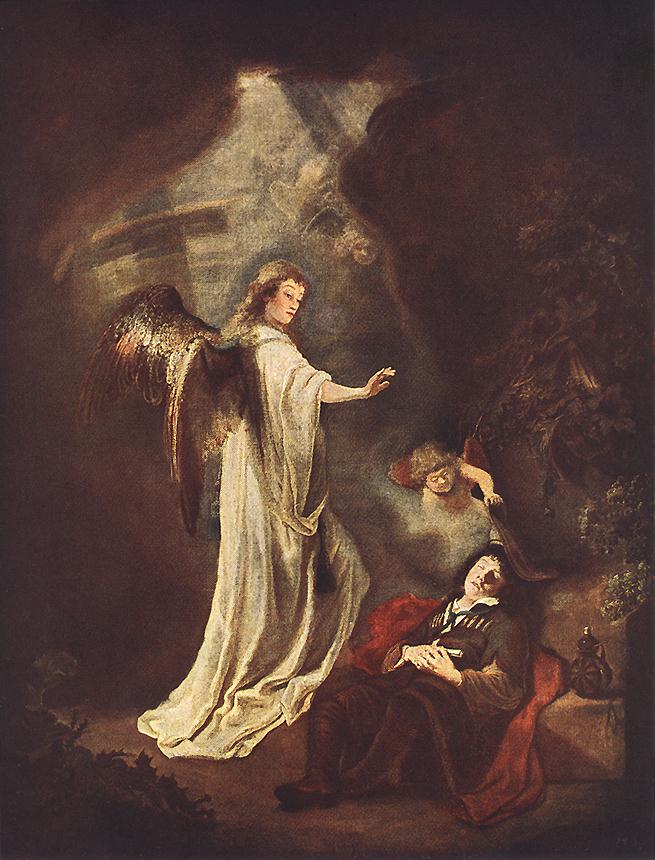
Alone on the road north, Jacob sleeps with a stone for a pillow. He dreams of a stairway set on the earth, reaching to heaven, with the angels of God going up and down on it, and the LORD standing above it. God gives the runaway the same promise He gave Abraham, and adds: "I am with thee, and will keep thee in all places whither thou goest." Jacob wakes: "Surely the LORD is in this place; and I knew it not." He sets up the stone as a pillar, pours oil on it, and names the place Bethel, "house of God."
At a well near Haran, Jacob meets Rachel, Laban's daughter, coming with her father's sheep. He rolls the stone from the well's mouth, waters her flock, kisses her, and weeps. He agrees to work seven years for her, "and they seemed unto him but a few days, for the love he had to her."
On the wedding night Laban gives him Leah, the older sister, instead. In the morning: "What is this thou hast done unto me?" Laban's answer stings the man who once posed as his older brother: "It must not be so done in our country, to give the younger before the firstborn." Jacob works seven more years for Rachel.
Genesis lets us hear Leah through the names of her sons. "The LORD saw that Leah was hated." Reuben: "the LORD hath looked upon my affliction; now therefore my husband will love me." Simeon: "the LORD hath heard that I was hated." Levi: "now this time will my husband be joined unto me." And then Judah: "Now will I praise the LORD." Her longing turns to praise.
Rachel, loved but childless, cries out: "Give me children, or else I die." The sisters compete through their servants Bilhah and Zilpah, through mandrakes, through bargaining. Dan, Naphtali, Gad, Asher, Issachar, Zebulun and a daughter, Dinah, are born. At last "God remembered Rachel," and she bears Joseph.
Laban changes Jacob's wages ten times, but Jacob's flocks of speckled and spotted animals thrive, and he credits God, who showed him in a dream what would happen. After twenty years God says, "Return." Leah and Rachel agree together, the only time they act as one: their father has "sold us." Jacob leaves secretly. Rachel takes her father's household gods. Laban overtakes them, searches, and Rachel hides the idols under her camel saddle and sits on them, saying she cannot rise because of her period. The two men make a covenant with a heap of stones: "The LORD watch between me and thee, when we are absent one from another."
A stairway, not a ladder
The Hebrew word sullam appears only here. Many scholars think it means a ramp or stairway, and compare it with the stepped ziggurats of Mesopotamia, which were seen as links between heaven and earth. At Babel, humans built a tower to reach heaven; at Bethel, heaven reaches down to a man asleep in the open.
Two languages, one heap of stones
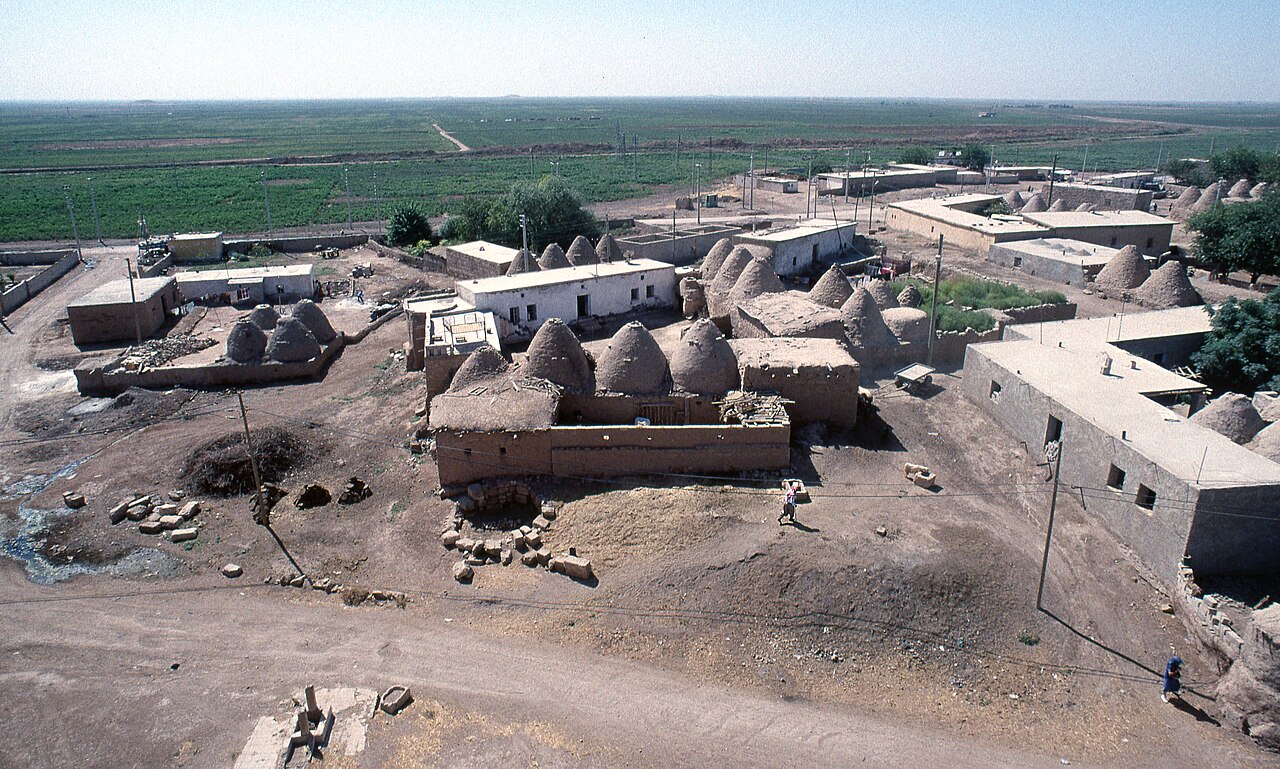
When Jacob and Laban make their treaty, Laban names the stone heap Jegar-sahadutha and Jacob names it Galeed. Both mean "heap of witness," Laban's in Aramaic, Jacob's in Hebrew (Genesis 31:47). It is the first Aramaic in the Bible, and it fits the family's roots in Aram.
Shepherds' contracts
Jacob complains that he bore the loss of animals torn by beasts and stolen by day or night (31:39). Ancient herding law covered exactly this: the Laws of Hammurabi (§§261–267) set out when a hired shepherd must make good a loss and when the owner bears it, for example after an attack by a lion. Jacob claims he paid even what the law would not have required.
Rachel's household gods
The teraphim were small household images, the kind of figurines found in many homes in the ancient Levant. An older theory held, from Nuzi tablets, that possessing them gave a claim to inheritance; later study (Moshe Greenberg and others) showed that reading was overstated. Rachel's motive is never stated. The scene shows honestly that Jacob's family still had other gods in the house, which they bury at Shechem in chapter 35.
The Case for the Biblical Account
Scripture's account
Jacob dreams at Bethel, works twenty years for Laban in Haran, marries Leah and Rachel, and returns with eleven sons and a daughter (Genesis 28–31).
What evidence would we expect?
Ties between Canaan and Aram; Aramaic-speaking relatives in upper Mesopotamia; herding contracts and household religion.
The discoveries
Haran as a real city; herding law in Hammurabi's code; household figurines across the Levant; the Aramaic and Hebrew names for the treaty heap.
Testing the discoveries
Arameans as a named people are clearly documented from the late second millennium BC; the story may describe Laban in the terms of a later day. Bethel's location (often identified with Beitin) is debated.
The strongest reconstruction
Israel remembered its ancestors as kin of the Arameans of upper Mesopotamia ("A Syrian ready to perish was my father," Deuteronomy 26:5). Genesis 28–31 tells that kinship as one family's story.
What remains possible
A real ancestral sojourn in Haran, a story of tribal origins told through family characters, or both.
What the evidence shows
- Ancient law addressed herdsmen's liability for lost animals.Source: Laws of Hammurabi §§261–267 (herdsmen's liability), in M. Roth, Law Collections from Mesopotamia and Asia Minor
- Genesis 31:47 contains the Bible's first Aramaic phrase.
- Possessing the household gods gave legal claim to inheritance. Popular in mid-20th-century scholarship; later challenged.Source: M. Greenberg, "Another Look at Rachel's Theft of the Teraphim," JBL 81 (1962)
- Israel remembered Aramean ancestry. Deuteronomy 26:5.
- God promised to be with Jacob wherever he went.
Continue the journey
Echoes Across CivilizationsA childless wife and a servant motherWas Sarai's plan to have a child through Hagar an accepted custom in the ancient world?More from this lesson
On the map
Location securely identified Probable identification Proposed or debated location Biblical route (roads schematic) Scholarly proposal
- Jacob's journeys. Beersheba → Bethel (the stairway dream) → Haran (twenty years) → Penuel at the Jabbok → Shechem → Bethel → Ephrath → Hebron.
Echoes Across Civilizations
Optional: how other ancient peoples told similar stories. Open one to compare, then come back to the lesson.
A childless wife and a servant motherBabylon · Old Assyrian merchants · Hurrian city of Nuzi
Was Sarai's plan to have a child through Hagar an accepted custom in the ancient world?
- Babylon: Laws of Hammurabi §§144–147 Shared literary world
- Old Assyrian merchants: Marriage contract from Kültepe Shared literary world
- Hurrian city of Nuzi: Marriage clause in a Nuzi tablet Shared literary world
Why this matters to the rest of Scripture
- Jesus: "Ye shall see heaven open, and the angels of God ascending and descending upon the Son of man."
- "Israel served for a wife, and for a wife he kept sheep."
- "Like Rachel and like Leah, which two did build the house of Israel."
- "A Syrian ready to perish was my father."