Era 1 · The Ancient WorldGenesis
Babel and the Nations
The tower, the scattering, and the family tree of the world
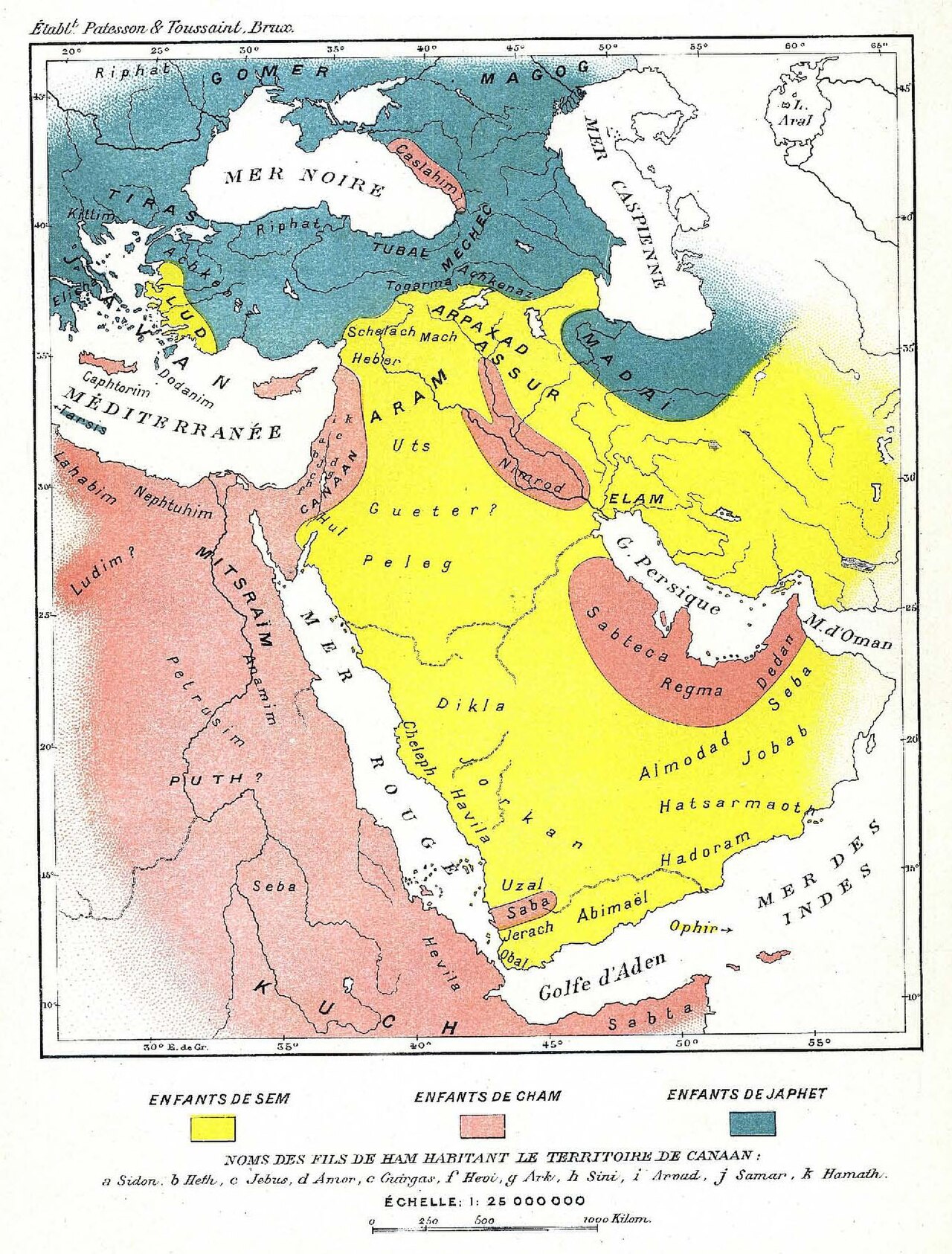
After the Flood, Noah's three sons, Shem, Ham, and Japheth, become the ancestors of the nations. Genesis 10 names them one by one, spreading out across the known world: Egypt, Canaan, Assyria, Elam, the coastlands, and beyond.
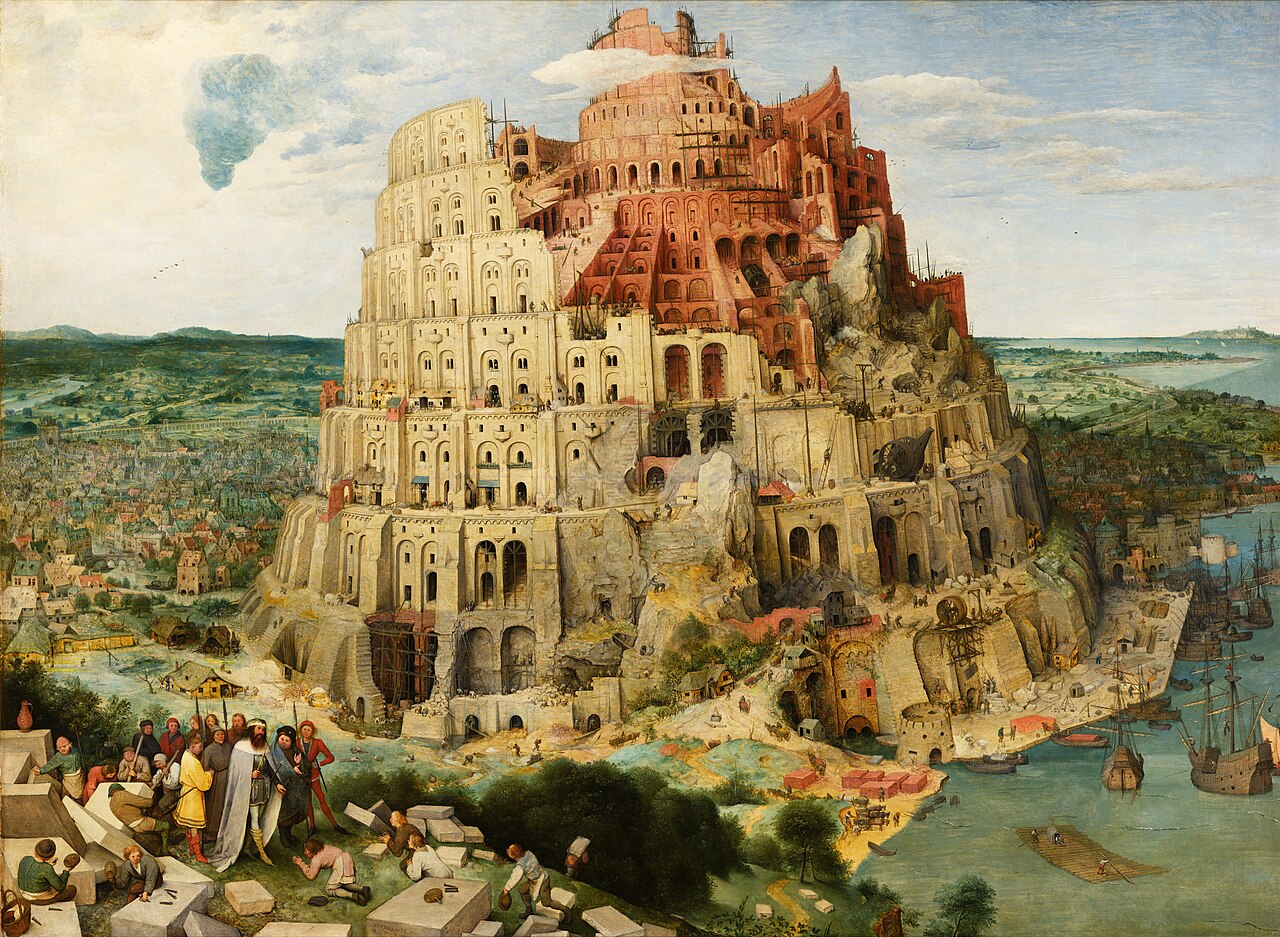
Genesis 11 tells how it happened. The whole earth has one language. People settle on a plain in the land of Shinar and say, "Go to, let us build us a city and a tower, whose top may reach unto heaven; and let us make us a name." They make bricks, bake them hard, and use bitumen for mortar.
The LORD comes down to see the city. He confuses their language so they cannot understand one another, and He scatters them across the face of the earth. They stop building. The city is called Babel, because there the LORD confused the language of all the earth.
Then the camera narrows. Genesis traces the line of Shem down to a man named Terah, who lives in Ur of the Chaldeans with his son Abram. Humanity tried to make a name for itself and failed. In the very next chapter, God will promise Abram: "I will make thy name great… and in thee shall all families of the earth be blessed."
Towers that reached for heaven
Shinar is the biblical name for southern Mesopotamia, the land of Babylon. Its cities built enormous stepped temple towers called ziggurats, designed as artificial mountains where heaven and earth met. One of the best preserved stands at Ur, the city Genesis links with Abraham.
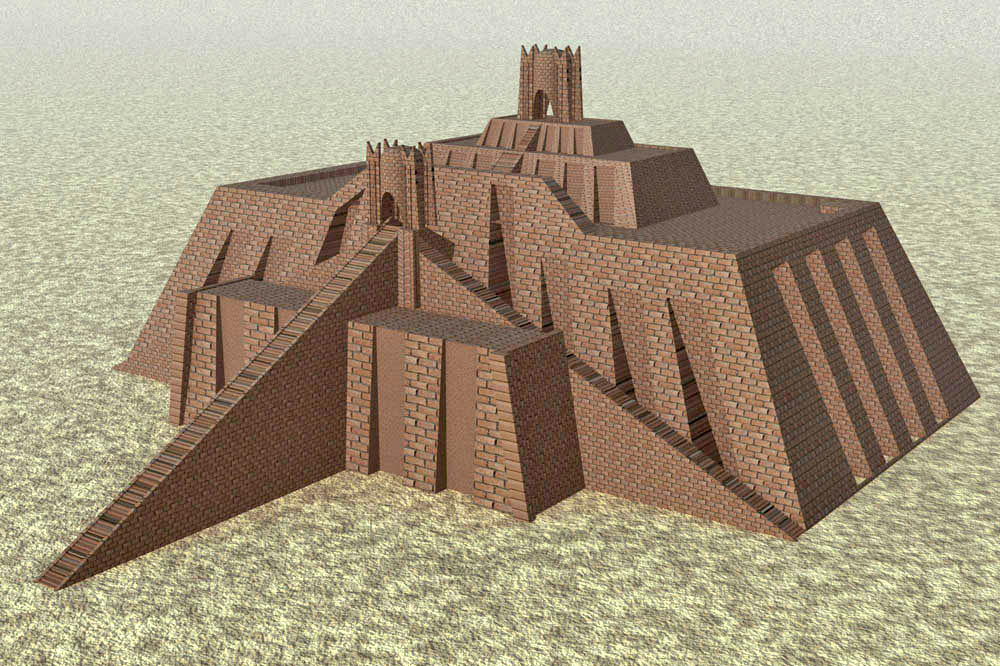
Babylon's own ziggurat was called Etemenanki, "the house of the foundation of heaven and earth." Ancient sources describe it as about 90 meters (300 feet) tall. Nebuchadnezzar II boasted of raising its top to the heavens, language strikingly close to Genesis 11.
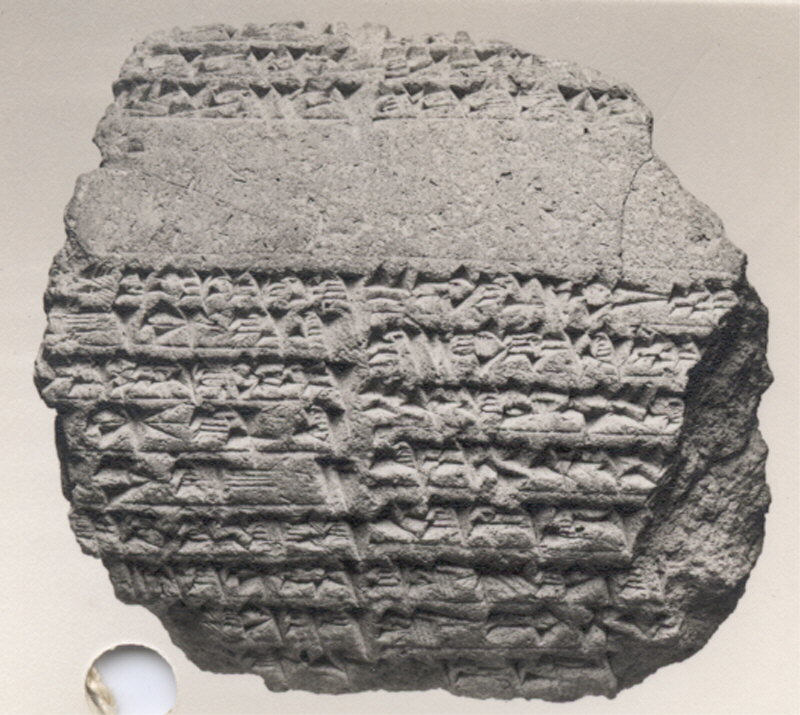
Even the building materials match. Genesis notes they used baked brick instead of stone and bitumen instead of mortar. That is exactly how Mesopotamian builders worked in a land with little stone, and the detail would have stood out to readers in stone-rich Canaan.
The Table of Nations
Genesis 10 lists about seventy peoples descended from Noah's sons. Many names correspond to real ancient peoples and places known from inscriptions: Mizraim (Egypt), Cush, Canaan, Asshur (Assyria), Elam, Javan (the Greeks of Ionia). It is an ancient map of the known world, organized as a family tree.
The Case for the Biblical Account
Scripture's account
Humanity, sharing one language, builds a city and tower in Shinar. God confuses their speech and scatters them. Genesis 10 lists the nations descended from Noah's sons (Genesis 10:1–11:26).
What evidence would we expect?
Monumental tower-building in southern Mesopotamia; building methods matching the description; real nations matching the names in Genesis 10.
The discoveries
Ziggurats throughout Mesopotamia, including Etemenanki at Babylon. Fired brick and bitumen as standard building materials. Many Table of Nations names attested in ancient records.
Testing the discoveries
The ziggurats, materials, and many national names are securely documented. No specific construction project has been identified as the tower of Genesis 11.
The strongest reconstruction
The Babel account fits the real world of Mesopotamian temple towers and royal ambition. It may preserve the memory of an actual monumental project, told to show God's verdict on human pride.
What remains possible
That Babel was a specific historical tower, possibly an early phase at Babylon or Eridu. How the world's language diversity relates to the event is not something linguistics can trace to a single moment.
An intriguing Sumerian parallel
A Sumerian poem known as Enmerkar and the Lord of Aratta contains a passage often called the "Spell of Nudimmud." It describes a time when all people spoke one language, and a god who changed the speech in their mouths. Scholars debate its exact meaning, but it shows that Mesopotamians also told of a time before language was divided.
What the evidence shows
- Mesopotamian cities built monumental ziggurats.
- Fired brick and bitumen were standard Mesopotamian building materials.
- Many peoples in Genesis 10 match nations known from ancient records.
- Mesopotamians told of a time when all spoke one language. The Sumerian passage's meaning is debated.
- A specific tower can be identified as Babel.
- God scattered humanity because of pride.
Continue the journey
Ancient MysteriesBefore Babel: Did Mesopotamians Remember a Change in Human Language?Does the Sumerian epic Enmerkar and the Lord of Aratta tell a version of the confusion of languages?More from this lesson
Investigations
Optional deep dives: the ancient sources, the physical evidence, and every interpretation side by side, including unconventional ones, each labeled for what it is.
Before Babel: Did Mesopotamians Remember a Change in Human Language?Ancient text: documented · Meaning of the passage: debated
Does the Sumerian epic Enmerkar and the Lord of Aratta tell a version of the confusion of languages?
A Sumerian epic contains a passage, the "Spell of Nudimmud," about a time when all people spoke to the god Enlil "in one tongue," and Enki changed the speech in their mouths. Scholars debate whether it describes a past confusion of languages, like Babel, or a hoped-for future unity.
Open the full investigation →Echoes Across Civilizations
Optional: how other ancient peoples told similar stories. Open one to compare, then come back to the lesson.
Towers to heaven and the scattering of languagesSumer · Babylon · Aztec (Cholula)
Did other peoples tell of a tower to the sky or a time of one language?
- Sumer: Enmerkar and the Lord of Aratta (the "Spell of Nudimmud") Shared literary world
- Babylon: Etemenanki, the ziggurat of Babylon Possible historical contact
- Aztec (Cholula): The giants' tower at Cholula Resemblance only
Why this matters to the rest of Scripture
- God's promise to Abram answers Babel: God makes his name great.
- At Pentecost, people of many languages each hear the gospel in their own tongue: Babel reversed.
- A multitude "of all nations, and kindreds, and people, and tongues" worships together.
- "Babylon the great" becomes the Bible's final symbol of proud human power.
Sources to explore
Overviews are a starting point. Each links onward to the primary sources and specialist studies behind it.