Era 2 · The Family of AbrahamGenesis
Two Brothers, Two Destinies
Esau, Jacob, a bowl of stew, and a stolen blessing
Abraham dies "in a good old age," and his sons Isaac and Ishmael bury him together in the cave of Machpelah beside Sarah. Genesis lists Ishmael's twelve sons, princes of tribes, just as God promised Hagar.
Rebekah, like Sarah, cannot have children. Isaac prays for her for twenty years, and she conceives twins who struggle inside her. In pain, Rebekah does what no one in the story has yet done: she goes "to enquire of the LORD." The answer comes to her: "Two nations are in thy womb… and the elder shall serve the younger."
Esau is born red and hairy; Jacob follows holding his brother's heel, so he is named Jacob, "heel-holder," which can also mean "supplanter." Esau grows into a hunter, Isaac's favorite. Jacob is a quiet man who stays among the tents, Rebekah's favorite.
One day Esau comes in from the field famished. "Feed me, I pray thee, with that same red pottage." Jacob names his price: "Sell me this day thy birthright." "I am at the point to die: and what profit shall this birthright do to me?" Esau swears, eats, drinks, gets up and leaves. "Thus Esau despised his birthright."
Isaac, meanwhile, lives through his own famine, repeats his father's wife-sister fear with Rebekah at Gerar, and digs wells that the Philistines quarrel over: Esek ("contention"), Sitnah ("enmity"), and finally Rehoboth ("room"): "now the LORD hath made room for us." At Beersheba God renews Abraham's promise to him.
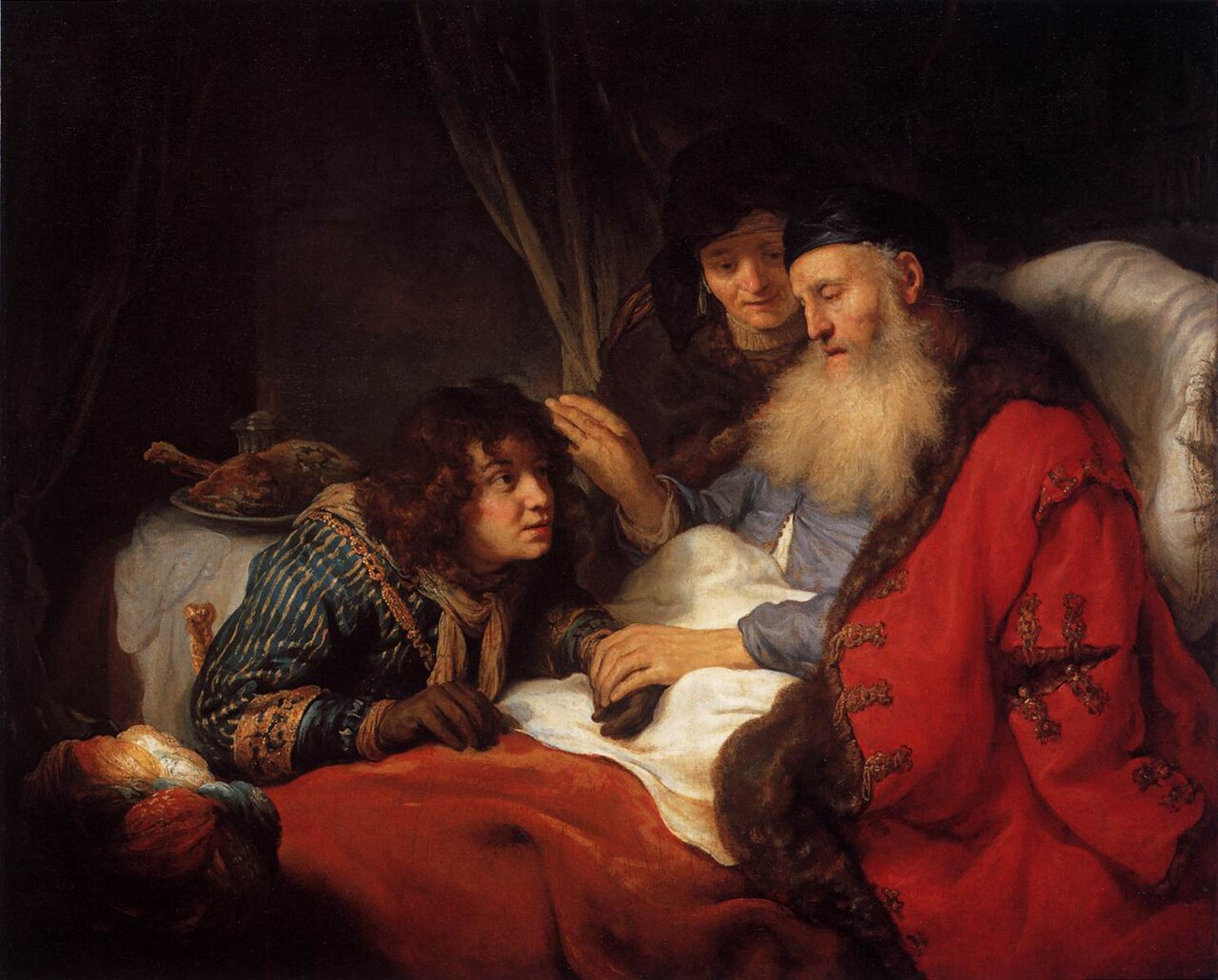
Years later, Isaac is old and blind. He sends Esau to hunt game and prepare a meal so that he may bless him before he dies. Rebekah overhears and acts: she cooks two goats, dresses Jacob in Esau's clothes, and covers his hands and neck with goatskin. "Upon me be thy curse, my son." Isaac is suspicious: "The voice is Jacob's voice, but the hands are the hands of Esau." He blesses him with the dew of heaven and lordship over his brothers.
Esau returns, and "cried with a great and exceeding bitter cry." "Bless me, even me also, O my father." The blessing cannot be taken back. Esau vows to kill Jacob once their father dies. Rebekah sends Jacob away to her brother Laban in Haran, "until thy brother's fury turn away." She will never see her son again.
Edom: Esau's people
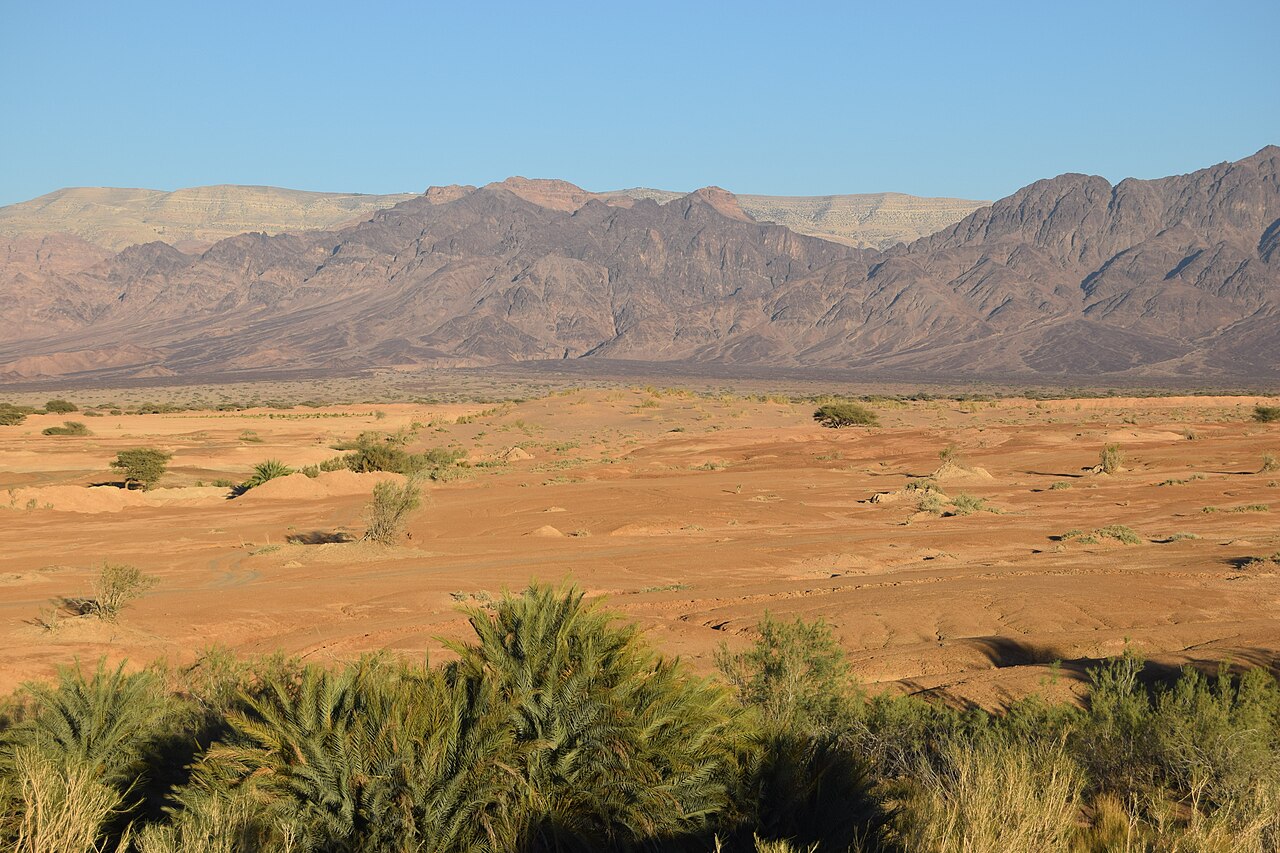
Genesis presents Esau as the ancestor of Edom, the people south and east of the Dead Sea. Edom appears in Egyptian records: a scribe's report in Papyrus Anastasi VI (about 1200 BC) notes that Shasu herders "of Edom" were allowed past the border fortress into the eastern Delta "to keep them alive and to keep their cattle alive." Excavations in the copper-mining region of Faynan show large-scale industry in Edom's territory by the 10th century BC.
Birthright and blessing
In the ancient Near East the firstborn usually received a double share and leadership of the family, but fathers could sometimes choose another heir. Tablets from Nuzi have been cited for a man selling his inheritance share to his brother for three sheep, a striking parallel to Esau's stew, though such comparisons are now used with more caution. A deathbed blessing had legal and spiritual weight. Genesis repeatedly reverses birth order: Isaac over Ishmael, Jacob over Esau, Joseph over his older brothers, Ephraim over Manasseh, and later David, the youngest son.
Rebekah's decision
Rebekah is one of the most active women in Genesis: she chose to leave home, received God's word about her sons directly, and engineered the blessing she believed God intended. Interpreters have judged her very differently: as a deceiver, or as a mother acting on the oracle God gave her. Genesis lets her stand without a verdict and shows the cost: exile for her favorite son, and a fractured family.
The Case for the Biblical Account
Scripture's account
Rebekah bears twins, Esau sells his birthright, Isaac digs wells at Gerar and Beersheba, and Jacob takes Esau's blessing (Genesis 25–27).
What evidence would we expect?
An Edomite people south of the Dead Sea; customs of birthright and inheritance; water disputes among herders in the Negev.
The discoveries
Edom in Egyptian records from about 1200 BC; Edomite copper industry by the 10th century BC; inheritance laws and contracts across the ancient Near East.
Testing the discoveries
Edom as a kingdom (36:31 lists its kings) is clearest from the 8th century BC. The stories may explain later relations between Israel and Edom, or preserve memory of earlier kinship.
The strongest reconstruction
Israel always remembered Edom as its brother people, unusual for a neighboring rival. Genesis ties that memory to twin ancestors whose story is told without flattering Israel's own forefather.
What remains possible
Historical twin ancestors, an ancestral story shaped to express later national relations, or both.
What the evidence shows
- Edomite herders are mentioned in Egyptian records around 1200 BC.Source: Papyrus Anastasi VI (c. 1200 BC): Shasu of Edom allowed into the Delta, trans. in Context of Scripture 3.5
- Large-scale copper production existed in Edom's territory in the 10th century BC.Source: T. E. Levy et al., copper production at Khirbat en-Nahas, Faynan (Edom), PNAS 2008 / 2014
- Ancient fathers could sometimes transfer firstborn privileges.
- Jacob and Esau were historical twins.
- "The elder shall serve the younger" was God's word to Rebekah.
Continue the journey
Next in the storyJacob's Ladder and His FamilyFleeing Esau, Jacob dreams of a stairway to heaven at Bethel.More from this lesson
Why this matters to the rest of Scripture
- Paul on God's choice of Jacob "not of works, but of him that calleth."
- Esau, "who for one morsel of meat sold his birthright."
- "Was not Esau Jacob's brother? saith the LORD."
- The prophet condemns Edom's violence "against thy brother Jacob."