Era 2 · The Family of AbrahamGenesis
Sarah's Burial and Isaac's Marriage
A grave in Hebron and a bride at the well
Sarah dies at 127 in Hebron, and Abraham comes "to mourn for Sarah, and to weep for her." Then he rises and goes to the sons of Heth, the people of the land: "I am a stranger and a sojourner with you: give me a possession of a buryingplace."
What follows is a careful, courteous negotiation at the city gate. The Hittites offer him their best tombs for free. Abraham insists on paying for the cave of Machpelah, owned by Ephron. Ephron, with exquisite politeness, names his price: "the land is worth four hundred shekels of silver; what is that betwixt me and thee?" Abraham weighs out the silver "current money with the merchant," and the field, the cave, and every tree in it are made over to him before witnesses. The man promised the whole land now owns one grave.
Abraham, "old, and well stricken in age," makes his chief servant swear to find Isaac a wife from his own kindred, not from the Canaanites, and never to take Isaac back there. The servant sets out with ten camels for Aram-naharaim, "the city of Nahor."
At the well at evening, when the women come to draw water, he prays for a sign: let the young woman who offers water to me and my camels be the one. Before he finishes, Rebekah comes out with her jar. She gives him a drink and then runs again and again to water all ten camels. He gives her a gold nose ring and bracelets and learns she is the granddaughter of Abraham's brother Nahor. He bows and worships.
Her brother Laban welcomes him. The servant tells the whole story, and the family agrees, but wants her to stay ten days. They ask Rebekah herself: "Wilt thou go with this man?" "I will go." Like Abraham before her, she leaves her country and her father's house. Isaac is walking in the field at evening when he sees the camels coming. He brings her into his mother's tent, "and she became his wife; and he loved her: and Isaac was comforted after his mother's death."
The Cave of the Patriarchs
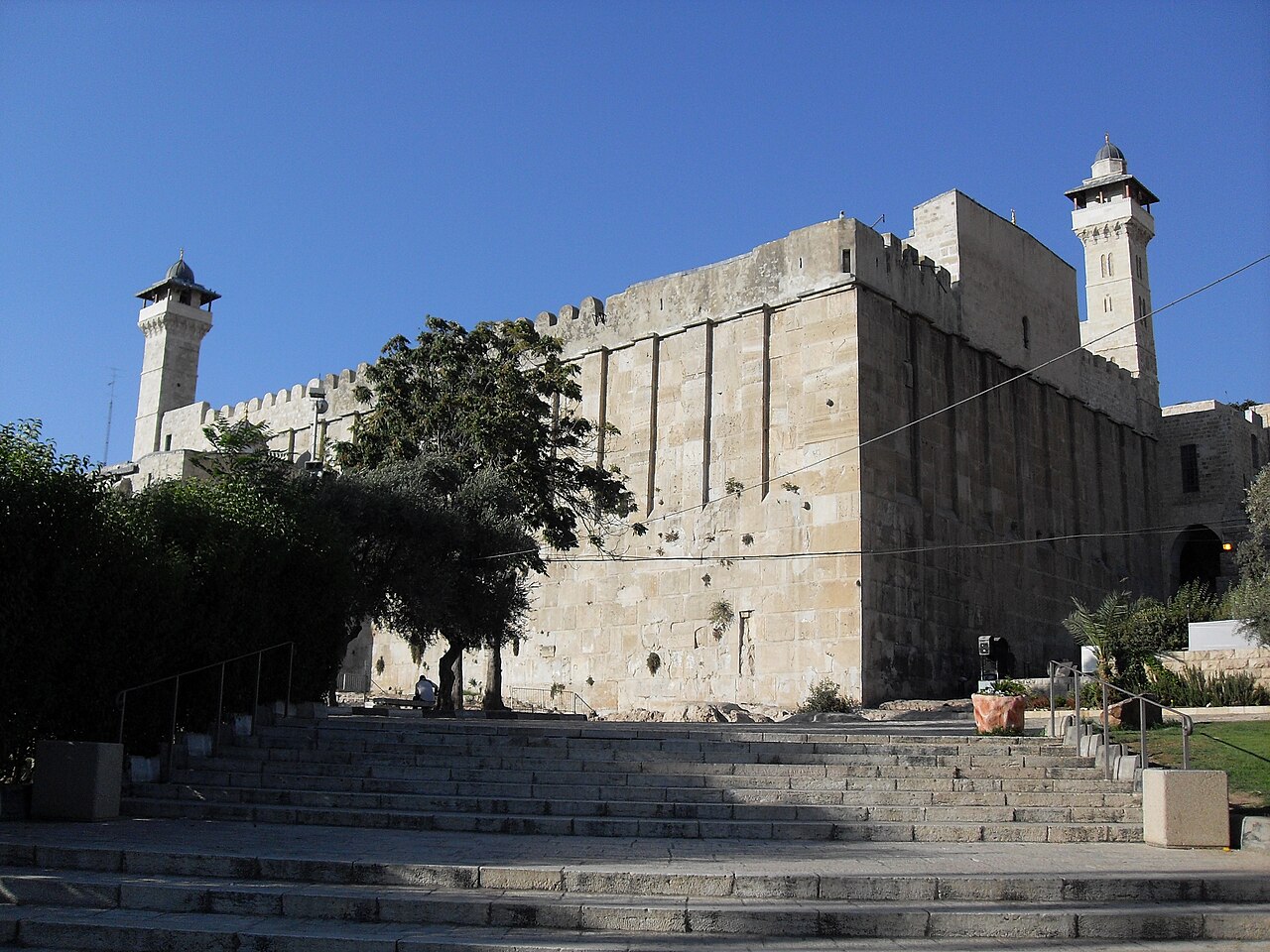
In Hebron today stands a massive stone enclosure over the traditional cave of Machpelah. Its walls are built in the style of Herod the Great (late 1st century BC), with huge finely dressed stones. Later it held a Byzantine church, then a mosque (the Ibrahimi Mosque), and it remains holy to Jews, Christians and Muslims. In 2017 UNESCO inscribed Hebron's Old Town, including the site, as a World Heritage Site. The caves beneath have been entered only a few times in modern history.
The enclosure shows that the burial tradition was firmly established and honored by the Second Temple period. It cannot, by itself, prove who was first buried in the cave.
Buying land at the gate
Ancient business was done at the city gate before witnesses, as in Ruth 4. Genesis 23 lists the boundaries, trees and price, like a deed. Scholars have compared it with Hittite laws and with Neo-Babylonian "dialogue documents" of the first millennium BC; the comparisons point in different directions for dating, but they confirm that the chapter reflects real legal practice.
The camels
The servant's ten camels have become a famous historical question. Tel Aviv University archaeologists found that domesticated camels appear in the copper mines of the Aravah valley only in the late 10th century BC. Camels were known earlier, and a few earlier finds may show limited domestic use, but camel caravans are clearly attested later than Abraham's traditional date.
The Case for the Biblical Account
Scripture's account
Abraham buys the cave of Machpelah from Ephron the Hittite; his servant brings Rebekah from Nahor's city to marry Isaac (Genesis 23–24).
What evidence would we expect?
An ancient, continuous burial tradition at Hebron; legal customs of land purchase; a real city of Nahor; marriage customs involving gifts and family consent.
The discoveries
A monumental Herodian enclosure honoring the patriarchs; Nahur in the Mari letters; ancient land-sale and marriage-gift customs.
Testing the discoveries
The enclosure is about 1,800 years later than the traditional date for Abraham. The camels and the "sons of Heth" raise questions about whether details were updated or composed later.
The strongest reconstruction
Hebron's patriarchal burial tradition is ancient and continuous; the negotiation and marriage customs are realistic. The burial of Abraham and Sarah there rests on Genesis and tradition.
What remains possible
That the cave holds the patriarchs' graves; that the tradition grew around an ancient tomb; or that later scribes updated details such as camels for their readers.
Two views of the camels
Camel caravans fit the first millennium BC. The detail may show when the story reached its present form, or a scribe making an old journey vivid for readers who traveled by camel.
Camels were known in the region earlier, and wealthy households might have owned a few. Genesis presents camels as a mark of exceptional wealth, which suggests they were rare. Absence of bones in excavated sites is not proof that no one owned them.
What the evidence shows
- The Hebron enclosure was built in the Herodian period over a site venerated as the patriarchs' tomb.Source: UNESCO World Heritage List: Hebron/Al-Khalil Old Town (2017) ↗
- Abraham and Sarah were buried in the cave of Machpelah.
- Domesticated camels were widely used in the southern Levant before the 10th century BC. Current evidence places widespread use later; limited earlier use is possible.Source: Tel Aviv University: earliest domesticated camels in Israel's Aravah valley (Sapir-Hen & Ben-Yosef, 2013) ↗
- A town called Nahur existed in upper Mesopotamia in the early second millennium BC.
Continue the journey
Connected in this bookJacob's Final BlessingsGenesis 49:29–32: Jacob asks to be buried in Machpelah with Abraham, Sarah, Isaac, Rebekah and Leah.More from this lesson
Why this matters to the rest of Scripture
- The patriarchs "confessed that they were strangers and pilgrims on the earth."
- Jacob asks to be buried in Machpelah with Abraham, Sarah, Isaac, Rebekah and Leah.
- Stephen's speech, which compresses the burial traditions of Hebron and Shechem.
- Another property deal settled before witnesses at the city gate.
Sources to explore
- UNESCO World Heritage List: Hebron/Al-Khalil Old Town (2017) ↗
- Tel Aviv University: earliest domesticated camels in Israel's Aravah valley (Sapir-Hen & Ben-Yosef, 2013) ↗
Overviews are a starting point. Each links onward to the primary sources and specialist studies behind it.