Genesis 47:31
Bed or staff? Same letters, two readings
Israel bowed "upon the bed's head" in the Hebrew, but "upon the top of his staff" in the Greek, which Hebrews 11:21 quotes. The Hebrew consonants are the same; the vowels differ.
Same letters, different readings: the consonants agree, but ancient readers vocalized or interpreted them differently
The family tree
Each row is a language or text tradition. Witnesses in the same row may share ancestry, revise one another, or have an uncertain relationship; the line under each box says which. A solid arrow appears only where direct copying or a documented revised edition is established. Order by date never implies copying. Scroll sideways on a phone.
✓ contains it · ✕ does not · ❝ quotes part of it · ⓘ reports on manuscripts · ▢ pages lost · – no copy survives
- Same line, through lost copies
- Translation
- Related (shared ancestry)
One word, two vowel patterns
- Consonants (as originally written)
- מטה (m-ṭ-h)
- Read as mittah
- "bed": Masoretic Text, Vulgate, KJV and most English translations of Genesis
- Read as matteh
- "staff": Septuagint, Hebrews 11:21
Every witness, in order
Unknown (debated)
Original Genesis
Written in consonants only. Ancient Hebrew did not write vowels.
Translated c. 250 BC
Septuagint
How the site knows this: Reported in scholarship; not checked by the site.
Israel bowed in worship upon the top of his staff.
The translators read the word as matteh, "staff" (Greek rhabdos).
1st century AD
Hebrews 11:21
How the site knows this: Read in the site's library text: the Greek New Testament editions in the library (Textus Receptus, Byzantine Textform, Statistical Restoration).
προσεκύνησεν ἐπὶ τὸ ἄκρον τῆς ῥάβδου αὐτοῦ
…worshipped, leaning upon the top of his staff.
The letter to the Hebrews quotes the Greek reading.
c. AD 400
Jerome's Vulgate
How the site knows this: Read in the site's library text: Clementine Vulgate (1592 edition).
adoravit Israel Deum, conversus ad lectuli caput
Israel worshipped God, turning to the head of the bed.
Jerome follows the Jewish reading tradition, "bed," centuries before the Masoretes wrote vowels down.
AD 1008
Masoretic Text (Leningrad Codex)
How the site knows this: Read in the site's library text: Westminster Leningrad Codex, a digital transcription of the Leningrad Codex.
וַיִּשְׁתַּחוּ יִשְׂרָאֵל עַל־רֹאשׁ הַמִּטָּה
And Israel bowed himself upon the head of the bed.
The Masoretes' vowel points read mittah, "bed." Their vowels record a reading tradition much older than the codex, as Jerome's translation shows.
Ancient tradition; medieval copies
Samaritan Pentateuch
How the site knows this: Read in the site's library text: Samaritan Pentateuch, Kennicott's 1780 text digitized by A. Sigalov.
וישתחוי ישראל על ראש המטה
And Israel bowed upon the head of the mṭh
The same consonants, mṭh, without vowels. They can be read mittah, "bed," or matteh, "staff."
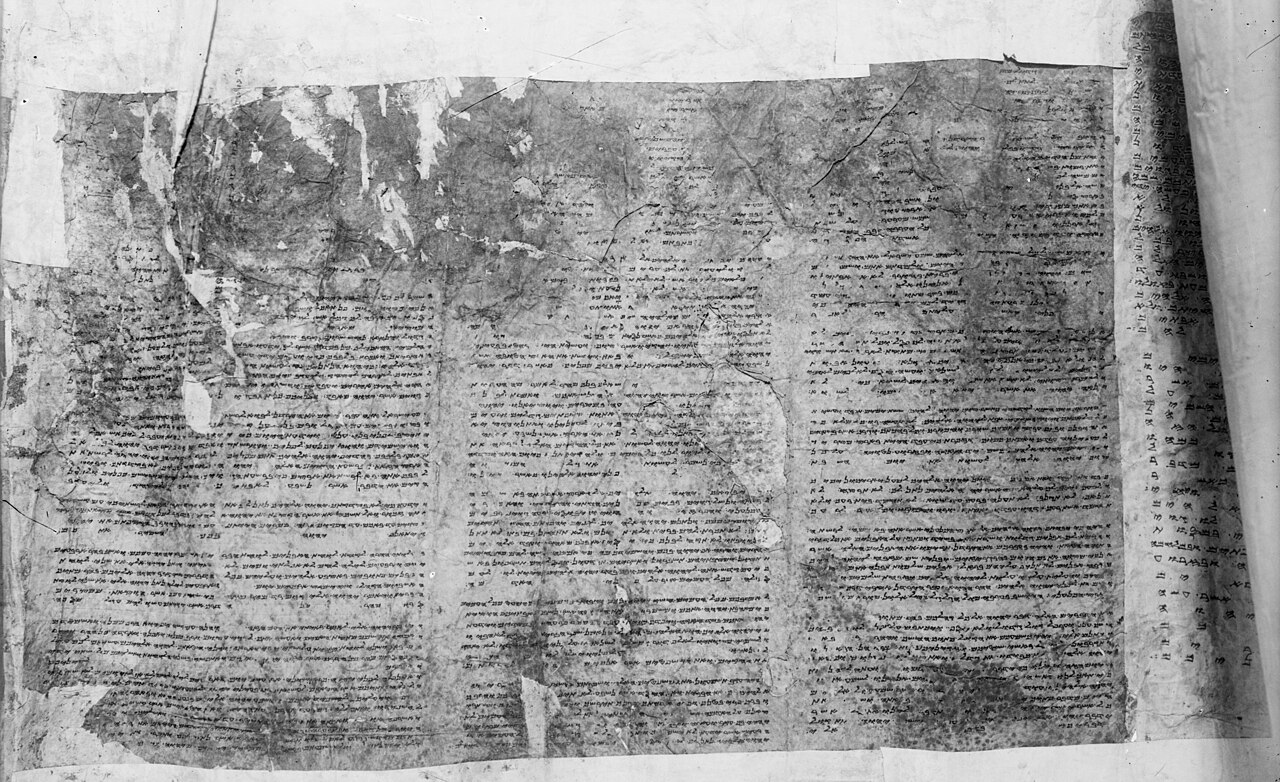
Historical manuscriptImage credit Pictured: a Samaritan Torah scroll, not this verse.
1611
King James Bible
How the site knows this: Read in the site's library text: King James Version (1769 text).
Israel bowed himself upon the bed's head.
"Bed" in Genesis 47:31; "staff" in Hebrews 11:21, faithfully translating each source.
What changed, and why
Ancient Hebrew was written without vowels. Readers supplied them from knowledge and tradition. The Masoretes, between about AD 600 and 1000, added vowel marks to preserve the traditional pronunciation. Here, the same three letters can mean two different things.
Neither reading changes the story: a dying man bowing in worship. But it shows how the New Testament could quote a reading that differs from the standard Hebrew without anyone altering the letters.
What the evidence shows
- The Hebrew consonants mṭh can be read "bed" or "staff."
- The Septuagint and Hebrews 11:21 read "staff"; the Masoretic vowels and the Vulgate read "bed."
- Which reading the author intended. Both are grammatically possible.
Sources
- NET Bible translators' note on Genesis 47:31 ↗
- E. Tov, Textual Criticism of the Hebrew Bible, 3rd ed. (Fortress, 2012)
Related lessons
- Joseph Reveals Himself →Joseph reveals himself and forgives his brothers. Jacob's whole family, seventy in the Hebrew count, settles in Goshen, while Joseph's policies bring Egypt's land under Pharaoh.
- Scribes, Jerome, and the Masoretes →Jerome gave the West its Latin Bible; Jewish scholars called the Masoretes guarded the Hebrew text letter by letter.