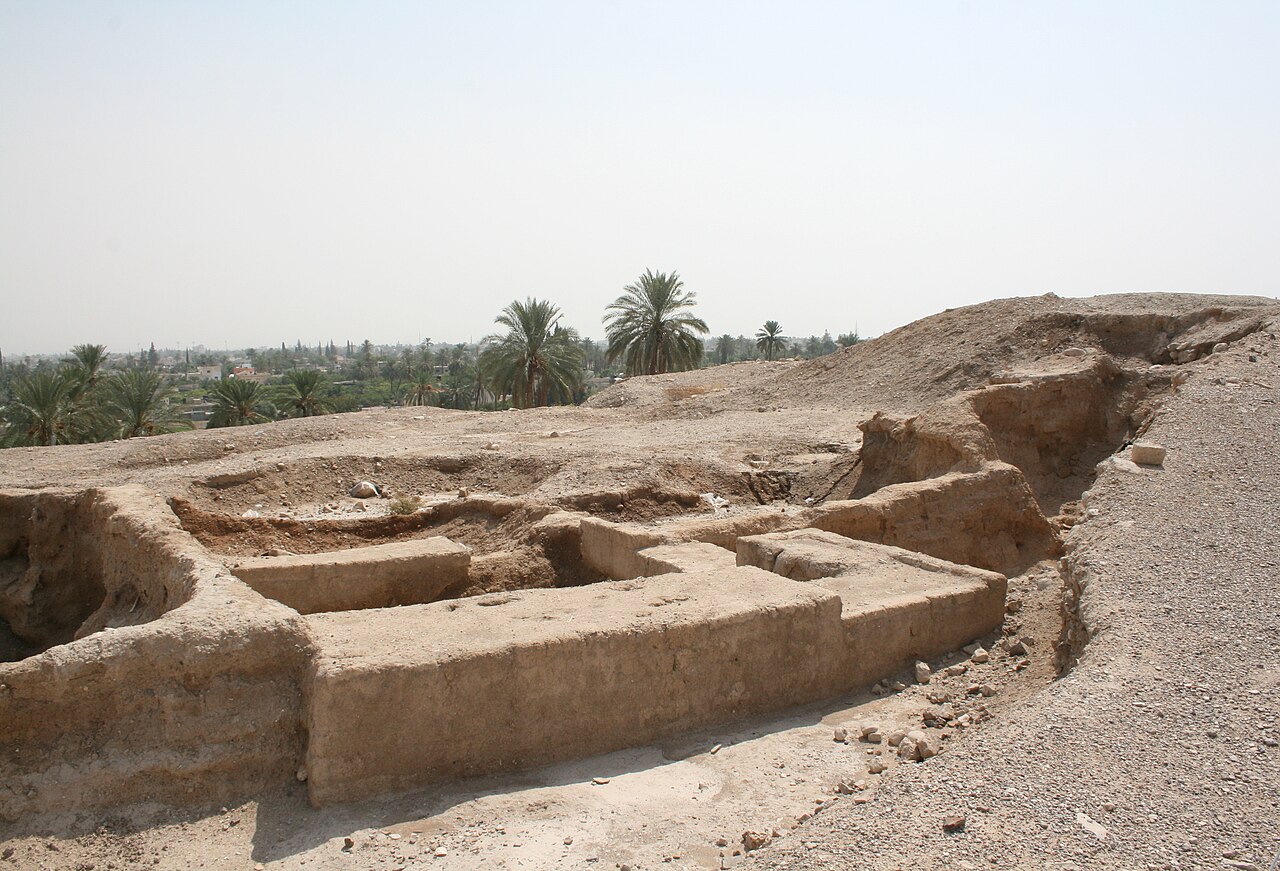
"Make thee sharp knives [of flint], and circumcise again the children of Israel the second time." The men who left Egypt had been circumcised, but those born on the journey had not. "This day have I rolled away the reproach of Egypt from off you. Wherefore the name of the place is called Gilgal unto this day."
Israel keeps the Passover on the fourteenth day of the month in the plains of Jericho. "And they did eat of the old corn of the land on the morrow after the passover, unleavened cakes, and parched corn… And the manna ceased on the morrow… neither had the children of Israel manna any more."
By Jericho Joshua looks up and sees "a man over against him with his sword drawn in his hand." "Art thou for us, or for our adversaries?" "Nay; but as captain of the host of the LORD am I now come." Joshua falls on his face. "Loose thy shoe from off thy foot; for the place whereon thou standest is holy. And Joshua did so."
Flint knives
Flint blades remained in ritual use long after metal tools were common; Zipporah also circumcised with a flint (Exodus 4:25). The Greek Septuagint adds at the end of the book that the flint knives were buried with Joshua in his tomb (24:30–31 in the Greek), a detail not in the Hebrew. No such knives have been found.
Gilgal and the "reproach of Egypt"
The name Gilgal is explained by a play on galal, "to roll": God "rolled away" the reproach. Many place-name explanations in Joshua (Gilgal, Achor, the stones "unto this day") are etiologies, stories that explain a name or landmark. Calling them etiologies describes their form; it does not decide their historicity.
Who is the commander?
Jewish tradition often identified him with the archangel Michael; many Christian interpreters saw a pre-incarnate appearance of Christ, because Joshua worships and is told to remove his shoes, as Moses was at the burning bush (Exodus 3:5). Others read him as an angel representing God's army. The text describes a man with a sword; it does not describe any device or vehicle, and readings of him as a technological visitor are modern speculation.
The Greek version of 5:2–9 differs from the Hebrew in its explanation of who was circumcised and why; the How Joshua Came to Us lesson lists it among the Greek–Hebrew differences.
The Case for the Biblical Account
Scripture's account
Circumcision at Gilgal, the first Passover in Canaan, the end of manna, and the commander of the LORD's army (Joshua 5).
What evidence would we expect?
Flint tools in ritual use; Passover traditions; continuity with the Exodus narrative.
The discoveries
Flint blades in Bronze and Iron Age contexts; the Septuagint's longer ending mentioning the knives; the theophany parallel with Exodus 3.
Testing the discoveries
The ritual details fit the ancient setting; the events are known only from Scripture.
The strongest reconstruction
Joshua 5 presents the entry into the land as a renewal of the covenant signs before any battle.
What remains possible
The identity of the commander; the relationship between the Greek and Hebrew forms of 5:2–9.
What the evidence shows
- The Septuagint says the flint knives were buried with Joshua. Checked in the library's Greek (Giguet), 24:31.
- The commander was the pre-incarnate Christ. A traditional Christian reading; Jewish tradition says Michael.
- The commander was a technological visitor. A modern speculation; the text describes a man with a sword.
Continue the journey
Journey of a PassageJoshua 24:29–33: Flint knives in Joshua's tomb: the Greek endingThe Hebrew ends with three burials.More from this lesson
Why this matters to the rest of Scripture
- "Put off thy shoes from off thy feet."
- Zipporah's flint.
- Manna until they came to Canaan.
- Michael the prince.
- Circumcision of the heart.