myBibleHistory

Ancient Mysteries & Interpretations

Israel in Egyptian Records: the Merneptah Stele and the Amarna Letters

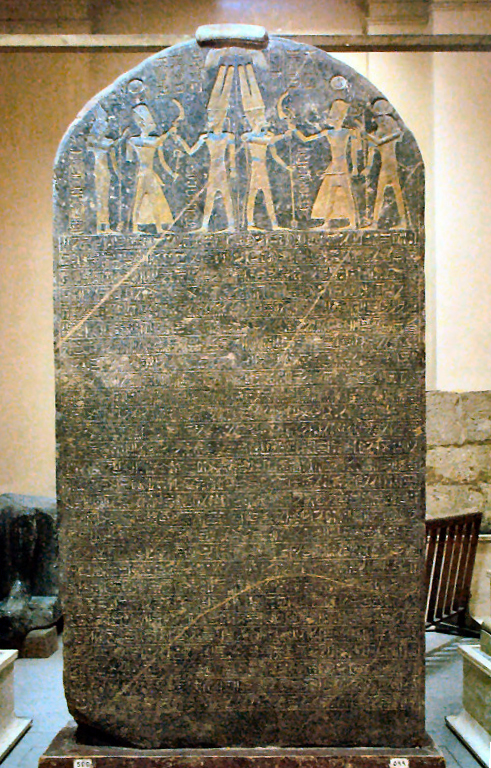
Pharaoh Merneptah's victory stele (c. 1208 BC) names Israel as a people in Canaan, the earliest widely accepted mention outside the Bible. A century earlier, the Amarna letters show Canaan's city-kings writing to Pharaoh and complaining about the 'Apiru. Neither mentions Joshua or describes a conquest.

Stele and letters: authentic · "Israel" as a people c. 1208 BC: documented · Joshua or a conquest: not mentioned

The Merneptah Stele
Authentic ancient artifactThe Merneptah Stele (c. 1208 BC), Egyptian Museum, Cairo, JE 31408: the earliest widely accepted mention of Israel outside the Bible.Image credit

1 What Scripture says

2 What evidence we might expect

  • An external mention of Israel in Canaan by the end of the Late Bronze Age.
  • Canaanite city-states with local kings.

3 What ancient sources survive

Merneptah Stele ("Israel Stele")

Language
Egyptian hieroglyphic
Composed
c. 1208 BC (year 5 of Merneptah)
Oldest surviving copy
Granite stele found by Flinders Petrie at Thebes in 1896; Egyptian Museum, Cairo (JE 31408)
Status
Not scripture

"Israel is laid waste, his seed is not"; Israel written with the determinative for a people.

Source: The Merneptah Stele (Cairo JE 31408): Oriental Institute educational text ↗

Amarna letters

Language
Akkadian cuneiform
Composed
c. 1360–1332 BC
Oldest surviving copy
About 380 clay tablets found at Tell el-Amarna, Egypt, in 1887
Status
Not scripture

Abdi-Heba of Jerusalem (EA 286–290) complains of the 'Apiru.

4 What discoveries exist

The Merneptah Stele
Authentic ancient artifactThe Merneptah Stele (c. 1208 BC), Egyptian Museum, Cairo, JE 31408: the earliest widely accepted mention of Israel outside the Bible.Image credit

A Berlin statue pedestal (ÄM 21687) has been read by some as an earlier mention of Israel; that reading is debated and is examined in the Exodus investigations. It does not replace the Merneptah Stele as the accepted earliest mention.

5 How interpretations compare

Traditional reading

'Apiru = Hebrews

The 'Apiru troubling Canaan's kings include Joshua's Israelites (early-date model).

Assessment: Most scholars see 'Apiru as a social category, not one people.

6 The strongest supported reconstruction

By about 1208 BC Egypt recognized a people called Israel in Canaan. The Amarna letters show the political world of city-states the conquest narratives describe. Neither text documents Joshua.

7 What remains possible or unknown

  • How long Israel had been in Canaan before 1208 BC.
  • The relationship between the 'Apiru and early Israel.

What the evidence shows

Where this connects