Era 5 · The Promised LandJudges
Historical Investigation: How Did Israel Emerge in Canaan?
Judges' picture of scattered tribes, and what the Iron I highlands show
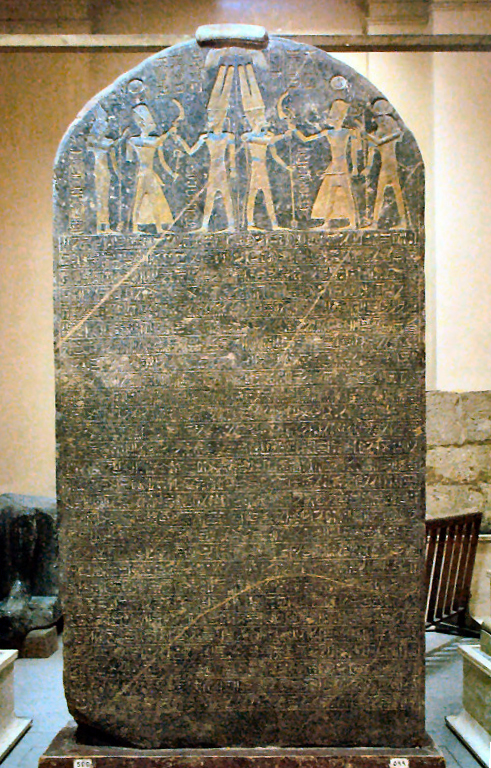
Joshua tells of a conquest; Judges of a long, uneven settlement. Between them they give two pictures of Israel's beginnings. The fuller treatment of Jericho, Ai, Hazor, the Merneptah Stele and the models of conquest, infiltration and emergence is in Joshua's evidence lesson. Here the focus is on what Judges adds.
The Iron I villages
Surveys led by Israel Finkelstein, Adam Zertal and others recorded about 250 new sites in the central hills in the 12th–11th centuries BC, growing to many more later. They are small, unwalled villages with "four-room" houses, collared-rim storage jars, terraces and cisterns, and very few pig bones. Who these people were, and where they came from, is debated: local Canaanites moving uphill, pastoralists settling, newcomers from outside, or a mixture. Finkelstein stresses that pottery and houses alone do not prove ethnicity.
| Judges | Archaeology of Iron I |
|---|---|
| Israel in the hills, Canaanites in the plains (ch. 1) | New hill villages; continuing lowland cities |
| No king (17:6) | No palaces or monumental buildings in the hill villages |
| Philistine pressure (chs. 13–16) | Philistine cities expanding in the 12th–11th centuries |
| Local shrines (chs. 6, 17–18) | Small cult places such as the Bull Site; Shiloh |
Chronology
Adding up the oppressions and rests in Judges gives about 410 years, more than 1 Kings 6:1 allows between the Exodus and Solomon (480 years) once the wilderness, Joshua, Eli, Samuel, Saul and David are added. Most scholars and many conservative readers conclude that some judges overlapped, serving different regions at the same time. Jephthah's "300 years" (11:26) is a figure in a speech.
The Case for the Biblical Account
Scripture's account
Tribes without kings in the land (Judges 1–21).
What evidence would we expect?
Small, decentralized settlements; continuing Canaanite cities; regional conflicts.
The discoveries
Iron I highland villages; Merneptah's "Israel" c. 1208 BC; Philistine settlement on the coast.
Testing the discoveries
The general picture matches Judges well; the identity and origin of the villagers are debated.
The strongest reconstruction
Judges preserves the memory of a decentralized, tribal Israel in a contested land.
What remains possible
Early conquest models; gradual emergence models; combinations.
What the evidence shows
- Hundreds of new villages appeared in the central hills in Iron I.Source: I. Finkelstein, "Ethnicity and Origin of the Iron I Settlers in the Highlands of Canaan," Biblical Archaeologist 59 (1996) ↗
- The villagers were the early Israelites. Their origins are debated.
- Some judges served at the same time.
Continue the journey
Ancient MysteriesIsrael in Egyptian Records: the Merneptah Stele and the Amarna LettersWhat do Egypt's own texts say about Canaan and Israel in this period?More from this lesson
Investigations
Optional deep dives: the ancient sources, the physical evidence, and every interpretation side by side, including unconventional ones, each labeled for what it is.
Israel in Egyptian Records: the Merneptah Stele and the Amarna LettersStele and letters: authentic · "Israel" as a people c. 1208 BC: documented · Joshua or a conquest: not mentioned
What do Egypt's own texts say about Canaan and Israel in this period?
Pharaoh Merneptah's victory stele (c. 1208 BC) names Israel as a people in Canaan, the earliest widely accepted mention outside the Bible. A century earlier, the Amarna letters show Canaan's city-kings writing to Pharaoh and complaining about the 'Apiru. Neither mentions Joshua or describes a conquest.
Open the full investigation →Why this matters to the rest of Scripture
- Cities not taken.
- 480 years.
- "About the space of four hundred and fifty years."