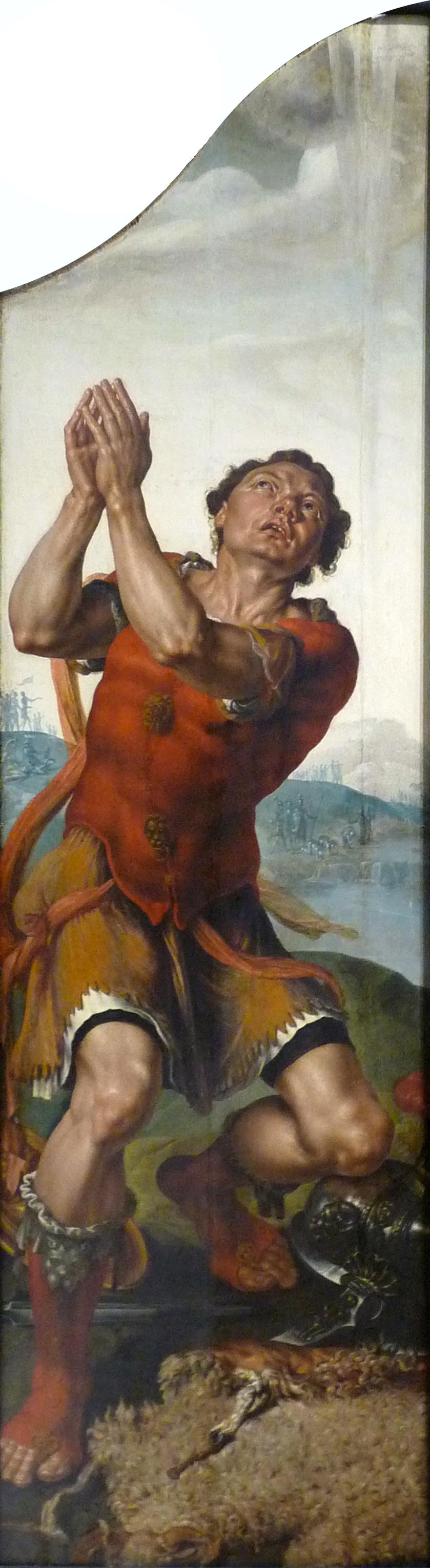
Era 5 · The Promised LandJudges
Gideon's Calling and the Missing Qumran Speech
"The LORD is with thee, thou mighty man of valour"
Midian, Amalek and "the children of the east" come "as grasshoppers for multitude; for both they and their camels were without number," and destroy the crops "till thou come unto Gaza." Israel hides in caves and dens and cries to the LORD.
"The LORD sent a prophet unto the children of Israel, which said unto them, Thus saith the LORD God of Israel, I brought you up from Egypt… but ye have not obeyed my voice." (These verses, 6:7–10, are absent from the Qumran manuscript 4QJudg-a; see below.)
The angel of the LORD sits under the oak at Ophrah while Gideon "threshed wheat by the winepress, to hide it from the Midianites." "The LORD is with thee, thou mighty man of valour." Gideon: "if the LORD be with us, why then is all this befallen us?" "Go in this thy might… have not I sent thee?" "My family is poor in Manasseh, and I am the least in my father's house." Fire from the rock consumes his offering; Gideon builds an altar, "Jehovah-shalom."
That night he pulls down his father's altar of Baal and cuts down the Asherah. The townsmen demand his death; his father Joash answers, "Will ye plead for Baal?… if he be a god, let him plead for himself," and Gideon is called Jerubbaal. Then the fleece: wet with dew on dry ground, then dry on wet ground.
The missing speech: 4QJudg-a
4QJudg-a (4Q49), a fragment from Qumran Cave 4 dated to the second half of the 1st century BC, preserves parts of Judges 6:2–6 followed directly by 6:11–13. As published by Julio Trebolle Barrera, the prophet's speech of 6:7–10 is not there. The fragment is small, so the scale of the gap is reconstructed from line lengths, but the join between 6:6 and 6:11 is on the preserved text.
Many scholars think 6:7–10 is a later addition: a Deuteronomistic sermon inserted into the story, and the Qumran scroll preserves the earlier, shorter form. Others think the scroll's scribe skipped the verses, or that it was an excerpted text. Robert Rezetko and Trebolle Barrera discuss what it means for how Judges was composed. The passage page marks what is preserved and what is reconstructed.
Camels and raiders
Domesticated camels were used in Arabia and the southern Levant from at least the late 2nd millennium BC; camel bones at Timna's copper mines appear around the 10th century BC. Camel-riding raiders would fit the eastern desert frontier. The exact date of the Midianite raids is unknown.
Testing God?
The fleece is Gideon's request, granted in mercy, not a command to seek signs. Deuteronomy 6:16 forbids testing God; readers have long debated whether Gideon's fleece is a model or a warning.
The Case for the Biblical Account
Scripture's account
Midianite oppression, the prophet's rebuke, Gideon's call, the Baal altar and the fleece (Judges 6).
What evidence would we expect?
Ancient copies of the chapter; camel-borne raiders; Baal and Asherah worship.
The discoveries
4QJudg-a without 6:7–10; camel domestication in the region; Asherah attested in inscriptions; winepresses cut in rock across the hill country.
Testing the discoveries
The Qumran omission is real, but its explanation is debated.
The strongest reconstruction
Judges 6 preserves an old call narrative, which in some textual traditions was framed by a later prophetic speech.
What remains possible
That 6:7–10 is original and the scroll omitted it.
What the evidence shows
- 4QJudg-a lacks Judges 6:7–10.Source: J. Trebolle Barrera, "4QJudg-a," DJD XIV (1995); R. Rezetko, "The Qumran Scrolls of the Book of Judges," Journal of Hebrew Scriptures 13 (2013) ↗
- Judges 6:7–10 is a later addition.Source: "Literary criticism and textual criticism in Judges 6:1–14 in light of 4QJudg-a," Old Testament Essays (2014) ↗; R. Rezetko, "The Qumran Scrolls of the Book of Judges," Journal of Hebrew Scriptures 13 (2013) ↗
- Camels were domesticated in the region by the late 2nd millennium BC.
- "The LORD is with thee."
Continue the journey
Journey of a PassageJudges 6:6–12: The prophet's speech missing at QumranIn the Masoretic Text, Israel cries out, and a prophet rebukes them (6:7–10) before the angel comes to Gideon.More from this lesson
Why this matters to the rest of Scripture
- Moses objects; "Certainly I will be with thee."
- "Ye shall not tempt the LORD."
- Saul: "the least of all the families."
- Gideon among the faithful.