Era 5 · The Promised LandJudges
The Abduction at Shiloh
"Every man did that which was right in his own eyes"
"Now the men of Israel had sworn in Mizpeh, saying, There shall not any of us give his daughter unto Benjamin to wife." They weep at Bethel: "O LORD God of Israel, why is this come to pass in Israel, that there should be to day one tribe lacking?"
Jabesh-gilead did not come to the assembly. Twelve thousand men are sent: "utterly destroy every male, and every woman that hath lain by man." They find 400 young virgins and bring them to the camp at Shiloh, and give them to Benjamin's survivors. "And yet so they sufficed them not."
"Behold, there is a feast of the LORD in Shiloh yearly." They tell the Benjaminites: "Go and lie in wait in the vineyards… if the daughters of Shiloh come out to dance in dances, then come ye out of the vineyards, and catch you every man his wife." If the fathers complain, Israel will say they did not break their oath, because they did not give their daughters. The Benjaminites do so and rebuild their cities. "In those days there was no king in Israel: every man did that which was right in his own eyes."
Not a marriage solution
The women of Jabesh-gilead are captives whose families were killed; the women of Shiloh are seized at a religious festival. The text calls it what it is: "catch you every man his wife." Reading it as a happy resolution misses the narrator's last line. God gives no command in this chapter; the elders devise the plan.
Shiloh's festival
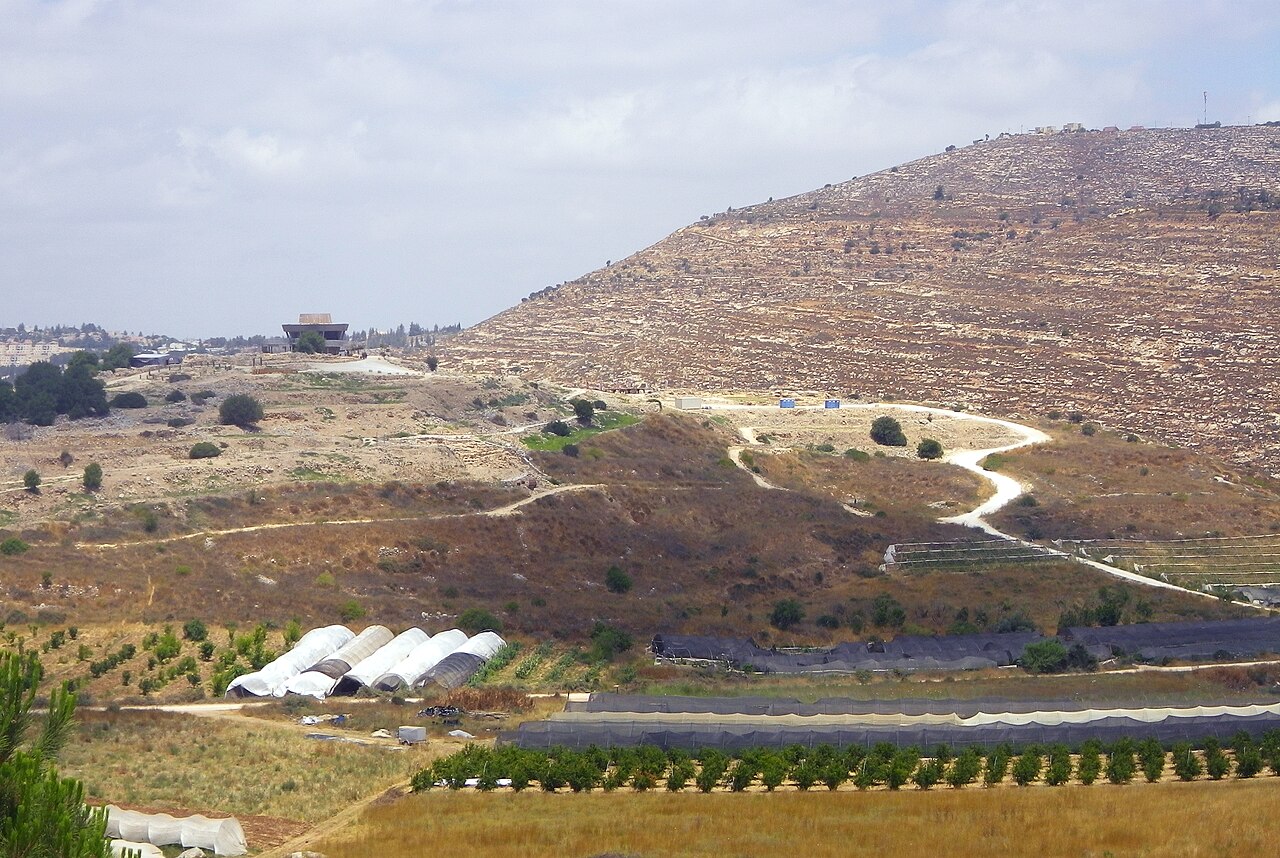
Verse 19 gives unusual directions: north of Bethel, east of the road from Bethel to Shechem, south of Lebonah. Khirbet Seilun fits them and is securely identified with Shiloh; Iron I remains there include storage jars and cultic material. Vineyards and dances fit a grape-harvest festival, perhaps an early form of Sukkot (compare 1 Samuel 1:3).
Jabesh-gilead
Jabesh-gilead, east of the Jordan, is proposed at Tell el-Maqlub or Tell Abu al-Kharaz; it is not certain. Its later bond with Benjamin is striking: Saul of Gibeah rescues it (1 Samuel 11), and its men recover Saul's body (1 Samuel 31:11–13).
4QJudg-b
4QJudg-b (4Q50), a Qumran fragment of the 1st century BC or AD, preserves small parts of Judges 19–21 that Rezetko and others describe as close to the Masoretic text. The exact verses and letters it preserves still need checking against the published edition.
The Case for the Biblical Account
Scripture's account
Wives for Benjamin from Jabesh-gilead and Shiloh (Judges 21).
What evidence would we expect?
Shiloh as an Iron I sanctuary; Benjamin's later ties to Jabesh-gilead.
The discoveries
Khirbet Seilun's Iron I material; 1 Samuel 11 and 31.
Testing the discoveries
Shiloh is secure; the events are known only from Judges.
The strongest reconstruction
An account of Benjamin's near-extinction and survival that links forward to Saul.
What remains possible
The location of Jabesh-gilead; the coverage of 4Q50.
What the evidence shows
- Khirbet Seilun is Shiloh.
- The plan was commanded by God. The elders devise it; no divine command is given.
- 4Q50 is close to the Masoretic text in Judges 19–21. Fragment-level verification pending.Source: R. Rezetko, "The Qumran Scrolls of the Book of Judges," Journal of Hebrew Scriptures 13 (2013) ↗
Continue the journey
Journey of a PassageJudges 21:19–23: The festival at Shiloh, and a Qumran fragmentThe directions to Shiloh's festival and the plan to seize its dancers are the same in the witnesses checked.More from this lesson
On the map
Location securely identified Probable identification Proposed or debated location Biblical route (roads schematic) Scholarly proposal
- The war against Benjamin. Illustrative. The Levite's journey from Bethlehem past Jebus to Gibeah; the assembly at Mizpah; inquiry at Bethel; Shiloh. Gibeah and Mizpah are proposed identifications; the rock of Rimmon is not shown.
Echoes Across Civilizations
Optional: how other ancient peoples told similar stories. Open one to compare, then come back to the lesson.
Women who save and women who sufferJewish (Hellenistic) · Egyptian and Ugaritic · Greek
How do other ancient traditions portray women as deliverers and as victims of war?
- Jewish (Hellenistic): Judith Shared literary world
- Egyptian and Ugaritic: Warrior goddesses Anat and Astarte Resemblance only
- Greek: Trojan Women Similar human experience
Why this matters to the rest of Scripture
- The yearly feast at Shiloh.
- Saul rescues Jabesh-gilead.
- Jabesh-gilead buries Saul.
- Captive women in Midian.