Era 5 · The Promised LandJudges
Journey of a Passage: Ancient Judges Texts
A Qumran scroll without a sermon, a hidden Moses, and two Greek books of Judges
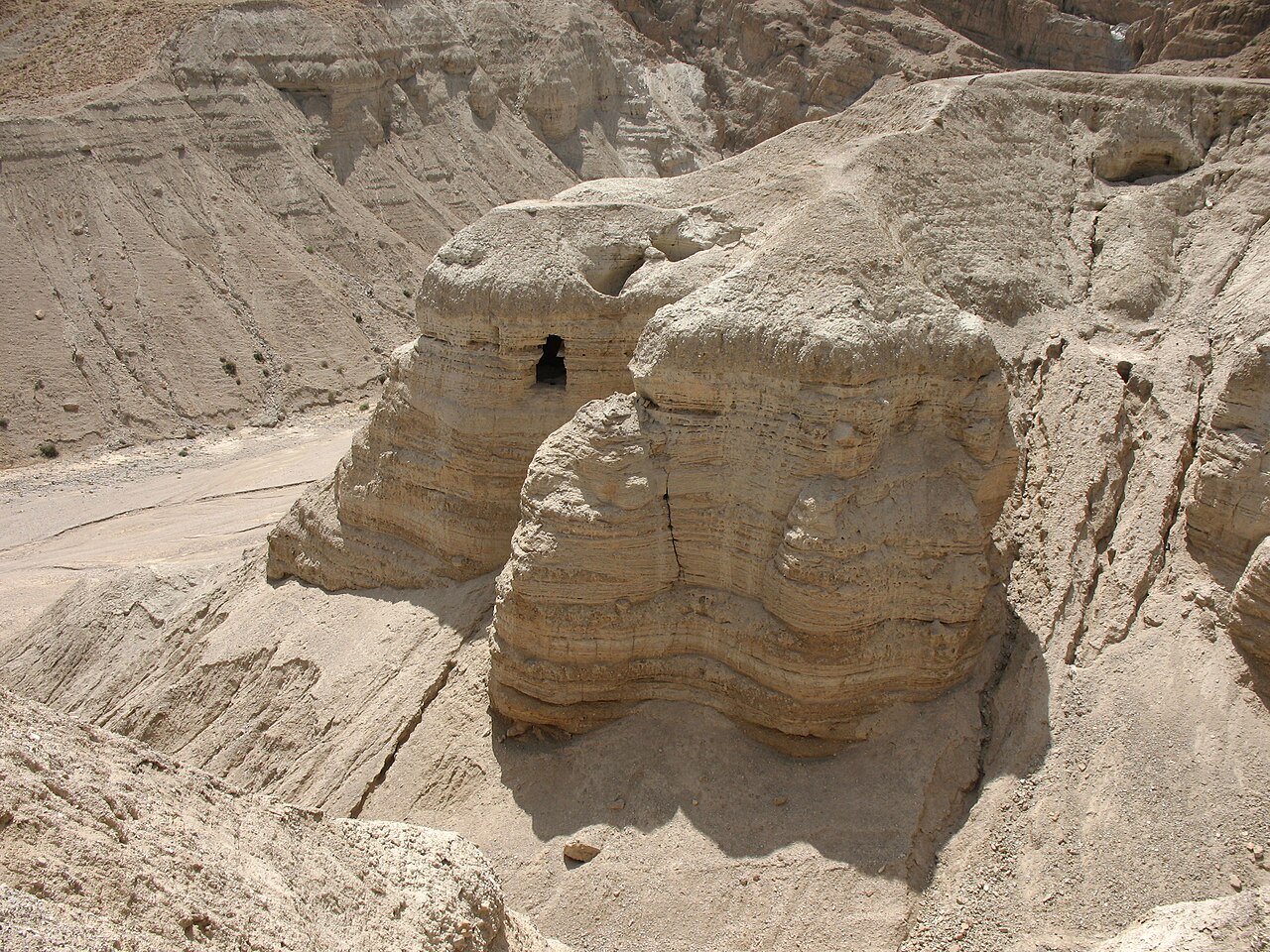
Judges is unusual. A Qumran scroll lacks a whole paragraph found in our Bibles. The Hebrew writes a name in a way that may hide the name Moses. And the Greek Bible has two substantially different forms of the whole book. This page gathers those places and sorts them by kind.
The passages
| Passage | What differs | Kind |
|---|---|---|
| Judges 1:8, 21 | Jerusalem taken and not taken | Difference between passages, not manuscripts |
| Judges 4 and 5 | Prose and poem tell the battle differently | Two compositions, not two copies |
| Judges 5:20 | "The stars fought" | Interpretation of poetry |
| Judges 6:6–12 | 4QJudg-a lacks 6:7–10 | Manuscript variant (preserved, partly reconstructed) |
| Judges 11:30–40 | "Whatever" or "whoever"; "and" or "or" | Ambiguous Hebrew; interpretation |
| Judges 12:6 | Shibboleth; Greek has "ear of grain" | Translation choice |
| Judges 14:14 | The riddle | Translation choice |
| Judges 15:4 | Foxes or jackals | Ambiguous word |
| Judges 16:13–14 | Greek and Latin have a longer text | Ancient variant |
| Judges 18:30 | Moses or Manasseh | Scribal feature and ancient variants |
| Judges 19:2 | "Played the harlot" or "left him" | Ancient variant or translation |
| Judges 20:15 | 26,000, 25,000 or 23,000 | Ancient variants |
| Judges 21:19–23 | Shiloh; 4QJudg-b fragment | Fragment coverage to verify |
Greek A and B
Rahlfs' edition of the Septuagint prints Judges twice, as text A (broadly the Alexandrinus family) and text B (broadly the Vaticanus family). The NETS translation renders both. Scholars think the Old Greek may be best preserved in neither as a whole, but partly in the Lucianic (Antiochene) manuscripts and the Old Latin. The site's Greek readings come from Giguet's French translation of a single Greek text, apparently of the B type; they are labeled "library's Greek" and should not be read as representing all Greek witnesses.
What the evidence shows
- 4QJudg-a lacks Judges 6:7–10.Source: J. Trebolle Barrera, "4QJudg-a," DJD XIV (1995); R. Rezetko, "The Qumran Scrolls of the Book of Judges," Journal of Hebrew Scriptures 13 (2013) ↗
- Greek Judges survives in two main forms (A and B).Source: P. Satterthwaite, "Judges," A New English Translation of the Septuagint (A and B texts) ↗
- The site has checked Greek A and B separately. Not yet: only Giguet's French of one Greek text is in the library.
- The Masoretic text writes a suspended nun in 18:30.Source: Sefaria, Judges 18:30 (Hebrew with the suspended nun) ↗
Continue the journey
Journey of a PassageJudges 1:8, 21: Was Jerusalem taken?Judges 1:8 says Judah captured and burned Jerusalem; 1:21 says Benjamin could not drive out its Jebusites.More from this lesson
Investigations
Optional deep dives: the ancient sources, the physical evidence, and every interpretation side by side, including unconventional ones, each labeled for what it is.
Did Moses' Grandson Serve an Idol?Suspended nun: documented · Earlier reading Moses: supported · Scribal motive: plausible
Was the priest of Dan's idol a grandson of Moses?
Judges 18:30 names the priest of the Danite image "Jonathan son of Gershom son of Manasseh." In the Masoretic manuscripts the nun of Manasseh is written small and above the line. Without it the name is Moses, whose son was Gershom. The Vulgate reads Moses. Rabbinic tradition says the letter was added to protect Moses' honor.
Open the full investigation →Why this matters to the rest of Scripture
- The paragraph missing at Qumran.
- Moses or Manasseh.