Era 5 · The Promised LandJudges
The Woman of Gibeah
"Consider of it, take advice, and speak your minds"
A Levite's concubine leaves him and returns to her father in Bethlehem. After four months he goes to bring her back. Her father keeps him feasting for days. Late on the fifth day they leave, pass Jebus (Jerusalem) because it is "a city of a stranger," and reach Gibeah of Benjamin. No one takes them in until an old man from Ephraim offers his house.
Men of the city surround the house and demand the guest. The host offers his own daughter and the concubine instead. The Levite seizes the concubine and puts her out. She is abused all night and collapses at the door at dawn. He tells her to get up; there is no answer. At home he cuts her body into twelve pieces and sends them throughout Israel. "There was no such deed done nor seen from the day that the children of Israel came up out of the land of Egypt unto this day: consider of it, take advice, and speak your minds."
"And his concubine played the whore against him, and went away from him unto her father's house to Bethlehemjudah" (19:2, KJV; on the wording see below). "And her husband arose, and went after her, to speak friendly unto her [literally, to speak to her heart]." Her father detains him with food for four days; on the fifth they leave toward evening.
In Gibeah, the old man says: "Peace be with thee… only lodge not in the street." "Certain sons of Belial, beset the house round about, and beat at the door… Bring forth the man that came into thine house, that we may know him." The host: "Behold, here is my daughter a maiden, and his concubine; them I will bring out now… but unto this man do not so vile a thing."
"So the man took his concubine, and brought her forth unto them; and they knew her, and abused her all the night until the morning." "Then came the woman in the dawning of the day, and fell down at the door of the man's house where her lord was, till it was light." Her lord opens the door to go on his way: "Up, and let us be going. But none answered." He puts her on the donkey, goes home, takes a knife, and divides her "together with her bones, into twelve pieces."
Why did she leave? (19:2)
The Hebrew watizneh ʿalayw is usually rendered "played the harlot against him." The library's Greek (Giguet) has "his wife left him" and the Vulgate "she left him" (reliquit eum). Some scholars propose a Hebrew word meaning "was angry with him," which may lie behind Greek renderings; others think the translators softened the text. Either way the verse does not justify what follows. The Levite went "to speak to her heart," yet never speaks to her in the story.
Gibeah and Sodom
| Genesis 19 (Sodom) | Judges 19 (Gibeah) |
|---|---|
| Two guests welcomed by Lot, an outsider in the city | A Levite welcomed by an old man from Ephraim, an outsider in the city |
| "Bring them out unto us, that we may know them" | "Bring forth the man… that we may know him" |
| Lot offers his daughters | The host offers his daughter and the concubine |
| The angels pull Lot in and strike the men blind | No one intervenes; the Levite pushes the woman out |
The near-quotations are deliberate: an Israelite town behaves like Sodom, and no angel comes.
Gibeah
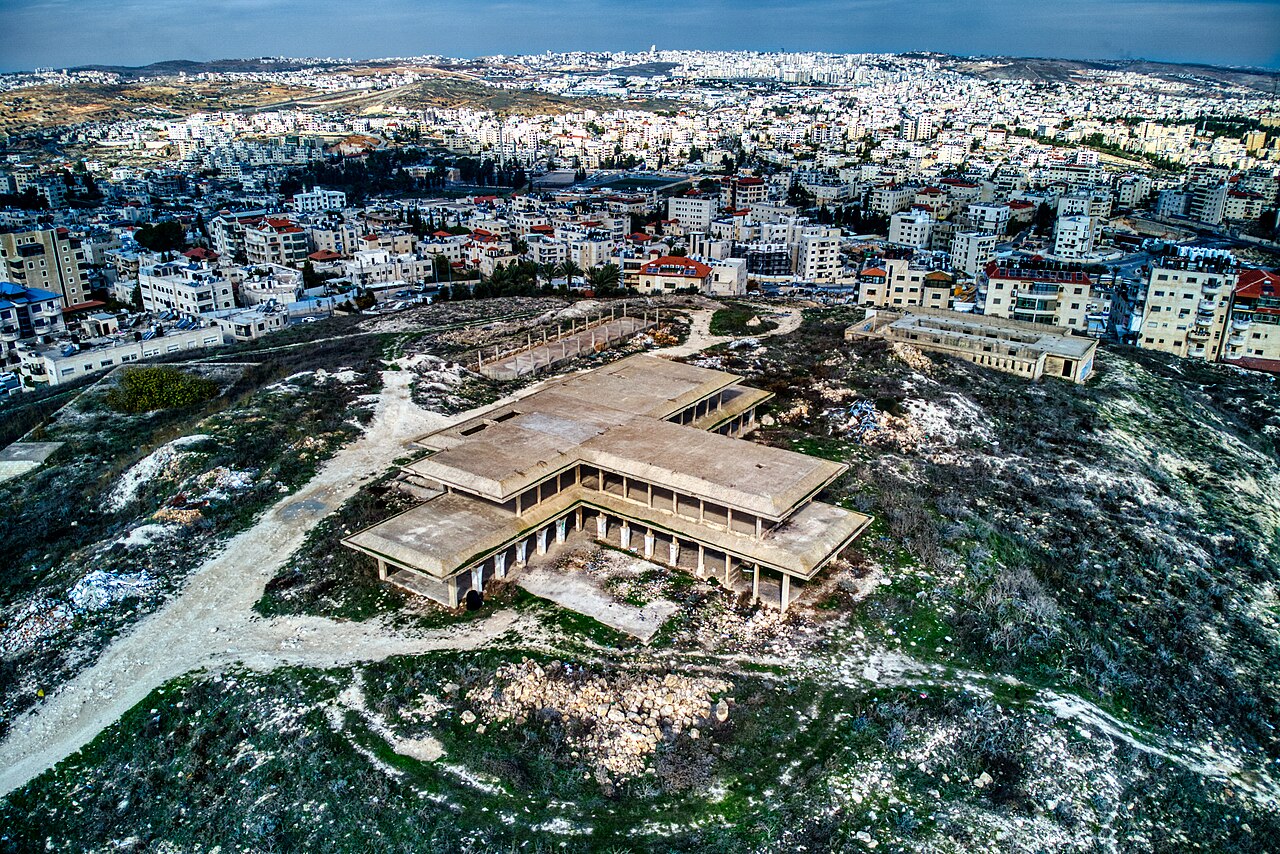
Gibeah of Benjamin, later Saul's home (1 Samuel 10:26), is usually identified with Tell el-Ful, north of Jerusalem, excavated by W. F. Albright and P. Lapp. The identification is debated; some propose Jaba. Destruction layers found there do not confirm this crime.
Did she die before he cut her?
The Hebrew does not say when she died. The library's Greek (Giguet) adds "for she was dead" in 19:28, and the Vulgate says he understood she was dead; the Hebrew simply says "none answered." The silence has led some readers to ask whether the Levite killed her.
The Case for the Biblical Account
Scripture's account
The outrage at Gibeah (Judges 19).
What evidence would we expect?
Towns of Benjamin on the north–south ridge road; ancient hospitality customs.
The discoveries
Tell el-Ful with Iron Age occupation; the ridge road through Benjamin; hospitality customs in ancient texts.
Testing the discoveries
The geography is real; the event is known only from Judges and later retellings.
The strongest reconstruction
A deliberately shaped narrative of moral collapse, echoing Sodom.
What remains possible
The meaning of 19:2; whether the woman was alive when found.
What the evidence shows
- Judges 19 deliberately echoes Genesis 19.
- Gibeah is Tell el-Ful.
- Greek and Latin differ from the Hebrew in 19:2. Checked in Giguet's French and the Vulgate; Greek A and B not checked separately.
- The woman was to blame for what happened. Nothing in the text supports this.
Continue the journey
Journey of a PassageJudges 19:2: Did she betray him, or leave him?The Hebrew says the concubine "played the harlot against him" and went to her father's house.More from this lesson
On the map
Location securely identified Probable identification Proposed or debated location Biblical route (roads schematic) Scholarly proposal
- The war against Benjamin. Illustrative. The Levite's journey from Bethlehem past Jebus to Gibeah; the assembly at Mizpah; inquiry at Bethel; Shiloh. Gibeah and Mizpah are proposed identifications; the rock of Rimmon is not shown.
Echoes Across Civilizations
Optional: how other ancient peoples told similar stories. Open one to compare, then come back to the lesson.
Women who save and women who sufferJewish (Hellenistic) · Egyptian and Ugaritic · Greek
How do other ancient traditions portray women as deliverers and as victims of war?
- Jewish (Hellenistic): Judith Shared literary world
- Egyptian and Ugaritic: Warrior goddesses Anat and Astarte Resemblance only
- Greek: Trojan Women Similar human experience
Why this matters to the rest of Scripture
- Sodom.
- Saul of Gibeah cuts up oxen to summon Israel.
- Hosea 9:9; 10:9"As in the days of Gibeah."
- The woman who cried out with none to save her.