Era 5 · The Promised LandJudges
Civil War Against Benjamin
"Shall I yet again go out to battle against the children of Benjamin my brother?"
"Then all the children of Israel went out, and the congregation was gathered together as one man, from Dan even to Beersheba." The Levite says: "the men of Gibeah… thought to have slain me: and my concubine have they forced, that she is dead." He does not mention that he put her out.
Benjamin refuses to hand over "the children of Belial" and gathers 26,000 swordsmen plus 700 chosen men of Gibeah; among them are 700 left-handed slingers who "could sling stones at an hair breadth, and not miss." Israel asks God, "Which of us shall go up first?" "Judah shall go up first." Benjamin kills 22,000 Israelites. They weep and ask again, "Shall I go up again…?" "Go up against him." Benjamin kills 18,000.
They go to Bethel, weep, fast, and offer sacrifices; "Phinehas, the son of Eleazar, the son of Aaron, stood before it in those days." "Go up; for to morrow I will deliver them into thine hand." An ambush takes Gibeah; smoke rises; Benjamin is routed: 25,100 fall that day. Six hundred flee to the rock of Rimmon and stay four months. Israel puts the towns of Benjamin to the sword, "as well the men of every city, as the beast, and all that came to hand."
The numbers
| Verse | Hebrew (MT) | Library's Greek (Giguet) | Latin (Vulgate) |
|---|---|---|---|
| 20:15 Benjamin's army | 26,000 + 700 of Gibeah | 23,000 + 700 | 25,000 + 700 |
| 20:35 fallen that day | 25,100 | 25,100 | 25,100 |
| 20:44–46 fallen in total | 18,000 + 5,000 + 2,000 = 25,000 | 25,000 | 25,000 |
| 20:47 survivors | 600 | 600 | 600 |
The Hebrew totals do not add up neatly (26,700 − 25,100 = 1,600, not 600), and the versions differ in verse 15. Some see rounded figures, others the alternative meaning of ʾeleph as a military unit, or separate sources. These are reported as they stand, not harmonized.
Left-handed or ambidextrous?
The Hebrew has "bound in the right hand" (left-handed), as of Ehud. The library's Greek has "ambidextrous"; the Vulgate "fighting with the left as with the right." 1 Chronicles 12:2 describes Benjaminites who could sling with either hand.
When did this happen?
Phinehas, Aaron's grandson, is still serving (20:28). That places the event early in the period of the judges, not after Samson. Chapters 17–21 are appendices arranged by theme, not chronology.
Places
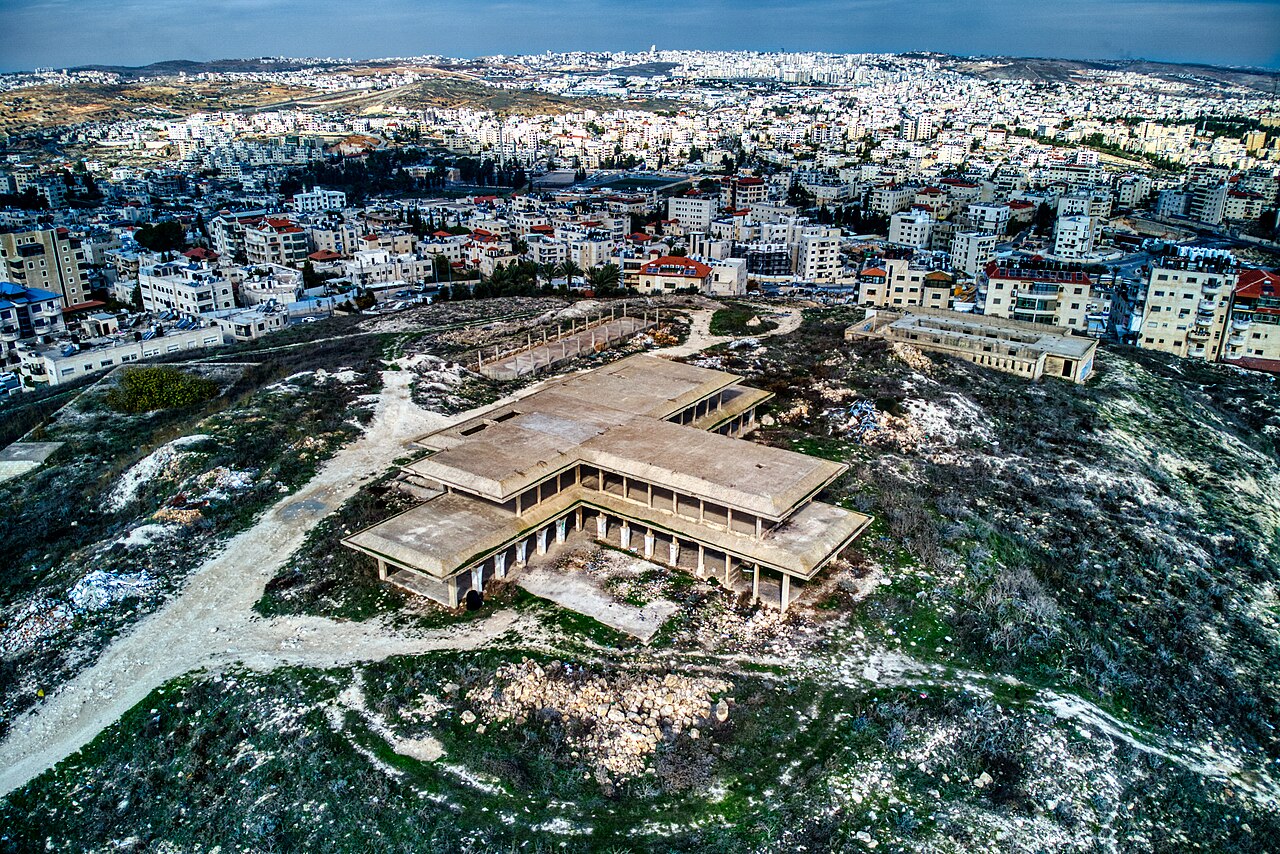
Mizpah of Benjamin is often identified with Tell en-Nasbeh (proposed); Bethel with Beitin (traditional, debated). The rock of Rimmon may be near Rammun, east of Bethel (proposed). Battle positions cannot be fixed.
The Case for the Biblical Account
Scripture's account
Israel's war against Benjamin (Judges 20).
What evidence would we expect?
Benjaminite towns with destruction layers; a tribal assembly tradition.
The discoveries
Candidate sites for Gibeah, Mizpah and Bethel; Benjamin's later importance under Saul.
Testing the discoveries
No destruction can be tied to this war; the numbers are textually unstable.
The strongest reconstruction
A memory of intertribal war against Benjamin, told to show Israel's collapse.
What remains possible
The scale and date of the war.
What the evidence shows
- The Hebrew, Greek and Latin give different totals in 20:15. Greek checked in Giguet only.
- Chapters 17–21 are set early in the judges period. Phinehas (20:28) and Jonathan son of Gershom (18:30).
- A destruction layer confirms the war.
Continue the journey
Journey of a PassageJudges 20:15, 35, 46: How many Benjaminites?The Hebrew counts 26,000 Benjaminite swordsmen plus 700 of Gibeah; the library's Greek 23,000; the Vulgate 25,000.More from this lesson
On the map
Location securely identified Probable identification Proposed or debated location Biblical route (roads schematic) Scholarly proposal
- The war against Benjamin. Illustrative. The Levite's journey from Bethlehem past Jebus to Gibeah; the assembly at Mizpah; inquiry at Bethel; Shiloh. Gibeah and Mizpah are proposed identifications; the rock of Rimmon is not shown.
Why this matters to the rest of Scripture
- Judgment on an Israelite city.
- The ambush at Ai.
- Benjaminite slingers with either hand.
- "The battle in Gibeah."