Era 5 · The Promised LandJudges
The Tribe of Dan and Moses/Manasseh
"Jonathan, the son of Gershom, the son of Manasseh"
"In those days there was no king in Israel: and in those days the tribe of the Danites sought them an inheritance to dwell in." Five scouts from Zorah and Eshtaol lodge at Micah's house, recognize the Levite's voice, and ask him to inquire of God. "Go in peace: before the LORD is your way."
At Laish they find a people "quiet and secure," "far from the Zidonians," with no ties to anyone. Six hundred armed Danites set out. At Micah's house they take the graven image, the ephod, the teraphim and the molten image. "Hold thy peace… be to us a father and a priest: is it better for thee to be a priest unto the house of one man, or… unto a tribe?" "And the priest's heart was glad." Micah runs after them: "Ye have taken away my gods which I made, and the priest… and what have I more?"
They come to Laish, "unto a people that were at quiet and secure," kill them and burn the city, rebuild it and call it Dan. "And the children of Dan set up the graven image: and Jonathan, the son of Gershom, the son of Manasseh, he and his sons were priests to the tribe of Dan until the day of the captivity of the land. And they set them up Micah's graven image… all the time that the house of God was in Shiloh."
Moses or Manasseh?
Gershom was the son of Moses (Exodus 2:22; 18:3). In the standard Hebrew text the name in 18:30 is written מנשה, Manasseh, with the nun (נ) written small and raised above the line. Without it the consonants are משה, Moses. The rabbis explained that the letter was added to spare Moses' honor, since Jonathan acted like the idolatrous king Manasseh (Bava Batra 109b). Many modern scholars agree that Moses is the earlier reading.
| Witness | Reads |
|---|---|
| Hebrew (Masoretic, as printed in the Westminster Leningrad text) | Manasseh (the digital text here does not show the raised nun) |
| Leningrad and Aleppo Codex tradition | Manasseh with a suspended nun (as described by Sefaria and the NET note) |
| Latin Vulgate | Moses (Moysi) |
| Douay-Rheims | Moses |
| Library's Greek (Giguet, one text) | Manasseh |
| King James | Manasseh |
| Many modern translations (NRSV, ESV, NIV) | Moses |
Greek manuscripts are divided; the A and B forms were not checked separately here.
Laish becomes Dan
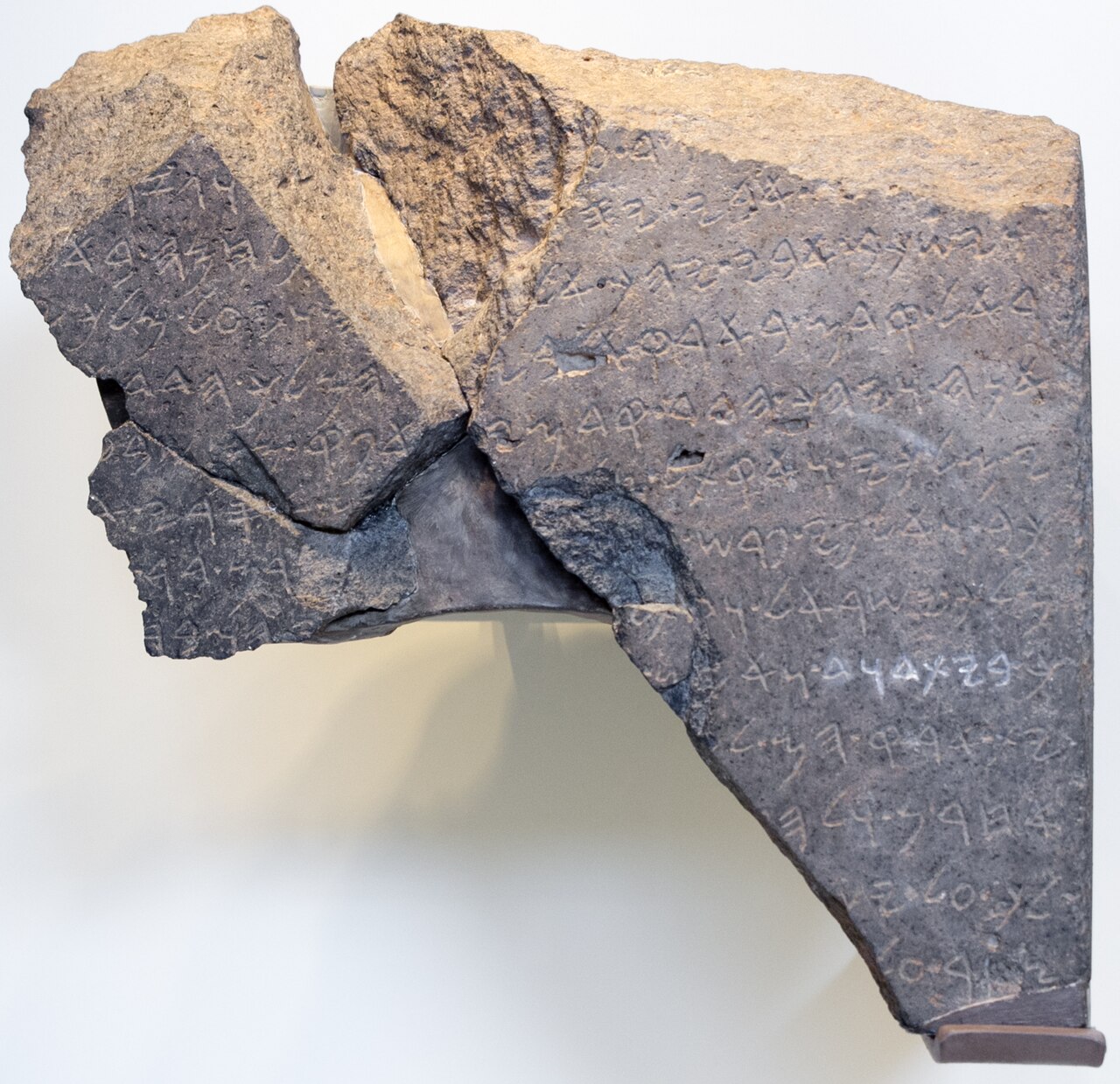
Tel Dan (Tell el-Qadi), at the foot of Mount Hermon by one of the Jordan's main springs, is securely identified with Laish/Dan. Laish appears in Egyptian execration texts and the Mari archives. Excavations under Avraham Biran found a Middle Bronze city with a mud-brick arched gate, Iron I occupation, and a large Iron II sacred precinct linked with Jeroboam's golden calf (1 Kings 12:29) and the 9th-century Tel Dan Stele mentioning the "house of David." The precinct is later than Judges 18; no Iron I shrine matching the story has been identified.
"Until the day of the captivity of the land"
This phrase most naturally refers to the Assyrian deportations from the north (733–732 BC; 2 Kings 15:29), suggesting the note was written or revised after that. Some suggest an earlier "captivity" such as the Philistines' capture of the ark (verse 31 mentions Shiloh).
The Case for the Biblical Account
Scripture's account
Dan's migration and sanctuary (Judges 18).
What evidence would we expect?
A northern city of Laish/Dan; a sanctuary there; Danite links with the Sorek valley.
The discoveries
Tel Dan with Laish in second-millennium texts; Iron I settlement; an Iron II sacred precinct; the Tel Dan Stele.
Testing the discoveries
The site and its later sanctuary are documented. The Danite conquest of Laish is not independently attested.
The strongest reconstruction
An account of Dan's sanctuary origins, told critically and preserving the priestly line.
What remains possible
The date of the migration; which "captivity" is meant.
What the evidence shows
- Tel Dan is ancient Laish/Dan.Source: Nelson Glueck School of Biblical Archaeology, Tel Dan excavations ↗
- The Masoretic text writes the nun of Manasseh suspended in 18:30.Source: Sefaria, Judges 18:30 (Hebrew with the suspended nun) ↗; NET Bible textual note on Judges 18:30 ↗
- The earlier reading was Moses.Source: NET Bible textual note on Judges 18:30 ↗
- Scribes altered the name to protect Moses' honor. A rabbinic and scholarly explanation; no scribe's record survives.
- The excavated sacred precinct is the shrine of Judges 18. The precinct is Iron II, later than the story's setting.
Continue the journey
Journey of a PassageJudges 18:30: Moses or Manasseh?The priest of Dan's idol was "Jonathan son of Gershom son of Manasseh" in the Hebrew, but the nun of Manasseh is written small and raised.More from this lesson
On the map
Location securely identified Probable identification Proposed or debated location Biblical route (roads schematic) Scholarly proposal
- The migration of Dan. From Zorah and Eshtaol north through the hill country of Ephraim (Micah's house, unlocated; Bethel shown as a reference point only) to Laish. Schematic.
Investigations
Optional deep dives: the ancient sources, the physical evidence, and every interpretation side by side, including unconventional ones, each labeled for what it is.
Did Moses' Grandson Serve an Idol?Suspended nun: documented · Earlier reading Moses: supported · Scribal motive: plausible
Was the priest of Dan's idol a grandson of Moses?
Judges 18:30 names the priest of the Danite image "Jonathan son of Gershom son of Manasseh." In the Masoretic manuscripts the nun of Manasseh is written small and above the line. Without it the name is Moses, whose son was Gershom. The Vulgate reads Moses. Rabbinic tradition says the letter was added to protect Moses' honor.
Open the full investigation →Why this matters to the rest of Scripture
- Gershom son of Moses.
- Dan takes Leshem.
- Jeroboam's calf at Dan.
- The northern deportation.
- "Dan shall be a serpent by the way."