Era 5 · The Promised LandJudges
Deborah, Barak and Jael
"The LORD shall sell Sisera into the hand of a woman"
"And Deborah, a prophetess, the wife of Lapidoth, she judged Israel at that time. And she dwelt under the palm tree of Deborah between Ramah and Bethel… and the children of Israel came up to her for judgment." Israel is oppressed by "Jabin king of Canaan, that reigned in Hazor," whose general Sisera has "nine hundred chariots of iron."
She sends for Barak of Naphtali: "Hath not the LORD God of Israel commanded, saying, Go and draw toward mount Tabor, and take with thee ten thousand men?" Barak answers, "If thou wilt go with me, then I will go: but if thou wilt not go with me, then I will not go." "I will surely go with thee: notwithstanding the journey that thou takest shall not be for thine honour; for the LORD shall sell Sisera into the hand of a woman."
Barak comes down from Tabor; "the LORD discomfited Sisera, and all his chariots." Sisera flees on foot to the tent of Jael, wife of Heber the Kenite, whose clan was at peace with Jabin. "Turn in, my lord, turn in to me; fear not." She gives him milk and covers him. When he sleeps, she takes a tent peg and a hammer "and smote the nail into his temples… so he died." When Barak arrives she shows him: "Come, and I will shew thee the man whom thou seekest."
Deborah
Deborah is the only judge described as both prophet and judge who settles disputes. She is not Barak's assistant: she summons him with God's command and goes with him. "Wife of Lapidoth" may also be read "woman of torches" (lappidot); the meaning is debated.
Jabin, Hazor and Joshua 11
Joshua 11 says Joshua killed Jabin of Hazor and burned the city. Here a Jabin still reigns in Hazor. Suggestions: Jabin was a dynastic name or title; Hazor was rebuilt; or two traditions of the same conflict were placed in different books. Hazor's great Late Bronze city was destroyed in the 13th century BC and only a small settlement followed. In Judges 5, Jabin is not mentioned.
The battlefield
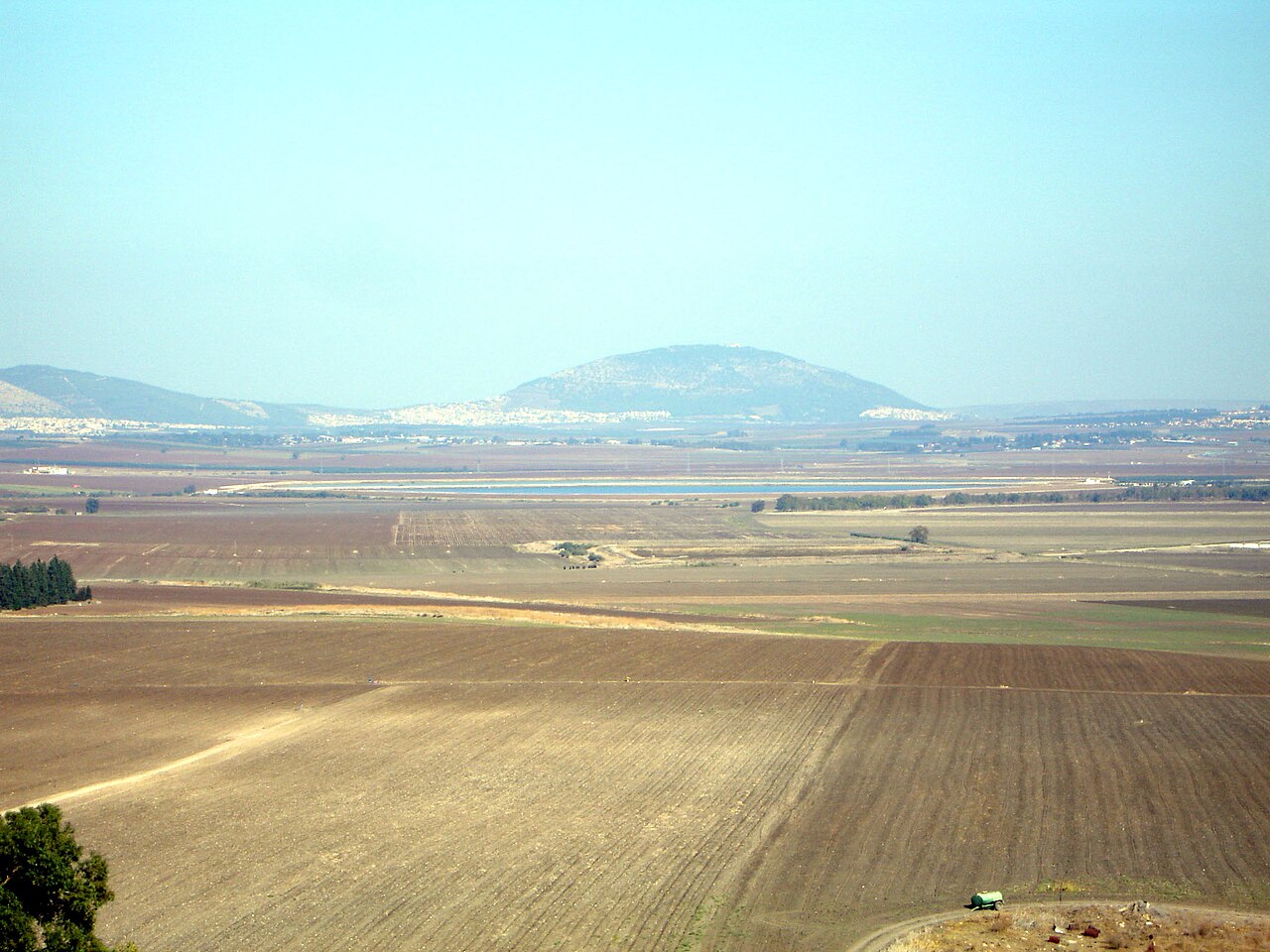
Mount Tabor and the Kishon River in the Jezreel Valley are secure geographical points; the exact battlefield is not known. Harosheth-hagoyim, Sisera's base, is unidentified; Adam Zertal proposed el-Ahwat, which is debated. A sudden flood of the Kishon could bog down chariots (5:21), a detail found in the poem.
Jael and the laws of hospitality
Jael's act breaks the ancient rule that a host protects a guest, and Heber's clan was allied with Jabin. The text praises her (5:24); readers have debated her motives and morality ever since. She acts with an ordinary household tool: women set up the tents.
The Case for the Biblical Account
Scripture's account
Deborah and Barak defeat Sisera; Jael kills him (Judges 4).
What evidence would we expect?
Canaanite chariot forces; a Canaanite power in the north; the Kishon and Tabor.
The discoveries
Late Bronze chariot warfare in Egyptian records; Hazor's destruction; the geography of the Jezreel Valley.
Testing the discoveries
The setting fits; the battle and its people are known only from Judges 4–5.
The strongest reconstruction
A remembered victory of northern tribes over a Canaanite chariot force, told in prose and in poetry.
What remains possible
How Jabin of Hazor relates to Joshua 11; the location of Harosheth-hagoyim.
What the evidence shows
- Deborah is called both prophetess and judge.
- Jabin was a dynastic name.
- Harosheth-hagoyim is el-Ahwat.
- "The LORD discomfited Sisera."
Continue the journey
Journey of a PassageJudges 4–5: One battle, a story and a songJudges 4 tells the victory over Sisera in prose; Judges 5 sings it as poetry.More from this lesson
On the map
Location securely identified Probable identification Proposed or debated location Biblical route (roads schematic) Scholarly proposal
- Deborah and Barak against Sisera. Illustrative only. Jabin reigns in Hazor; Barak gathers at Tabor and descends to the Kishon. Harosheth-hagoyim, Sisera's base, and the battlefield are not located.
Investigations
Optional deep dives: the ancient sources, the physical evidence, and every interpretation side by side, including unconventional ones, each labeled for what it is.
Did the Stars Fight for Deborah?Text: stable across witnesses checked · Event: unattested outside Judges · Space-battle readings: speculative
What does "the stars in their courses fought against Sisera" describe?
The Song of Deborah says the stars fought from heaven and the Kishon swept the enemy away. It belongs to a family of ancient poems in which God marches out as a warrior and creation fights on His side. Many readers see a storm that flooded the valley. Modern readings of a sky battle or visiting craft have no ancient or archaeological support.
Open the full investigation →Echoes Across Civilizations
Optional: how other ancient peoples told similar stories. Open one to compare, then come back to the lesson.
The God who marches out to battleCanaanite (Ugarit) · Assyrian · Israelite
Did other ancient peoples sing of a god who comes from his mountain in storm, shaking the earth, with heaven fighting for his people?
- Canaanite (Ugarit): Baal the storm god Shared literary world
- Assyrian: Royal inscriptions of the storm god Adad Resemblance only
- Israelite: "YHWH of Teman" Possible historical contact
Also covered: A battle in the sky?, clearly labeled as a modern theory.
Compare side by side →Women who save and women who sufferJewish (Hellenistic) · Egyptian and Ugaritic · Greek
How do other ancient traditions portray women as deliverers and as victims of war?
- Jewish (Hellenistic): Judith Shared literary world
- Egyptian and Ugaritic: Warrior goddesses Anat and Astarte Resemblance only
- Greek: Trojan Women Similar human experience
Why this matters to the rest of Scripture
- Jabin of Hazor.
- Samuel remembers Sisera and Barak.
- Barak among the faithful.
- Miriam the prophetess.