Baal Cycle (KTU 1.1–1.6)
- Language
- Ugaritic
- Composed
- Before c. 1200 BC
- Oldest surviving copy
- Clay tablets from Ugarit, 13th century BC
- Status
- Not scripture
The storm god Baal fights with thunder and rain.
Ancient Mysteries & Interpretations
The Song of Deborah says the stars fought from heaven and the Kishon swept the enemy away. It belongs to a family of ancient poems in which God marches out as a warrior and creation fights on His side. Many readers see a storm that flooded the valley. Modern readings of a sky battle or visiting craft have no ancient or archaeological support.
Text: stable across witnesses checked · Event: unattested outside Judges · Space-battle readings: speculative
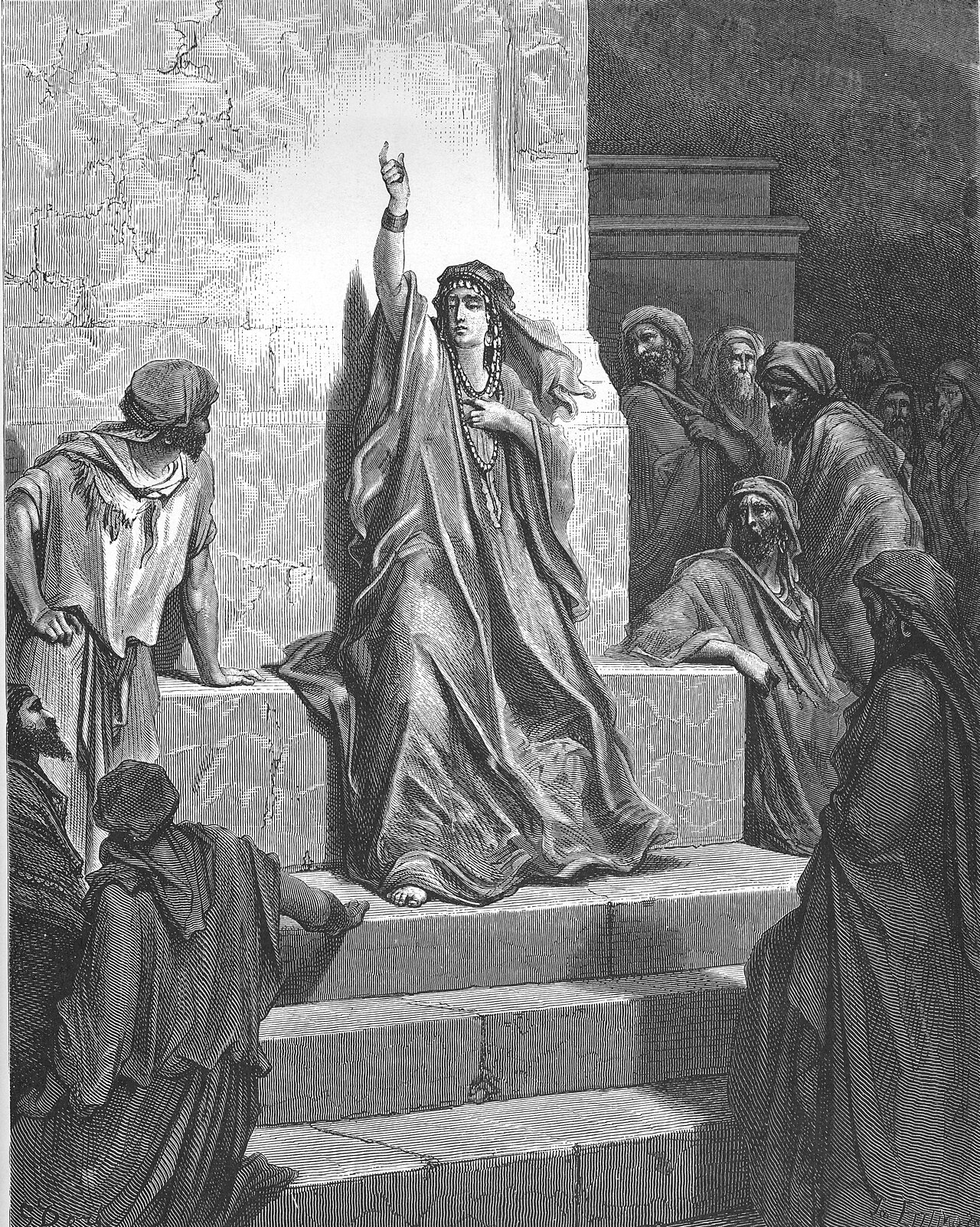
"LORD, when thou wentest out of Seir… the earth trembled, and the heavens dropped, the clouds also dropped water" (5:4). "They fought from heaven; the stars in their courses fought against Sisera. The river of Kishon swept them away" (5:20–21).
The storm god Baal fights with thunder and rain.
God comes from Teman; sun and moon stand still.
The Kishon drains the Jezreel Valley to the Mediterranean. It is a modest stream for most of the year but floods quickly in winter rains, turning the valley floor to mud. Mount Tabor and the Kishon are secure geographic points; the battlefield itself is not located.
Traditional reading
The poem celebrates a real victory given by God, described in the language of heaven and earth fighting together.
Scholarly reconstruction
Heavy rain flooded the Kishon and bogged down Sisera's chariots; the poem gives the storm cosmic meaning.
Scholarly reconstruction
The imagery is shared with Exodus 15, Psalm 68 and Habakkuk 3, and with storm-god poetry at Ugarit.
Modern speculative theory
Modern ancient-astronaut readings take the stars as visible objects in battle.
Assessment: No ancient source or physical evidence supports this; the ancient translations both stress that the stars stayed in their courses.
The verse is poetry about God's victory, very likely remembering a storm and flood that disabled the enemy's chariots.
The verse is stable across the Hebrew, the library's Greek, the Vulgate and the KJV. See the passage page for Judges 5:20.
What the evidence shows