Israel serves Cushan-rishathaim, "king of Mesopotamia [Aram-naharaim]," eight years. "The spirit of the LORD came upon" Othniel, Caleb's nephew; he prevails, and "the land had rest forty years."
Then Eglon king of Moab, with Ammon and Amalek, takes "the city of palm trees" (Jericho). After eighteen years the LORD raises up "Ehud the son of Gera, a Benjamite, a man lefthanded." He makes a dagger of a cubit (about 45 cm) with two edges and straps it on his right thigh under his clothes. "Eglon was a very fat man." Ehud brings the tribute, returns, and says, "I have a secret errand unto thee, O king." Alone in the cool upper room: "I have a message from God unto thee." He thrusts the dagger in, and "the fat closed upon the blade."
Ehud locks the doors and leaves. The servants think the king is "covering his feet" (relieving himself) and wait "till they were ashamed." Ehud escapes, musters Ephraim, seizes the Jordan fords, and Moab is subdued: "the land had rest fourscore years." "And after him was Shamgar the son of Anath, which slew of the Philistines six hundred men with an ox goad."
Cushan of double wickedness
"Rishathaim" means "double wickedness," probably a mocking nickname. Aram-naharaim is northern Mesopotamia, far from Othniel's Judah, which puzzles readers; some suggest a scribal confusion of Aram with Edom (in Hebrew, ארם and אדם differ by one similar letter), since Othniel was a southerner. No such king is known from other records.
Left-handed Benjaminites
Ehud, literally "bound in his right hand," belongs to a tribe whose name means "son of the right hand." Judges 20:16 mentions 700 left-handed Benjaminite slingers. A left-handed warrior's dagger on the right thigh would escape a guard's check.
Shamgar son of Anath
Anat was a fierce warrior goddess at Ugarit. "Son of Anath" could be his father's name, a place (Beth-anath), a warrior title ("Anat's men" is attested as a military designation), or a reference to devotion to the goddess. None is proven. The library's Greek (Giguet) reads "son of Dinach" and "a plowshare"; the Vulgate has "son of Anath" with "a plowshare" (vomere).
The Case for the Biblical Account
Scripture's account
Othniel, Ehud and Shamgar deliver Israel (Judges 3).
What evidence would we expect?
A Moabite kingdom; Philistine presence; Anat worship.
The discoveries
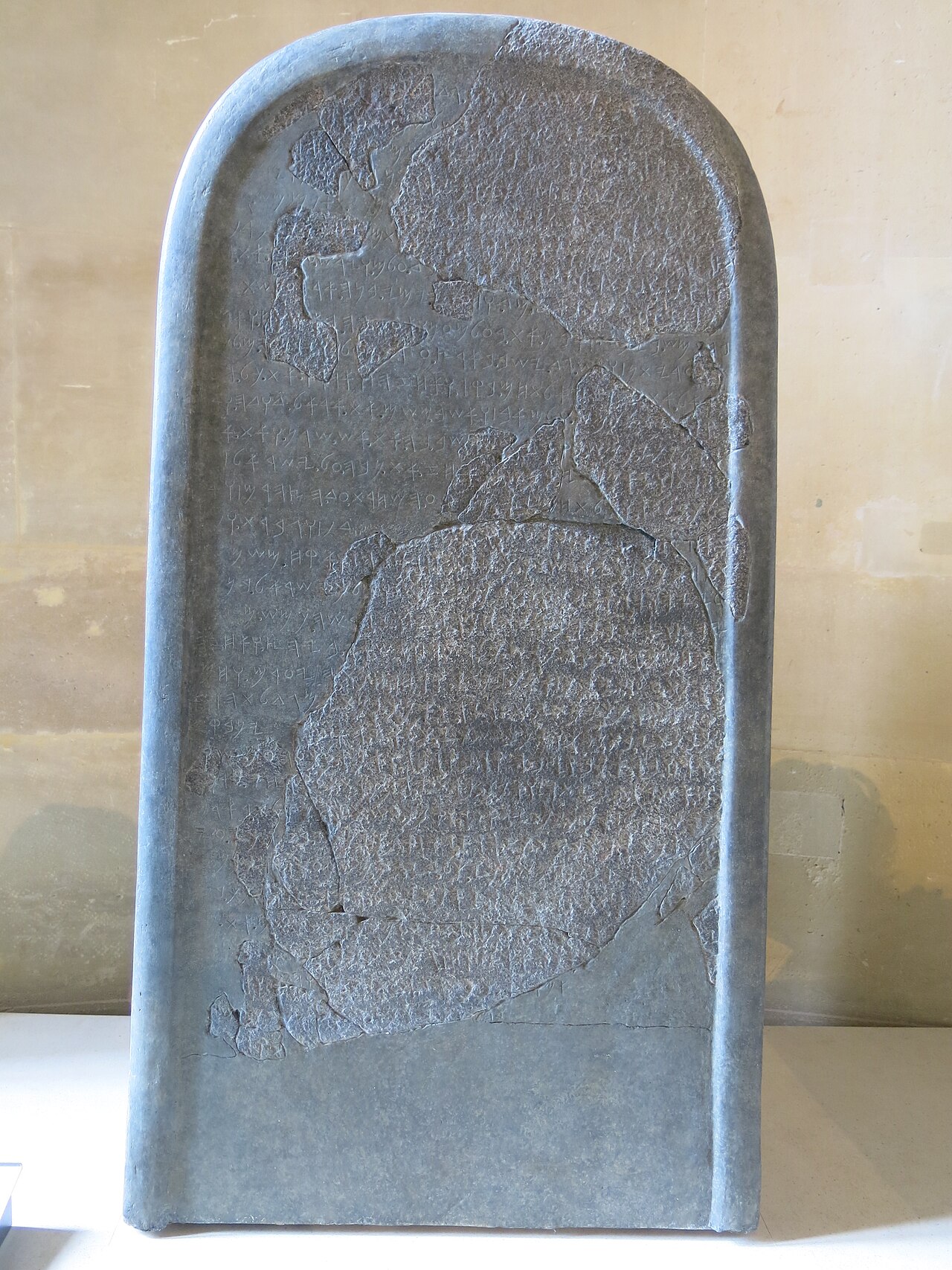
Moab in Egyptian texts of the 13th century BC; the much later Mesha Stele; Anat in Ugaritic myth; Philistines from the 12th century BC.
Testing the discoveries
The setting is plausible; no judge or king named here is attested outside the Bible.
The strongest reconstruction
Local hero stories of Benjamin and Judah, set in Israel's conflicts with Moab and the Philistines.
What remains possible
Whether Cushan's land was Aram or Edom; the meaning of "son of Anath."
What the evidence shows
- Anat was a warrior goddess in Ugaritic texts.Source: Ugaritic Baal Cycle (KTU 1.1–1.6), on the goddess Anat
- Shamgar was devoted to the goddess Anat.
- Cushan-rishathaim is attested outside the Bible.
- The library's Greek reads "son of Dinach" in 3:31. One Greek text, via Giguet's French.
Continue the journey
Ancient MysteriesWas Shamgar a Son of the Goddess Anat?What does "Shamgar son of Anath" mean?More from this lesson
Investigations
Optional deep dives: the ancient sources, the physical evidence, and every interpretation side by side, including unconventional ones, each labeled for what it is.
Was Shamgar a Son of the Goddess Anat?Anat: documented · Shamgar: attested only in Judges · Meaning: disputed
What does "Shamgar son of Anath" mean?
Anat was a fierce warrior goddess in the Ugaritic texts, sister of Baal. An Israelite deliverer called "son of Anath" is a puzzle. The phrase may name his father or mother, his town (Beth-anath), or a warrior title; it does not have to mean he worshiped the goddess. The library's Greek reads "son of Dinach."
Open the full investigation →Why this matters to the rest of Scripture
- Othniel takes Debir.
- "In the days of Shamgar the son of Anath."
- Left-handed slingers.
- Faith in the time of the judges.