Mari and Amarna references to Hazor
- Language
- Akkadian
- Composed
- 18th and 14th centuries BC
- Oldest surviving copy
- Tablets from Mari and Amarna
- Status
- Not scripture
Hazor's king is called "king" in the Amarna letters.
Ancient Mysteries & Interpretations
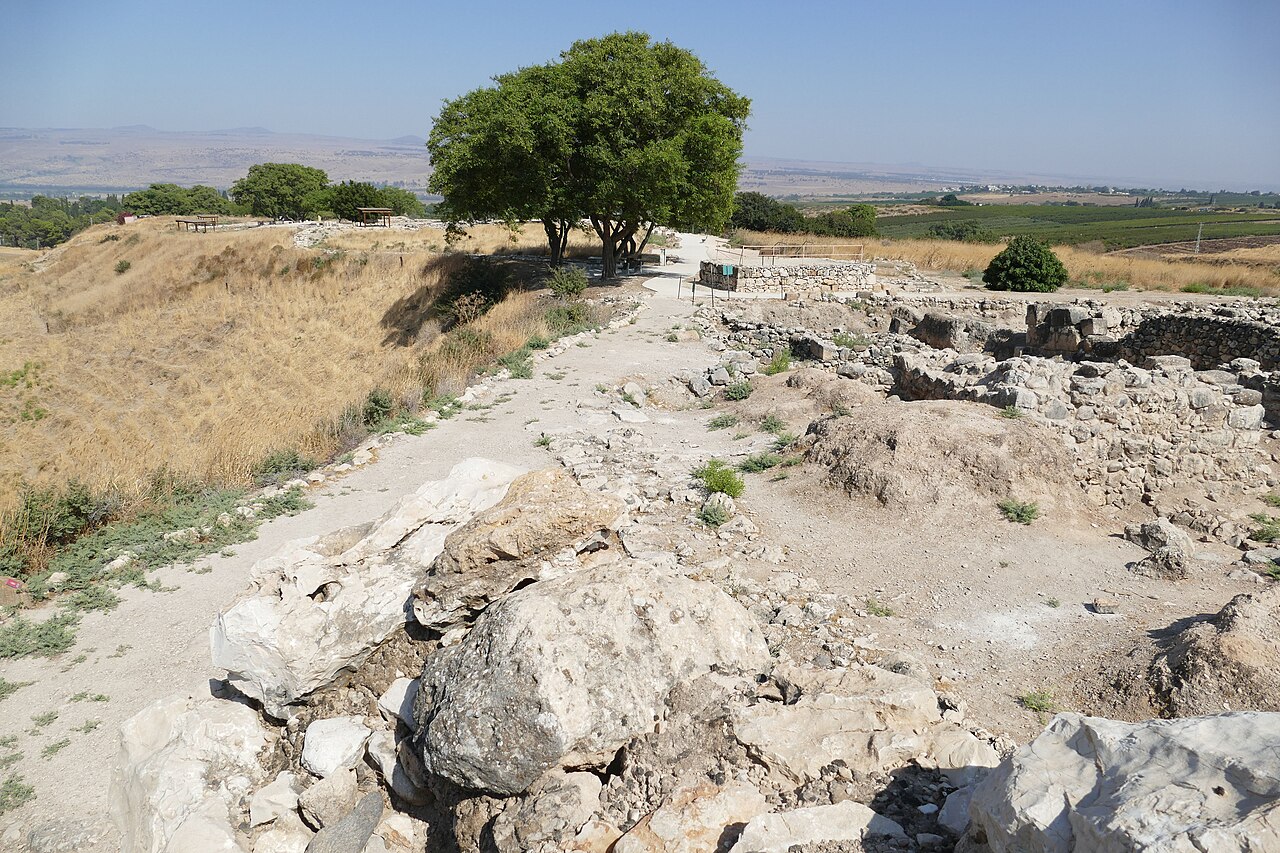
Hazor, the largest city in Canaan, was destroyed in the 13th century BC in a fire hot enough to vitrify bricks, with statues of gods and kings deliberately mutilated. Its excavators attributed it to Israel; others suggest Egyptians, Sea Peoples, rival cities, or an uprising. A 2021 study modeled the evidence for its date and process.
Destruction: documented · Date: 13th century BC (range debated) · Attacker: disputed
"Joshua at that time turned back, and took Hazor… for Hazor beforetime was the head of all those kingdoms… and he burnt Hazor with fire… Israel burned none of them, save Hazor only" (Joshua 11:10–13).
Hazor's king is called "king" in the Amarna letters.
Yigael Yadin (1955–58, 1968) and Amnon Ben-Tor (from 1990) excavated Hazor's upper and lower city. The final Late Bronze city ended in a conflagration; temples and the ceremonial palace were burned; cult statues were decapitated and their hands cut off, which Ben-Tor reads as deliberate desecration by enemies.
Traditional reading
The destruction is the event of Joshua 11.
Source: A. Ben-Tor, Hazor: Canaanite Metropolis, Israelite City (2016)
Scholarly reconstruction
Sharon Zuckerman argued for an uprising during a period of decline.
Scholarly reconstruction
Egyptian, Sea Peoples or rival Canaanite forces.
Hazor's 13th-century destruction is real and dramatic. It is the best archaeological match for Joshua's account, but who destroyed the city cannot be proven from the evidence.
What the evidence shows
Source: A. Ben-Tor, Hazor: Canaanite Metropolis, Israelite City (2016); S. Bechar et al., "The Destruction of Late Bronze Age Hazor" (multi-proxy study), Ägypten und Levante 31 (2021) ↗