Sumerian Flood Story (Eridu Genesis)
- Language
- Sumerian
- Composed
- Early 2nd millennium BC or earlier
- Oldest surviving copy
- A Nippur tablet, c. 1600 BC (Penn Museum)
Hero: Ziusudra, who is granted eternal life afterward.
Ancient Mysteries & Interpretations
The Sumerian flood story, Atrahasis, Gilgamesh XI and Berossus form one documented Mesopotamian line of transmission. Genesis tells the story in the same broad world but with a different theology. Indian and Greek flood stories are more distant. For each, the date the story is set, the date it was composed, and the date of its oldest surviving copy are different things.
Texts and their relationships: documented · The underlying event: unresolved
Genesis 6–9: God judges a violent world by a flood and saves Noah, his family and the animals in an ark, then makes a covenant with all life.
Hero: Ziusudra, who is granted eternal life afterward.
Hero: Atrahasis. Also the "Ark Tablet" (British Museum, c. 1750 BC) describing a round boat.
Source: W. G. Lambert & A. R. Millard, Atra-hasis: The Babylonian Story of the Flood (Oxford, 1969)
Hero: Utnapishtim. Several lines are adapted directly from Atrahasis.
Source: A. R. George, The Babylonian Gilgamesh Epic (Oxford, 2003)
Hero: Xisouthros (Ziusudra).
Hero: Noah.
Hero: Manu, warned by a fish.
Heroes: Deucalion and Pyrrha.
Archaeologists found thick flood deposits at Ur, Kish, Shuruppak and other Mesopotamian cities. Leonard Woolley believed his Ur deposit was "the Flood," but the layers at different sites date to different centuries, so they show repeated severe river floods rather than one event. The deposit at Shuruppak (c. 2900 BC) is interesting because Shuruppak is the flood hero's city in the Mesopotamian stories.
The flood texts and their dates
When a story is set, when it was composed, and when its oldest surviving copy was made are three separate questions. The line style shows how each text relates to the others.
| Text | Hero | Set in | Composed | Oldest copy | Relationship |
|---|---|---|---|---|---|
| Sumerian Flood Story | Ziusudra | Before kingship resumed | Early 2nd millennium BC or earlier | c. 1600 BC (Nippur tablet) | Oldest known written form of the Mesopotamian story |
| Atrahasis | Atrahasis | Primeval age | By c. 1700 BC | c. 1646–1626 BC (Ipiq-Aya's copy) | Same Mesopotamian tradition, retold in Akkadian |
| Gilgamesh, Tablet XI | Utnapishtim | Primeval age, told to Gilgamesh | c. 1200–1000 BC (standard version) | 7th century BC (Nineveh) | Adapts lines directly from Atrahasis |
| Berossus, Babyloniaca | Xisouthros | Tenth king before the Flood | c. 290–278 BC | Quoted by later authors | A Babylonian priest's Greek summary of the tradition |
| Genesis 6–9 | Noah | Tenth generation from Adam | Debated | Qumran fragments; complete AD 1008 | Shares the Mesopotamian story's world; very different theology |
| Shatapatha Brahmana (India) | Manu | Primeval age | c. 1st millennium BC | Medieval manuscripts | No established historical link |
| Greek Deucalion story | Deucalion and Pyrrha | Age of bronze | From the 5th century BC | Ancient papyri; medieval manuscripts | Possible contact with Near Eastern stories; not established |
Traditional reading
The agreement of the stories reflects a real event, which Genesis records truly.
Scholarly reconstruction
Genesis knows the Mesopotamian story and reshapes it to teach one righteous God, moral judgment and covenant.
Source: I. Finkel, The Ark Before Noah (2014)
Scholarly reconstruction
Distant traditions (India, Greece, the Americas) arose from people's experience of floods in many places, not from one event.
Modern speculative theory
Some writers argue the flood stories remember the destruction of an advanced Ice Age civilization.
Assessment: No archaeological evidence of such a civilization has been found; the end of the last Ice Age did raise sea levels dramatically, which is documented and sometimes discussed as a background to flood memories.
The Mesopotamian flood texts form a documented chain of copying and adaptation over two thousand years. Genesis shares the story's outline while differing deeply in meaning. Whether a single historical flood lies behind them remains open.
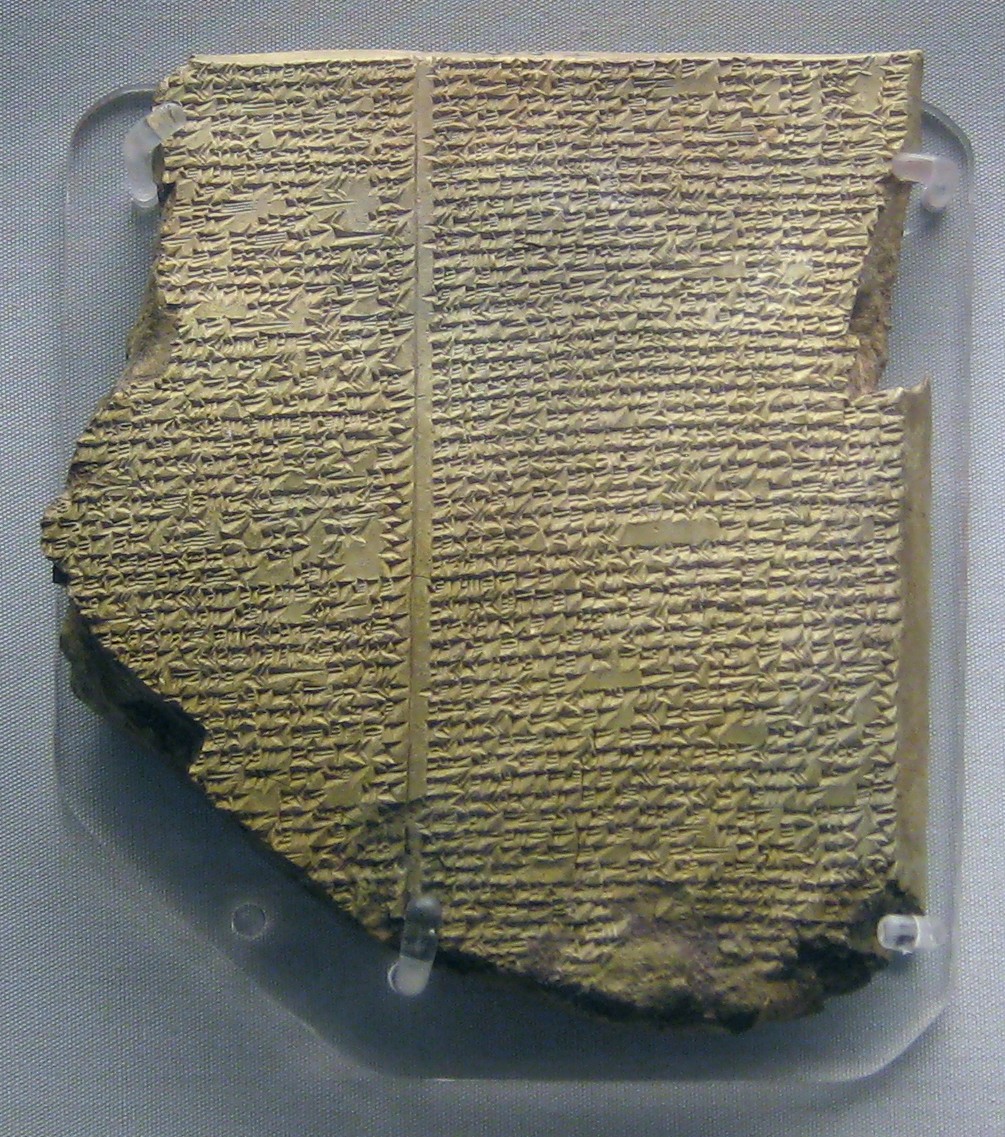
Sumerian → Akkadian (Atrahasis) → Gilgamesh XI (adapting Atrahasis) → Berossus (Greek). Genesis: Hebrew → Greek, Latin and every later language. The Mesopotamian texts were lost for two thousand years and rediscovered from 1872, when George Smith read the Gilgamesh flood tablet.
What the evidence shows
Source: A. R. George, The Babylonian Gilgamesh Epic (Oxford, 2003)