Genesis 6:1–4
- Language
- Hebrew
- Composed
- Debated (see How Genesis Came to Us)
- Oldest surviving copy
- Dead Sea Scroll fragments of Genesis; complete in the Leningrad Codex (AD 1008)
- Status
- Scripture for Jews and all Christians
Ancient Mysteries & Interpretations
Genesis 6:1–4 gives four short verses about the sons of God, human women and the Nephilim. The Book of the Watchers (1 Enoch 1–36), preserved in Aramaic among the Dead Sea Scrolls, expands them into a full account of heavenly beings who descended, took wives, fathered giants, and taught forbidden knowledge.
Ancient text: documented · Events described: not historically testable · Extraterrestrial reading: modern hypothesis, no supporting evidence
"When men began to multiply on the face of the earth, and daughters were born unto them, that the sons of God (bene ha'elohim) saw the daughters of men that they were fair; and they took them wives of all which they chose… There were giants (nephilim) in the earth in those days; and also after that, when the sons of God came in unto the daughters of men, and they bare children to them, the same became mighty men (gibborim) which were of old, men of renown." (Genesis 6:1–4)
Between those verses God limits human days to 120 years (6:3), and right after them comes the reason for the Flood: "the wickedness of man was great in the earth." The Nephilim reappear in Numbers 13:33, where the spies say the Anakim "come of the giants." The Greek Septuagint translates nephilim as gigantes, "giants."
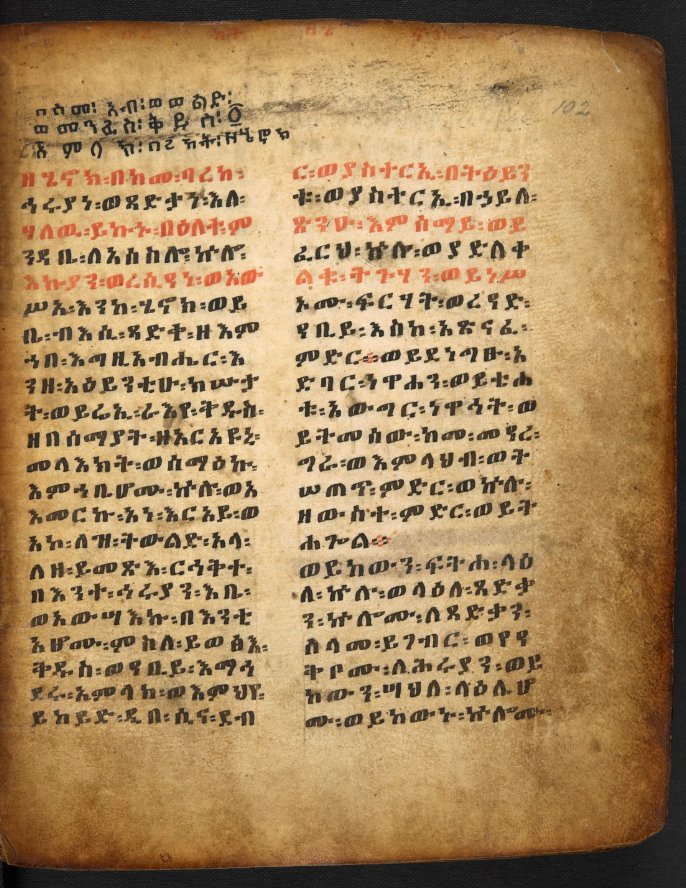
The full text survives only in Ge'ez; the oldest complete Ethiopic manuscripts date from about the 15th century AD. A 5th–6th century Greek manuscript from Akhmim (Codex Panopolitanus) preserves chapters 1–32.
Source: Leon Levy Dead Sea Scrolls Digital Library (Israel Antiquities Authority) ↗; J. T. Milik, The Books of Enoch: Aramaic Fragments of Qumrân Cave 4 (Oxford, 1976)
In 1952, Cave 4 at Qumran yielded fragments of at least eleven Aramaic manuscripts of Enochic books. The oldest, 4Q201, is dated by its script to the first half of the 2nd century BC, so the Watchers tradition was being copied more than two centuries before Jesus, and likely composed earlier still.
| Watcher (as named in 1 Enoch 6–8) | What he taught |
|---|---|
| Shemihazah, their leader | Spells and the cutting of roots (herbal lore) |
| Asael (Azazel) | Metalworking: swords, shields and armor; bracelets and ornaments; cosmetics and dyes |
| Armaros | The undoing of spells |
| Baraqiel | Astrology |
| Kokabiel | The signs of the stars |
| Ziqiel / Ezeqiel | Signs of lightning or clouds |
| Arteqiph / Araqiel | Signs of the earth |
| Shamsiel | Signs of the sun |
| Sahriel / Sariel | The course of the moon |
Names and assigned teachings vary between the Aramaic, Greek and Ethiopic versions; the table follows the main lines of Nickelsburg's commentary and should not be read as one fixed list. The two hundred Watchers descend on Mount Hermon "in the days of Jared" (1 Enoch 6:6; compare Genesis 5:18, where Jared's name may mean "descent").
In 1 Enoch, the arts of civilization are not simply progress: weapons enable violence, ornaments and cosmetics enable seduction, astrology leads people astray. Genesis 4:22 credits a human, Tubal-cain, with bronze and iron working, and Genesis 6 then describes the earth "filled with violence." Genesis does not say the Watchers taught metalworking; 1 Enoch draws that connection. The shared question is old and serious: why does human skill so often serve destruction?
Traditional reading
The sons of God are heavenly beings who rebelled. This is the reading of 1 Enoch, Jubilees, the Dead Sea Scrolls, Philo, Josephus, and most early church fathers before the 4th century. "Sons of God" means heavenly beings in Job 1:6 and 38:7. Jude 6 and 2 Peter 2:4 speak of angels kept in chains, and Jude 14–15 quotes 1 Enoch 1:9.
Assessment: The oldest attested interpretation. Its truth is a theological question.
Traditional reading
The godly descendants of Seth intermarried with the descendants of Cain. Julius Africanus, Augustine and many later Christian and Jewish interpreters held this view, partly because Jesus says angels "neither marry nor are given in marriage" (Matthew 22:30).
Assessment: Widely held since the 4th century; the phrase "sons of God" is not used of Sethites elsewhere.
Traditional reading
"Sons of God" (or "sons of the mighty") are ancient rulers who claimed divine status and took any women they wanted. Targum Onkelos and many rabbinic interpreters read it this way.
Assessment: Fits ancient royal claims to divine sonship; another serious traditional option.
Scholarly reconstruction
Many scholars see Genesis 6:1–4 as a deliberately brief allusion to a wider tradition about divine beings and heroic giants, compressed and placed to show the spread of corruption before the Flood.
Assessment: A literary-historical reading; compatible with several theological views.
Modern speculative theory
Writers from Erich von Däniken (1968) onward propose the sons of God were extraterrestrial visitors and the Nephilim hybrid offspring; the Watchers' teaching becomes technology transfer.
Evidence offered: Proponents point to the beings' descent from the sky, their advanced knowledge, and their giant offspring.
Assessment: The ancient texts describe heavenly beings in religious terms; no text describes vehicles, other worlds or biology, and no physical evidence of nonhuman visitors or hybrid remains has been authenticated. It is a modern reinterpretation, not an ancient reading.
Source: K. L. Feder, Frauds, Myths, and Mysteries: Science and Pseudoscience in Archaeology (10th ed., 2019)
The Watchers tradition is genuinely ancient: Jewish scribes were copying it by the early 2nd century BC, and New Testament writers knew it. It shows how Jews in the Second Temple period read Genesis 6. What it describes (heavenly beings, giants, forbidden instruction) belongs to faith and interpretation; neither archaeology nor science can verify or refute it.
Composed in Aramaic → copied at Qumran (2nd century BC–1st century AD) → translated into Greek (quoted in Jude; partly preserved in the Akhmim codex and by the Byzantine chronicler Syncellus) → translated into Ge'ez and kept complete in Ethiopia → brought to Europe by James Bruce in 1773 → first English translation by Richard Laurence (1821); standard English by R. H. Charles (1912), now superseded by translations that use the Qumran fragments.
What the evidence shows
Source: J. T. Milik, The Books of Enoch: Aramaic Fragments of Qumrân Cave 4 (Oxford, 1976); Leon Levy Dead Sea Scrolls Digital Library (Israel Antiquities Authority) ↗; Library of Congress, Scrolls from the Dead Sea (exhibition) ↗
Source: G. W. E. Nickelsburg, 1 Enoch 1: A Commentary (Hermeneia, Fortress, 2001)