myBibleHistory

Ancient Mysteries & Interpretations

The Anunnaki: Ancient Gods and Modern Theories

The Anunnaki (Anunna) were a group of Mesopotamian gods. In the Atrahasis epic, the junior gods (Igigi) rebel against hard labor, and humans are made from clay mixed with a slain god's flesh and blood to do the work. The modern idea that the Anunnaki were space travelers from a planet Nibiru comes from Zecharia Sitchin (1976), not from the texts.

Ancient texts: documented · Divine-council parallels: real and studied · Nibiru/genetic-engineering theory: rejected by specialists

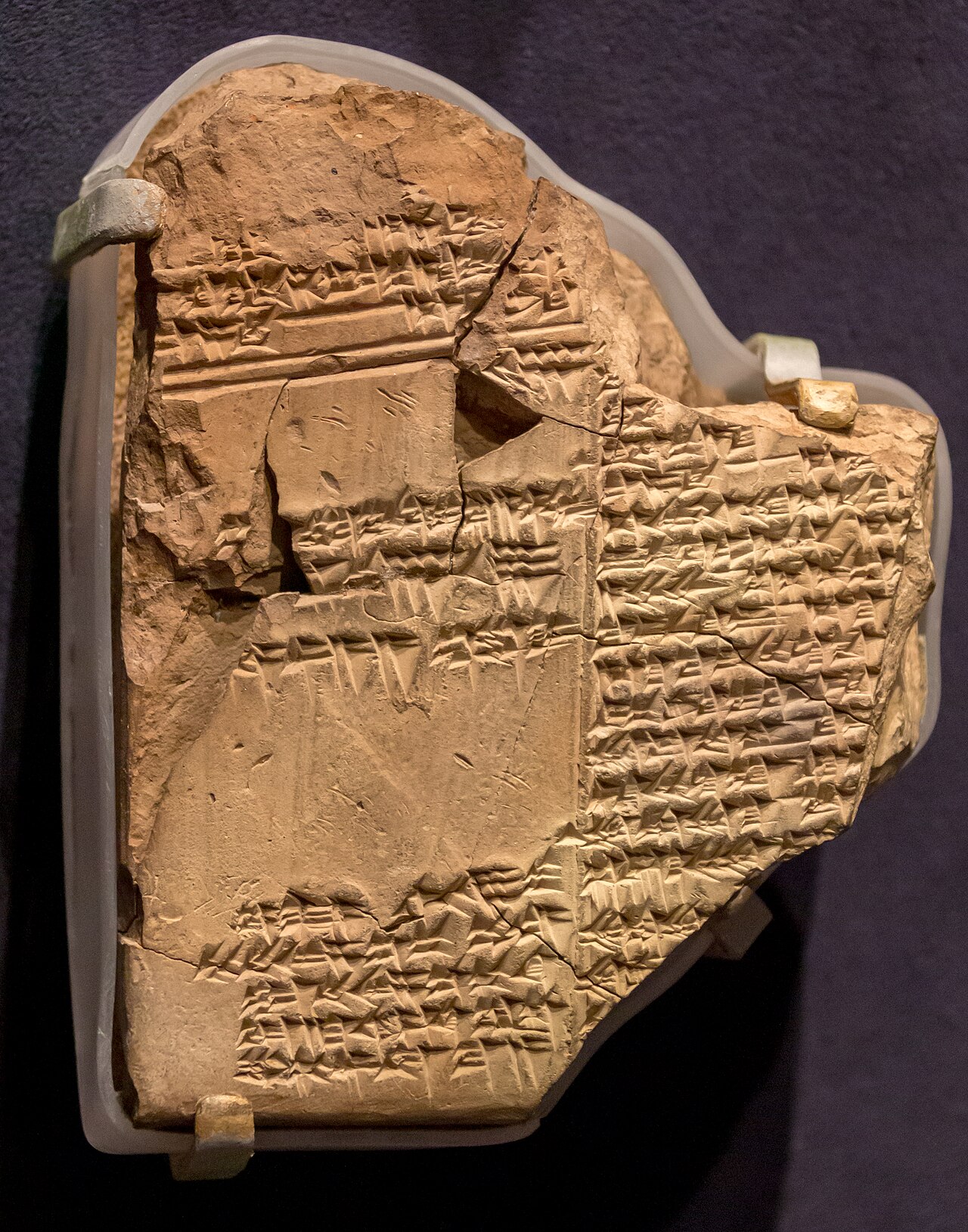
Tablet of the Atrahasis epic
Authentic ancient artifactA fragment of the Epic of Atrahasis, an older Mesopotamian flood story, First Dynasty of Babylon (Morgan Library & Museum).Image credit

1 What Scripture says

"Let us make man in our image" (1:26); "the LORD God formed man of the dust of the ground, and breathed into his nostrils the breath of life" (2:7); "the man is become as one of us" (3:22); "let us go down" (11:7). The plural language, and the "assembly" of heavenly beings in passages like Psalm 82 and 1 Kings 22:19, invite comparison with Mesopotamia's divine assemblies.

2 What evidence we might expect

  • Texts that use the term Anunnaki, with their roles.
  • Creation accounts describing how and why humans were made.
  • Any description of space travel, planets or biology in the original language.

3 What ancient sources survive

Atrahasis

Language
Akkadian
Composed
By about 1700 BC
Oldest surviving copy
Old Babylonian tablets copied by the scribe Ipiq-Aya under King Ammi-saduqa (c. 1646–1626 BC)

Begins "When the gods were man": the Igigi dig the rivers, rebel, and humans are created to take their burden.

Source: W. G. Lambert & A. R. Millard, Atra-hasis: The Babylonian Story of the Flood (Oxford, 1969)

Enuma Elish

Language
Akkadian
Composed
Late 2nd millennium BC
Oldest surviving copy
1st-millennium BC tablets from Ashur and Nineveh

Humanity is created from the blood of the rebel god Kingu so the gods may rest.

Sumerian texts naming the Anunna

Language
Sumerian
Composed
3rd–2nd millennium BC
Oldest surviving copy
Tablets from the late 3rd millennium onward

The Anunna are the great gods, often fifty or seven in number; in later texts they are associated with the underworld, while the Igigi are the gods of heaven. Usage is not consistent across periods.

Source: Oracc, Ancient Mesopotamian Gods and Goddesses: Anunna (Anunnaki) ↗
4 What discoveries exist

Why humans were made

Atrahasis
To relieve the gods of toil. Made from clay mixed with the flesh and blood of a slain god, so humans carry a divine element.
Enuma Elish
To serve the gods so they may rest. Made from a rebel god's blood.
Genesis
In God's image, to rule and care for creation as His representatives, made from dust and given God's breath. God rests on the seventh day after making humans, not by making them slaves.

The similarities (clay or dust, a divine element, a divine assembly) are real and widely discussed. The differences are just as real: Genesis has one Creator, and humanity's dignity rather than servitude.

5 How interpretations compare

Scholarly reconstruction

Divine council

Many scholars, including evangelical ones such as Michael Heiser, read Genesis' plurals against the background of a heavenly council: God speaking to His court of heavenly beings, with Genesis firmly subordinating them to the one Creator.

Traditional reading

Plural of majesty or the Trinity

Jewish interpreters have often read "us" as God addressing the angels or a plural of majesty; many Christians have seen a hint of the Trinity.

Modern speculative theory

Zecharia Sitchin's Anunnaki

In The 12th Planet (1976), Sitchin claimed the Anunnaki came from a planet Nibiru on a 3,600-year orbit, mined gold on Earth, and genetically engineered humans as workers.

Evidence offered: Sitchin's own translations of Sumerian and Akkadian words.

Assessment: Specialists in these languages reject the translations. In the texts, Nibiru is a celestial point or star associated with Marduk (often identified with Jupiter), not a planet in a long orbit, and no text describes spaceflight, gold-mining expeditions from space, or genetic engineering. Astronomers have found no such planet.

Source: M. S. Heiser, critiques of Zecharia Sitchin's translations (sitchiniswrong.com); K. L. Feder, Frauds, Myths, and Mysteries: Science and Pseudoscience in Archaeology (10th ed., 2019)

6 The strongest supported reconstruction

The Anunnaki are well documented as Mesopotamian deities. Their creation myths offer genuine and illuminating comparisons with Genesis, especially on why humans exist. The extraterrestrial interpretation depends on translations that the evidence does not support.

7 What remains possible or unknown

  • The exact membership and role of the Anunnaki, which shifted over two thousand years of Mesopotamian religion.

8 How this material came to us

Sumerian and Akkadian tablets, buried with their cities, were rediscovered and deciphered from the mid-19th century. Atrahasis was first fully published in 1969 (Lambert and Millard). Modern ancient-astronaut readings date from the 1960s–70s.

What the evidence shows

  • Independently documentedThe Anunnaki were a group of gods in Mesopotamian religion.

    Source: Oracc, Ancient Mesopotamian Gods and Goddesses: Anunna (Anunnaki) ↗

  • Independently documentedIn Atrahasis, humans are made from clay and a slain god's flesh and blood to relieve the gods' labor.

    Source: W. G. Lambert & A. R. Millard, Atra-hasis: The Babylonian Story of the Flood (Oxford, 1969)

  • Conflicts with current evidenceThe Anunnaki were extraterrestrials from a planet Nibiru who engineered humans. Not what the texts say; rejected by specialists in the languages.

    Source: M. S. Heiser, critiques of Zecharia Sitchin's translations (sitchiniswrong.com)

Where this connects