Genesis 1:1
In the beginning
The Bible's first sentence, followed through Hebrew, Samaritan, Greek, Latin, and English witnesses. The major witnesses preserve remarkably similar wording; the Hebrew syntax still leaves room for more than one reading.
Stable text: no manuscript differences in meaning
The family tree
Each row is a language or text tradition. Witnesses in the same row may share ancestry, revise one another, or have an uncertain relationship; the line under each box says which. A solid arrow appears only where direct copying or a documented revised edition is established. Order by date never implies copying. Scroll sideways on a phone.
✓ contains this verse · ▢ pages lost · – no copy survives
- Copied or printed directly
- Same line, through lost copies
- Translation
- Related (shared ancestry)
- Modern edition based on it
- Original GenesisMoses' time or later (debated)
- Dead Sea Scrolls: 4QGenesis-b1st century BC – 1st century ADDescends, through lost copies, from Original Genesis
- Aleppo Codexc. AD 930Descends, through lost copies, from Original Genesis
- Leningrad CodexAD 1008
- Printed Hebrew Bibles1488 (Soncino); 1524–25 (Bomberg)Copied or printed directly from medieval Masoretic manuscripts (not the Leningrad Codex itself)
Every witness, in order
Moses' time or later (debated)
Original Genesis
No original copy of any biblical book survives. Everything below is a copy, translation, or edition.
c. 250 BC
Septuagint translation
The Greek translation of the Torah, made in Egypt. No copy of Genesis 1 survives from that time.
1st century BC – 1st century AD
Dead Sea Scrolls: 4QGenesis-b
How the site knows this: Reported in scholarship; not checked by the site.
בראשית ברא אלהים את השמים ואת הארץ
In the beginning God created the heavens and the earth.
One of about 20 Genesis manuscripts from the Qumran caves, and one that preserves the opening of chapter 1. Its text agrees closely with the later standard Hebrew.
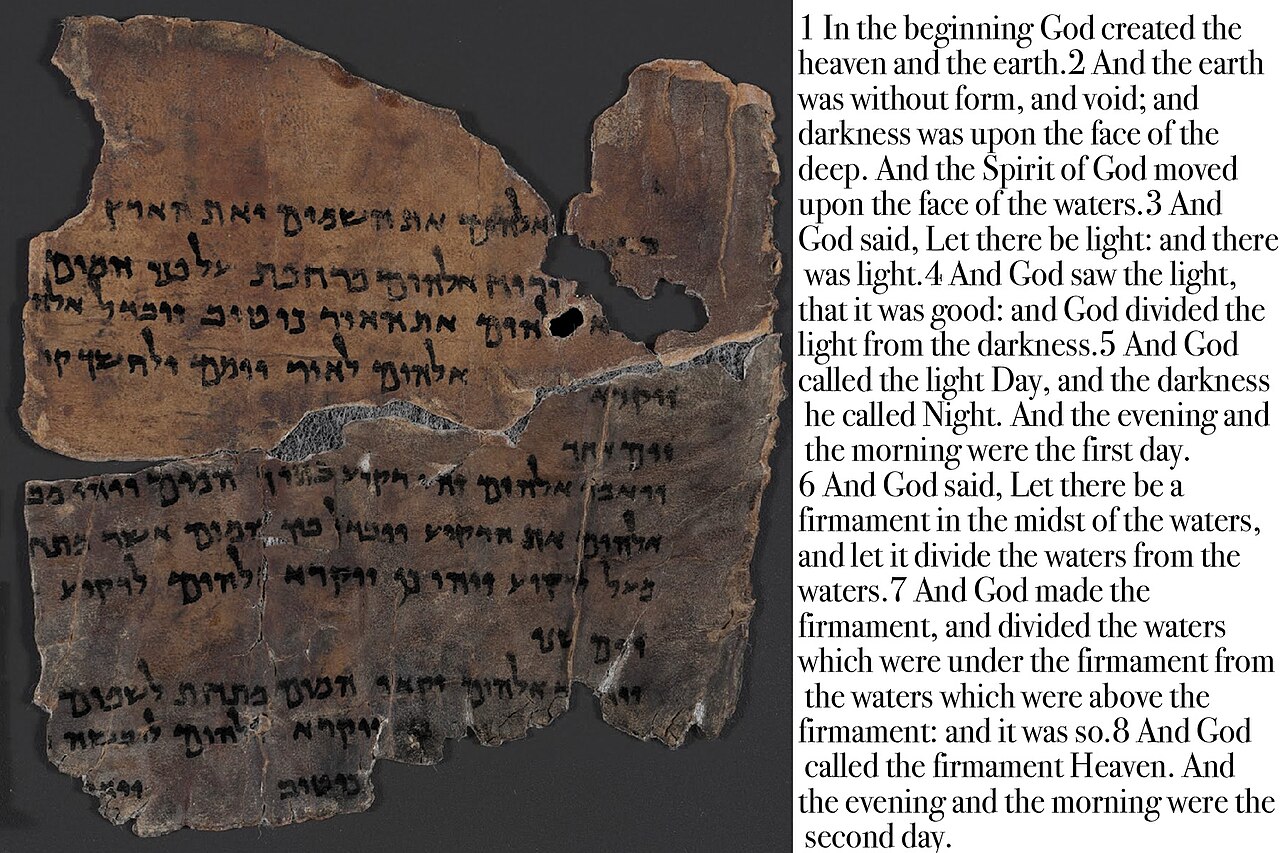
Historical manuscriptImage credit Pictured: a Genesis fragment from the Dead Sea Scrolls; the photo may not be this exact fragment.
Source: Davila, "4QGen-b," in Discoveries in the Judaean Desert XII (1994); Leon Levy Dead Sea Scrolls Digital Library ↗
4th century
Codex Vaticanus
One of the greatest Greek Bibles, but its first pages are lost; Genesis now begins at chapter 46. It cannot witness this verse.
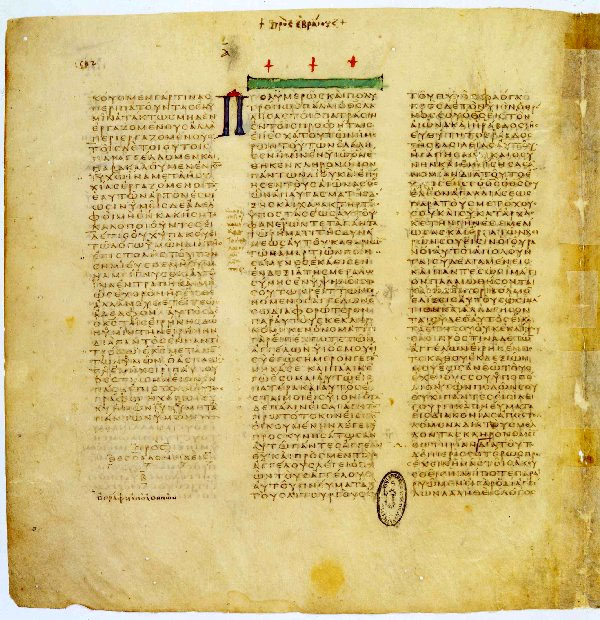
Historical manuscriptImage credit Pictured: a New Testament page.
Translated c. AD 390–405
Jerome's Vulgate
Jerome translated Genesis from the Hebrew, not the Greek. His own manuscript does not survive.
5th century
Codex Alexandrinus
How the site knows this: Reported in scholarship; not checked by the site.
Ἐν ἀρχῇ ἐποίησεν ὁ θεὸς τὸν οὐρανὸν καὶ τὴν γῆν.
In the beginning God made the heaven and the earth.
Among the oldest Greek manuscripts preserving this verse (written in capitals, shown here in modern Greek letters). The Greek says "made" and "heaven" in the singular; the meaning is the same.
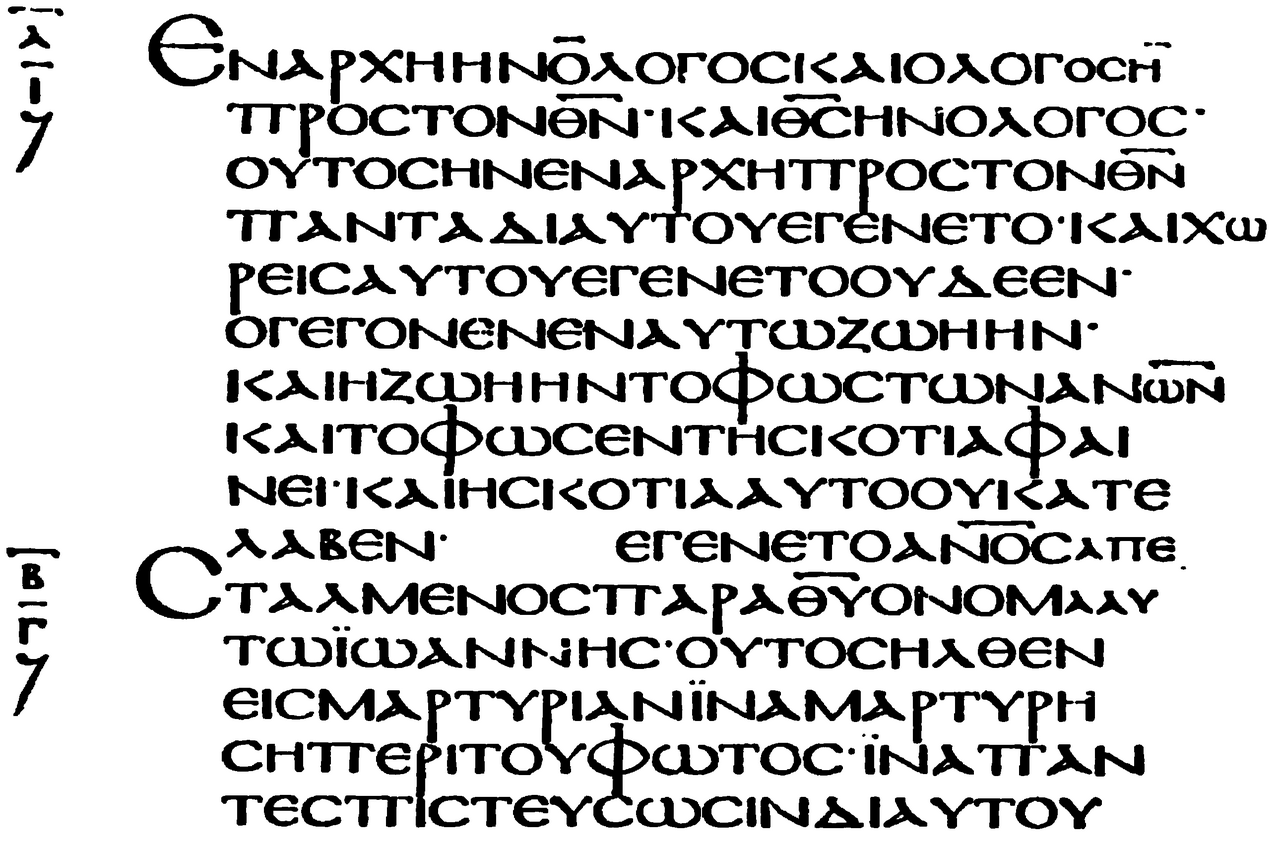
Historical manuscriptImage credit Pictured: the opening of John's Gospel in the same codex.
c. AD 700
Codex Amiatinus
How the site knows this: Reported in scholarship; not checked by the site.
In principio creavit Deus caelum et terram.
In the beginning God created heaven and earth.
The oldest complete Latin Vulgate, made in northern England.
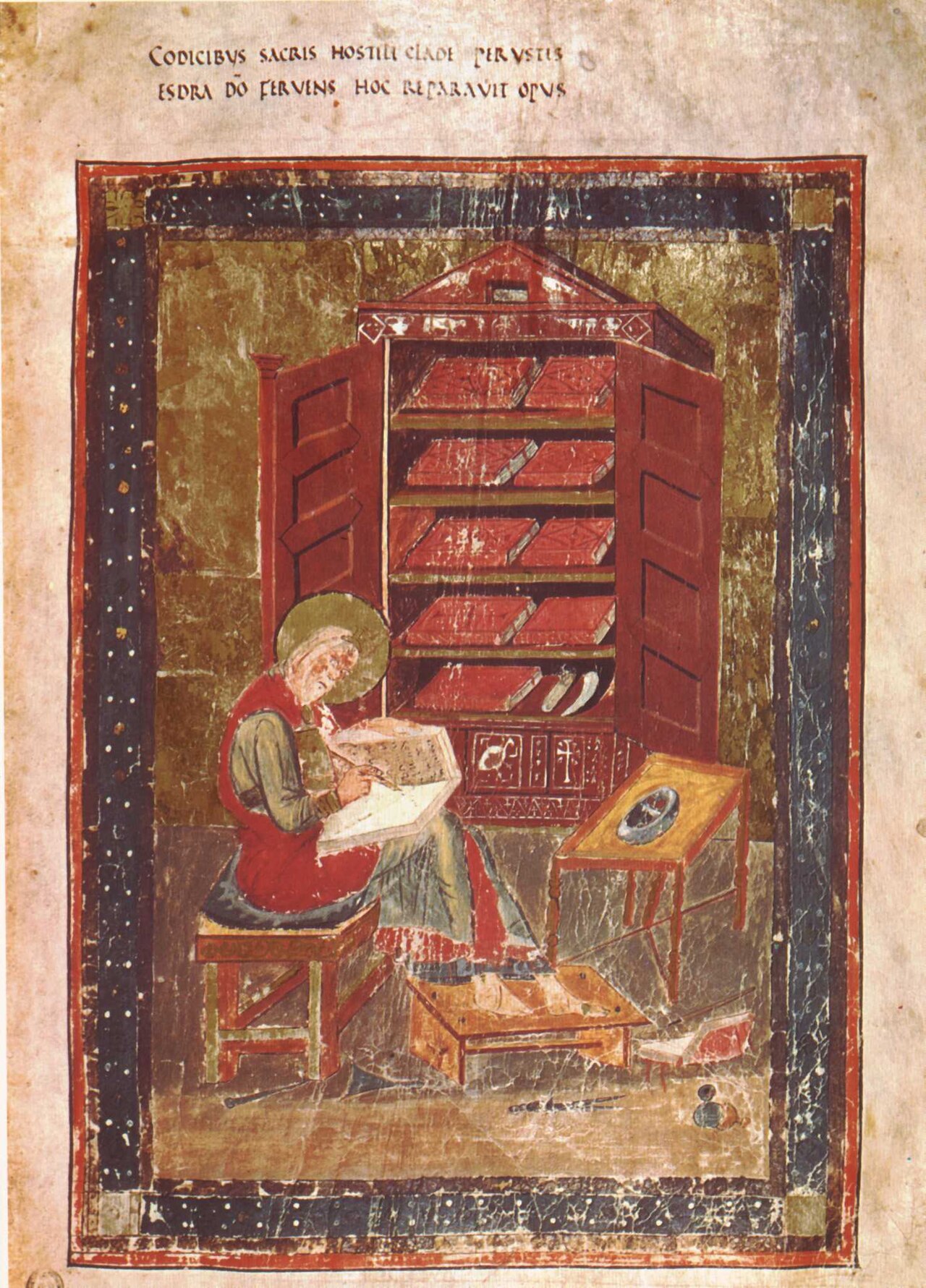
Historical manuscriptImage credit Pictured: the Ezra portrait page, not Genesis 1.
c. AD 930
Aleppo Codex
The most authoritative Masoretic Bible, but almost all of Genesis was lost after the 1947 riots in Aleppo. It cannot witness this verse today.
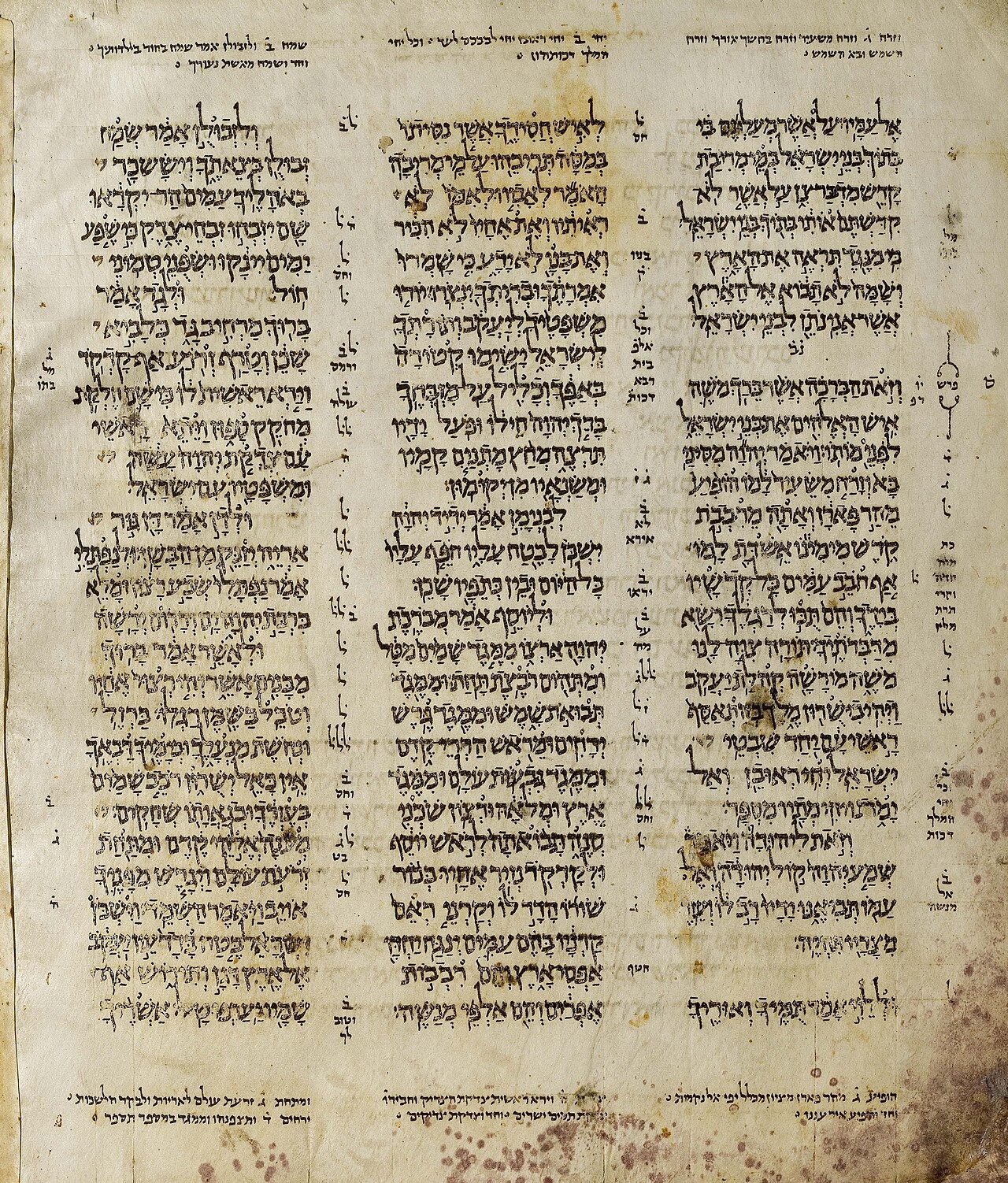
Historical manuscriptImage credit Pictured: a surviving page of Deuteronomy.
AD 1008
Leningrad Codex
How the site knows this: Read in the site's library text: Westminster Leningrad Codex, a digital transcription of the Leningrad Codex.
בְּרֵאשִׁית בָּרָא אֱלֹהִים אֵת הַשָּׁמַיִם וְאֵת הָאָרֶץ
In the beginning God created the heavens and the earth.
The oldest complete Hebrew Bible, with the Masoretes' vowel marks. Its letters match the Dead Sea Scroll wording of this verse.
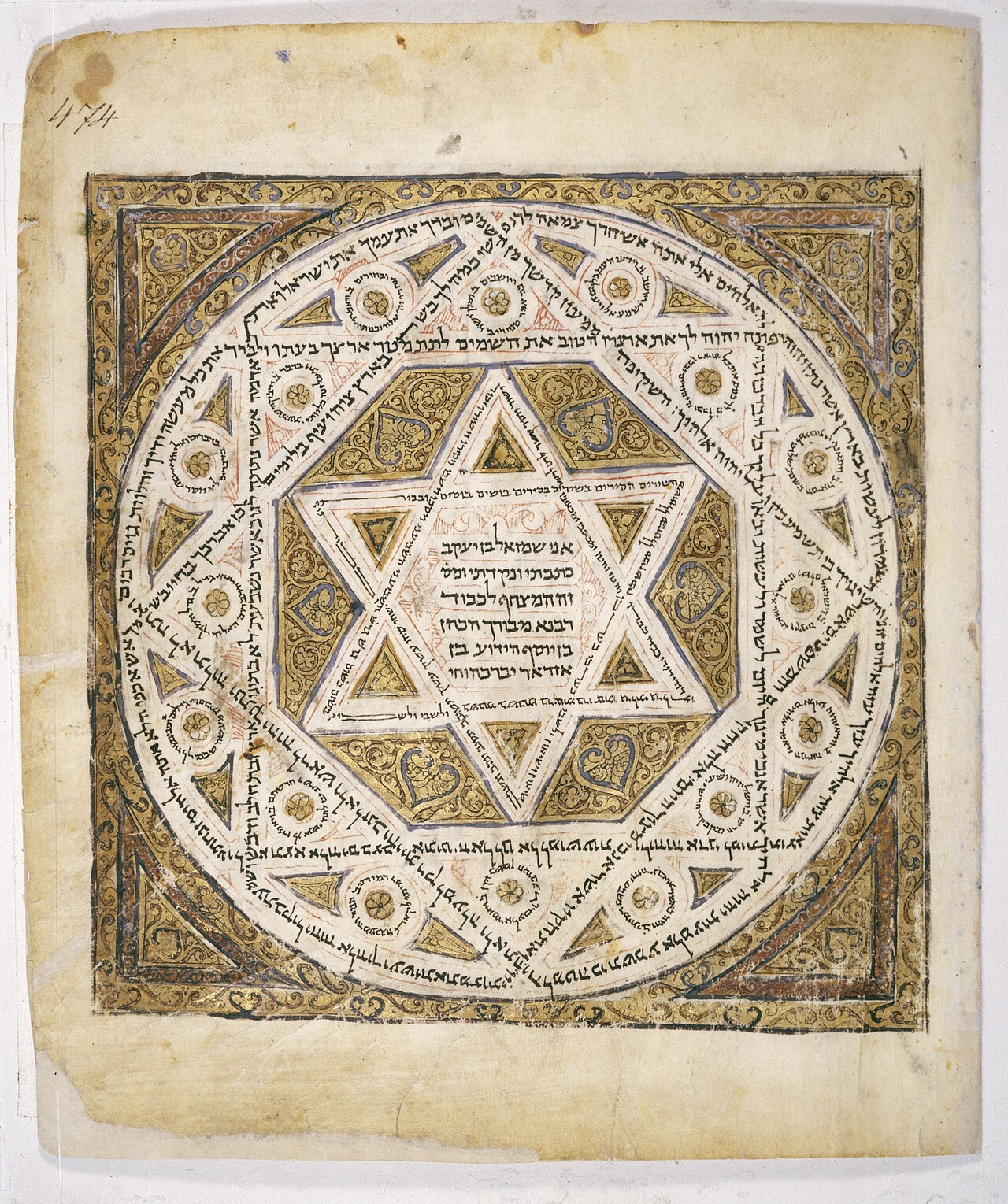
Historical manuscriptImage credit Pictured: a decorated page from the codex, not Genesis 1.
Ancient tradition; medieval copies
Samaritan Pentateuch
How the site knows this: Read in the site's library text: Samaritan Pentateuch, Kennicott's 1780 text digitized by A. Sigalov.
בראשית ברא אלהים את השמים ואת הארץ
In the beginning God created the heavens and the earth.
A separate line of copying kept by the Samaritan community, in its own script (shown here in standard Hebrew letters). For this verse it agrees with the Hebrew.
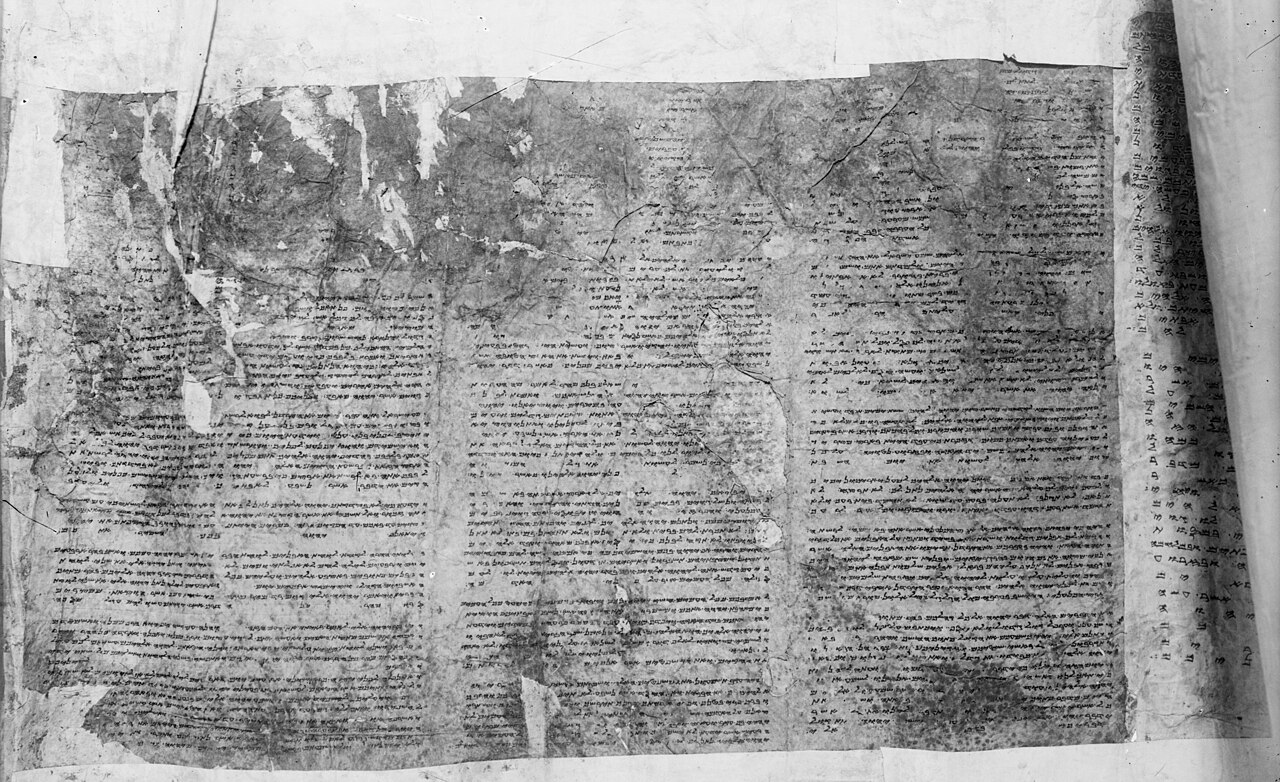
Historical manuscriptImage credit Pictured: a Samaritan Torah scroll, not this verse.
c. 1455
Gutenberg Bible
How the site knows this: Reported in scholarship; not checked by the site.
In principio creavit Deus caelum et terram.
The Latin Vulgate, printed from late medieval manuscripts (spelling varied slightly between copies). It is a printing of the Latin, not a source for the English translations below.
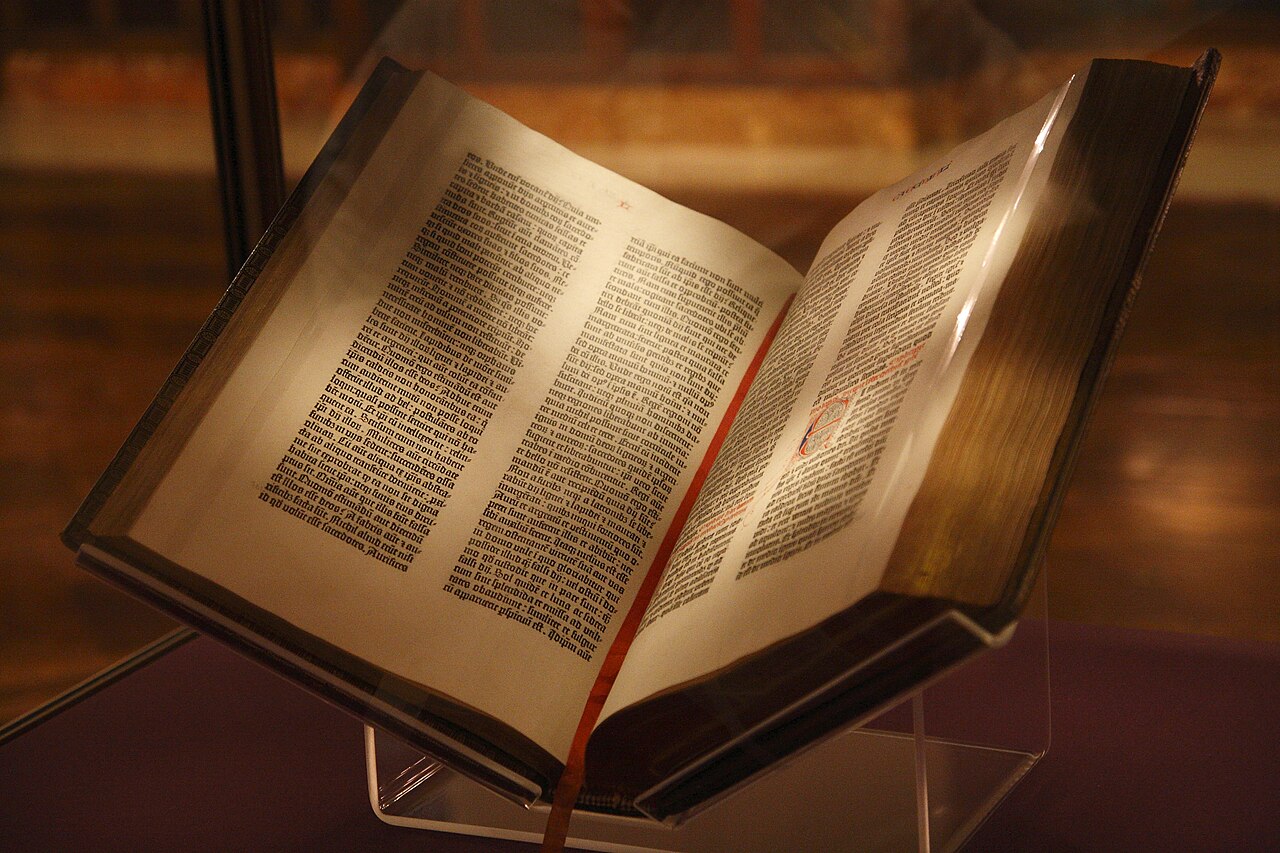
Historical printed workImage credit Pictured: a volume of the Gutenberg Bible.
1488 (Soncino); 1524–25 (Bomberg)
Printed Hebrew Bibles
How the site knows this: Reported in scholarship; not checked by the site.
The first printed Hebrew Bibles, made from medieval Masoretic manuscripts. Daniel Bomberg's Rabbinic Bible (1524–25) became the Hebrew text behind the King James Old Testament.
1530
Tyndale's Pentateuch
How the site knows this: Read in the site's library text: Tyndale (1525/1530).
In the begynnynge God created heaven and erth.
Translated from the printed Hebrew, with Luther's German and the Latin at hand.
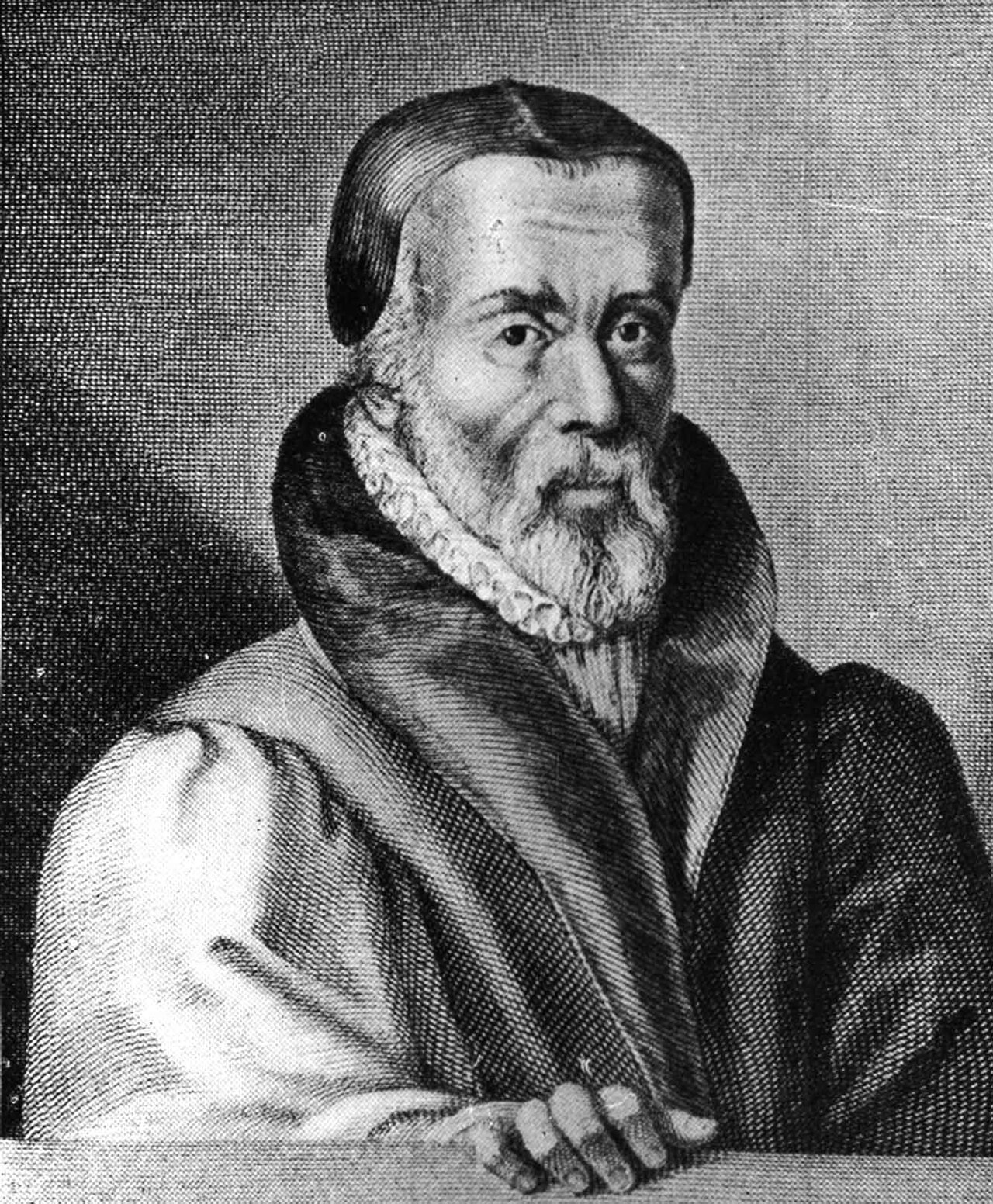
Later artwork, not historical evidenceImage credit 1611
King James Bible
How the site knows this: Read in the site's library text: King James Version (1769 text).
In the beginning God created the Heauen, and the Earth.
Translated from the printed Hebrew while revising earlier English Bibles that drew heavily on Tyndale. Shown in 1611 spelling.
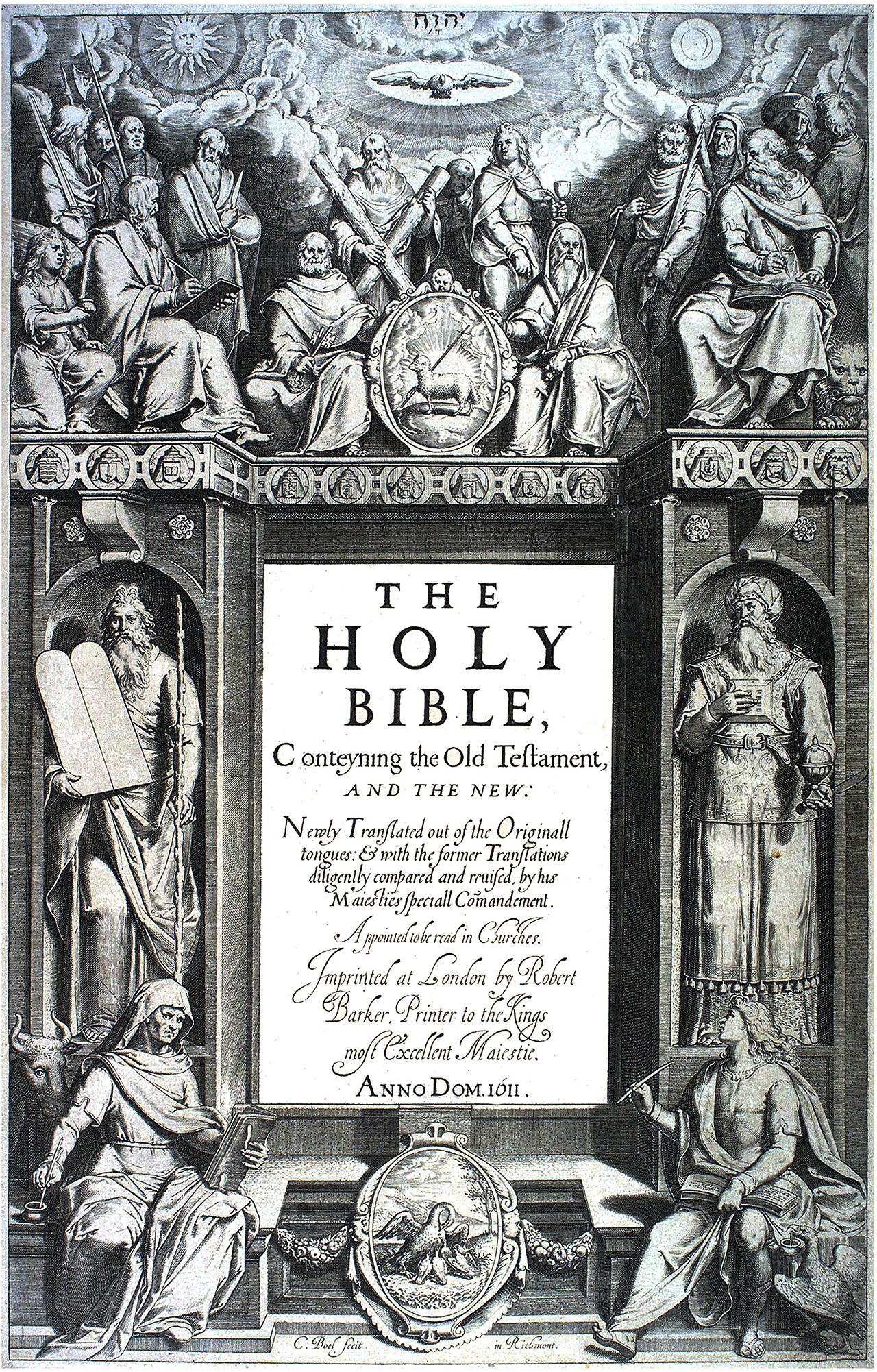
Historical printed workImage credit Pictured: the 1611 title page.
1950s–today
Modern English Bibles
How the site knows this: Checked in a published edition.
In the beginning God created the heavens and the earth.
Translated from scholarly Hebrew editions based on the Leningrad Codex, checked against the Dead Sea Scrolls, Greek, and Samaritan texts. "Heavens" reflects the plural form of the Hebrew shamayim; this is a translation choice, not a change in the manuscripts.
What changed, and why
Across the surviving witnesses, in five languages and many kinds of writing material, the wording of this sentence is remarkably stable. The differences among the witnesses shown are translation choices: "made" versus "created" in Greek, "heaven" versus "heavens" in English. Interpretation is another matter: the Hebrew can be read as an independent opening statement ("In the beginning God created…") or as a dependent time clause ("When God began to create…", as in some modern translations), and readers have long debated what it implies.
Notice the branches. The Greek and Latin are translations, made separately from Hebrew texts. The Samaritan text is a parallel line of copying. The English Bibles were translated from printed Hebrew, not from the Latin Gutenberg Bible.
What the evidence shows
- Genesis 1:1 survives in Dead Sea Scroll fragments, the Leningrad Codex, the Samaritan Pentateuch, Greek, and Latin witnesses.
- These witnesses agree on the meaning of the verse.
- Codex Vaticanus and the Aleppo Codex no longer contain this verse. Their Genesis pages are lost.
Sources
- Leon Levy Dead Sea Scrolls Digital Library ↗
- Tov, Textual Criticism of the Hebrew Bible, 3rd ed. (2012)
Related lessons
- How Genesis Came to Us →Who wrote Genesis, how it was copied for three thousand years, where the copies differ, and how the whole book from creation to Joseph reached the Bible you hold.
- In the Beginning →Genesis opens with one Creator who brings order out of the deep, and makes humanity in His image.