Era 4 · Covenant and WildernessDeuteronomy
Prophecy, Divination, and Moses' Successor
"The LORD thy God will raise up unto thee a Prophet… like unto me"
"The priests the Levites, and all the tribe of Levi, shall have no part nor inheritance with Israel… the LORD is their inheritance." A Levite who comes from any town to serve at the chosen place shares equally.
"There shall not be found among you any one that maketh his son or his daughter to pass through the fire, or that useth divination, or an observer of times, or an enchanter, or a witch, Or a charmer, or a consulter with familiar spirits, or a wizard, or a necromancer. For all that do these things are an abomination unto the LORD."
"The LORD thy God will raise up unto thee a Prophet from the midst of thee, of thy brethren, like unto me; unto him ye shall hearken." "I will put my words in his mouth; and he shall speak unto them all that I shall command him." And if the people ask how to know a false word: "When a prophet speaketh in the name of the LORD, if the thing follow not, nor come to pass, that is the thing which the LORD hath not spoken."
The vocabulary of divination
- Qosem qesamim, "one who practices divination": casting lots or arrows, or reading signs (compare Ezekiel 21:21).
- Me'onen, "observer of times": perhaps reading clouds or omens; the meaning is uncertain.
- Menachesh, "enchanter": divining by signs or omens; Joseph's cup is used for nachash (Genesis 44:5).
- Mekhashshef, "witch" or "sorcerer": practicing spells.
- Chover chever, "charmer": binding by spells.
- Sho'el 'ov ve-yidde'oni, "consulter with familiar spirits, or a wizard": consulting ghosts and "knowing ones" (compare Saul at Endor, 1 Samuel 28).
- Doresh el-ha-metim, "necromancer": one who seeks the dead.
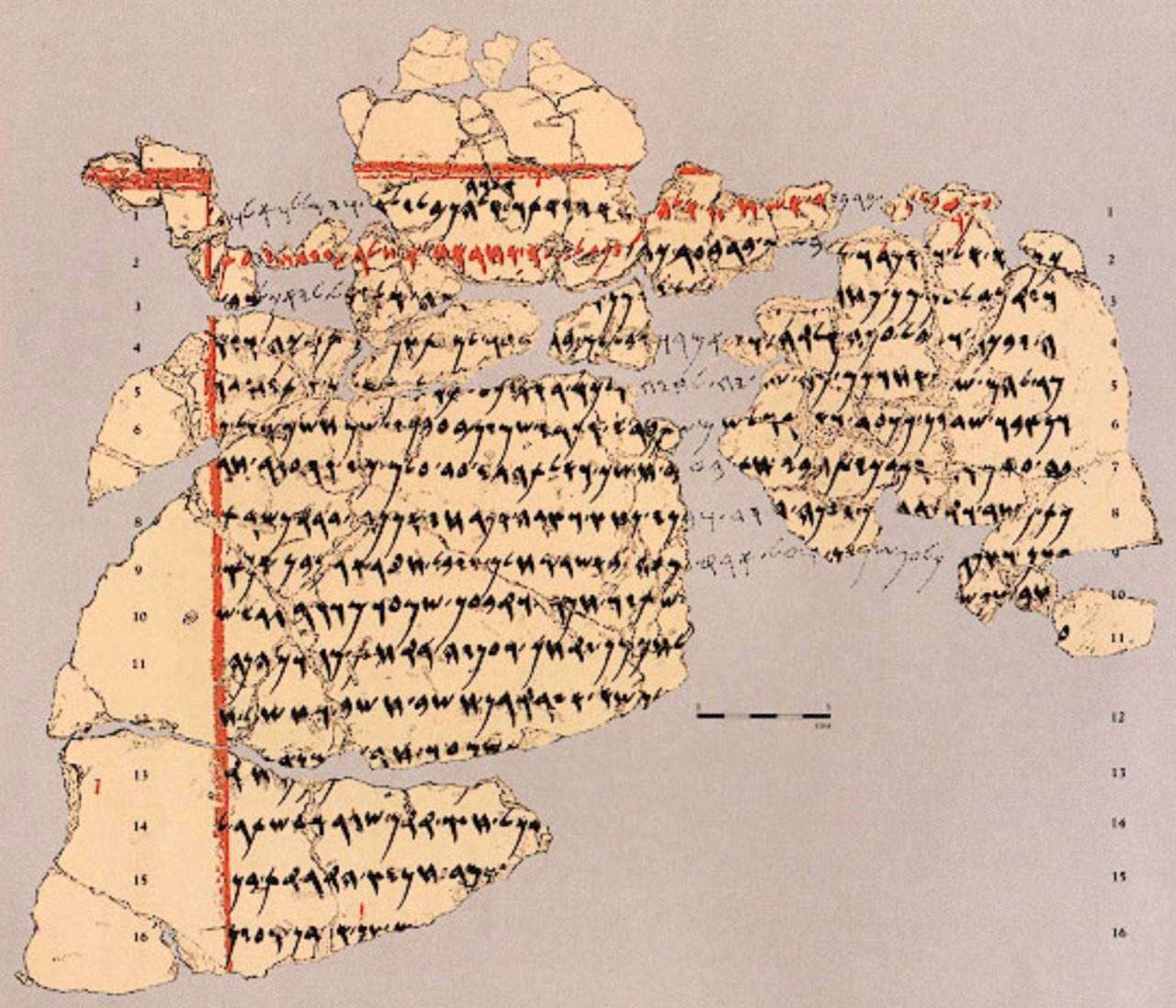
The ancient Near East had many such specialists. Mesopotamian diviners read sheep livers (extispicy), and clay liver models were used to train them. Letters from Mari (18th century BC) report the messages of prophets and ecstatics to King Zimri-Lim. The Deir Alla inscription calls Balaam "a seer of the gods." Deuteronomy does not deny that these practices existed; it forbids them for Israel.
The prophet like Moses
Within Deuteronomy the promise addresses a line of true prophets after Moses, though 34:10 says "there arose not a prophet since in Israel like unto Moses." By the late Second Temple period it was read as one expected figure: the Qumran text 4QTestimonia quotes it beside the star prophecy of Numbers 24, and the crowds ask John the Baptist, "Art thou that prophet?" (John 1:21). Peter and Stephen identify the prophet as Jesus (Acts 3:22–23; 7:37).
A test with limits
The test in 18:22 says when a word is false, not that every true word will be fulfilled exactly as spoken: Jonah's warning to Nineveh was not carried out because Nineveh repented (Jonah 3:10), and Jeremiah 18:7–10 explains that announced judgments can be conditional. Deuteronomy 13 adds a second test: even a fulfilled sign does not validate a prophet who leads to other gods.
The Case for the Biblical Account
Scripture's account
Divination is forbidden; God will raise up a prophet like Moses (Deuteronomy 18).
What evidence would we expect?
Diviners and prophets in the cultures around Israel; later Jewish expectation of a prophet.
The discoveries
Mesopotamian liver omens and clay liver models; Mari prophetic letters; Neo-Assyrian prophecies to Esarhaddon; the Deir Alla Balaam text; 4QTestimonia (4Q175).
Testing the discoveries
Divination and prophecy were common across the region. The messianic reading of 18:15 is attested at Qumran and in the New Testament.
The strongest reconstruction
Deuteronomy defines Israel's prophecy against a world of diviners, and its promise of a prophet became a major hope.
What remains possible
Whether 18:15 was first meant as a succession of prophets, a single figure, or both.
What the evidence shows
- Mari letters record prophetic messages to King Zimri-Lim.Source: M. Nissinen, Prophets and Prophecy in the Ancient Near East (2nd ed., 2019)
- 4QTestimonia quotes Deuteronomy 18:18–19.
- The meanings of all seven divination terms are known. Several remain uncertain.
- "I will put my words in his mouth."
Continue the journey
Echoes Across CivilizationsSeers, prophets and curses for hireDid kings in Israel's world hire seers and prophets, and curse their enemies?More from this lesson
Echoes Across Civilizations
Optional: how other ancient peoples told similar stories. Open one to compare, then come back to the lesson.
Seers, prophets and curses for hireTransjordan · Mari · Egypt · Assyria
Did kings in Israel's world hire seers and prophets, and curse their enemies?
- Transjordan: The Deir Alla plaster inscription ("the book of Balaam son of Beor") Possible historical contact
- Mari: The prophetic letters of Mari Shared literary world
- Egypt: The Execration Texts Resemblance only
- Assyria: Neo-Assyrian prophecies to Esarhaddon Possible historical contact
Why this matters to the rest of Scripture
- Saul and the medium of Endor.
- "There arose not a prophet since… like unto Moses."
- John 1:21; 6:14"That prophet."
- Peter quotes Deuteronomy 18.
- "When the word of the prophet shall come to pass."