Era 4 · Covenant and WildernessDeuteronomy
Ancient Warfare and Its Moral Questions
"Is the tree of the field man, that it should be besieged by thee?"
"When thou goest out to battle against thine enemies, and seest horses, and chariots, and a people more than thou, be not afraid of them." The priest says, "the LORD your God is he that goeth with you." The officers ask: who has built a new house and not dedicated it, planted a vineyard and not eaten of it, betrothed a wife and not taken her? "Let him go and return unto his house." "What man is there that is fearful and fainthearted? let him go and return… lest his brethren's heart faint as well as his heart."
"When thou comest nigh unto a city to fight against it, then proclaim peace unto it." If it opens its gates, its people serve as forced labor. If not, after it is taken the men are killed and the women, children, livestock and spoil taken. "Thus shalt thou do unto all the cities which are very far off."
"But of the cities of these people, which the LORD thy God doth give thee for an inheritance, thou shalt save alive nothing that breatheth: But thou shalt utterly destroy them… That they teach you not to do after all their abominations."
"When thou shalt besiege a city a long time… thou shalt not destroy the trees thereof by forcing an axe against them: for thou mayest eat of them, and thou shalt not cut them down (for the tree of the field is man's life)."
Two kinds of city
| Distant cities (20:10–15) | Cities of the land (20:16–18) | |
|---|---|---|
| Offer of peace | Yes | Not mentioned |
| If it surrenders | Forced labor | — |
| If it resists | Men killed; women, children and goods taken | "Save alive nothing that breatheth" (herem) |
| Stated reason | — | "That they teach you not to do after all their abominations" |
Siege warfare
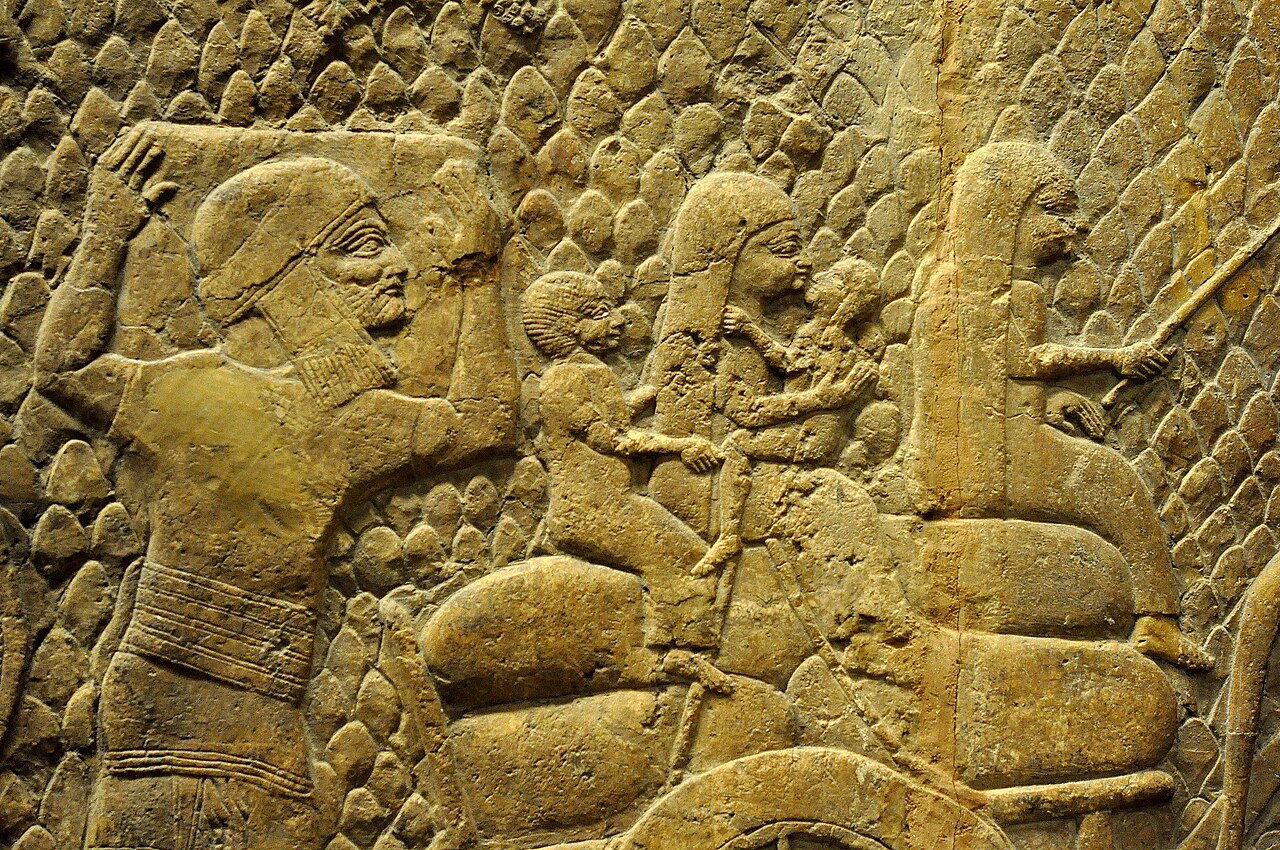
Assyrian reliefs, like those of Sennacherib's siege of Lachish (701 BC) in the British Museum, show siege ramps, battering rams, impaled prisoners and deportations. Assyrian kings boasted of cutting down orchards around besieged cities. Deuteronomy forbids destroying fruit trees, though other trees may be used for siege works. These reliefs are later than the setting of Deuteronomy, but they show the warfare its laws assume.
Readings
Some readers emphasize the restraints as unusually humane for their time. Others note that the same chapter authorizes killing and enslavement. Many scholars think the herem commands for Canaan are idealized rhetoric written long after the settlement; Joshua and Judges themselves describe Canaanites who remained. Jewish tradition (for example Maimonides) required an offer of peace even to the cities of Canaan. No reading of this chapter justifies violence against any people today.
The Case for the Biblical Account
Scripture's account
Rules of war: exemptions, offers of peace, herem for Canaan, protection of fruit trees (Deuteronomy 20).
What evidence would we expect?
Ancient siege practices; rhetoric of total destruction; military exemptions elsewhere.
The discoveries
Assyrian siege reliefs and royal inscriptions boasting of destroyed orchards; the Mesha Stele's herem; Ugaritic and Mesopotamian references to exemptions are rare.
Testing the discoveries
The warfare described matches ancient practice. The extent to which herem was carried out is not established by archaeology.
The strongest reconstruction
Deuteronomy 20 regulates war within ancient norms, adding distinctive limits and a distinctive religious justification for herem.
What remains possible
Whether these laws reflect practice, ideals, or a later program.
What the evidence shows
- Assyrian kings boasted of cutting down the orchards of besieged cities.
- The Lachish reliefs show Assyrian siege methods in 701 BC.
- The herem of Canaan's cities was fully carried out. Joshua and Judges describe Canaanites who remained.
- The restraints in Deuteronomy 20 resolve its moral problems.
Continue the journey
Connected in this bookA Chosen People and a Difficult CommandDeuteronomy 7:1–5: The command about the seven nations.More from this lesson
Why this matters to the rest of Scripture
- The command about the seven nations.
- The Gibeonites make peace.
- Gideon sends the fearful home.
- Israel fells Moab's trees.
- A king sends for terms of peace.