Era 4 · Covenant and WildernessDeuteronomy
Joshua and the Written Law
"And Moses wrote this law, and delivered it unto the priests"
"I am an hundred and twenty years old this day; I can no more go out and come in." Moses calls Joshua before all Israel: "Be strong and of a good courage: for thou must go with this people unto the land… And the LORD, he it is that doth go before thee; he will be with thee, he will not fail thee, neither forsake thee: fear not, neither be dismayed."
"And Moses wrote this law, and delivered it unto the priests the sons of Levi, which bare the ark." "At the end of every seven years, in the solemnity of the year of release, in the feast of tabernacles… thou shalt read this law before all Israel in their hearing. Gather the people together, men, and women, and children, and thy stranger."
In the tent, the LORD appears in the pillar of cloud and tells Moses that the people will "go a whoring after the gods of the strangers… and will forsake me." "Now therefore write ye this song for you… that this song may be a witness for me." Moses finishes writing "the words of this law in a book, until they were finished," and the Levites put it "in the side of the ark… that it may be there for a witness against thee."
What was "this law"?
Deuteronomy 31:9 and 31:24 say Moses wrote "this law." What that phrase covered is debated: the laws of chapters 12–26, the speeches of Deuteronomy, or the whole Torah. The book later describes Moses' death, so its final form includes words written after him. Jewish tradition attributes the last eight verses to Joshua (Bava Batra 15a) or says Moses wrote them in tears, at God's dictation.
Hakhel: the seven-year reading
The public reading became known as hakhel, "assemble!" The Mishnah (Sotah 7:8) describes King Agrippa (1st century AD) reading Deuteronomy from a wooden platform in the Temple court, and weeping at "thou mayest not set a stranger over thee" because of his Edomite descent. Nehemiah 8 describes Ezra reading the law at Booths. Some modern communities in Israel hold a symbolic hakhel gathering.
The oldest copies
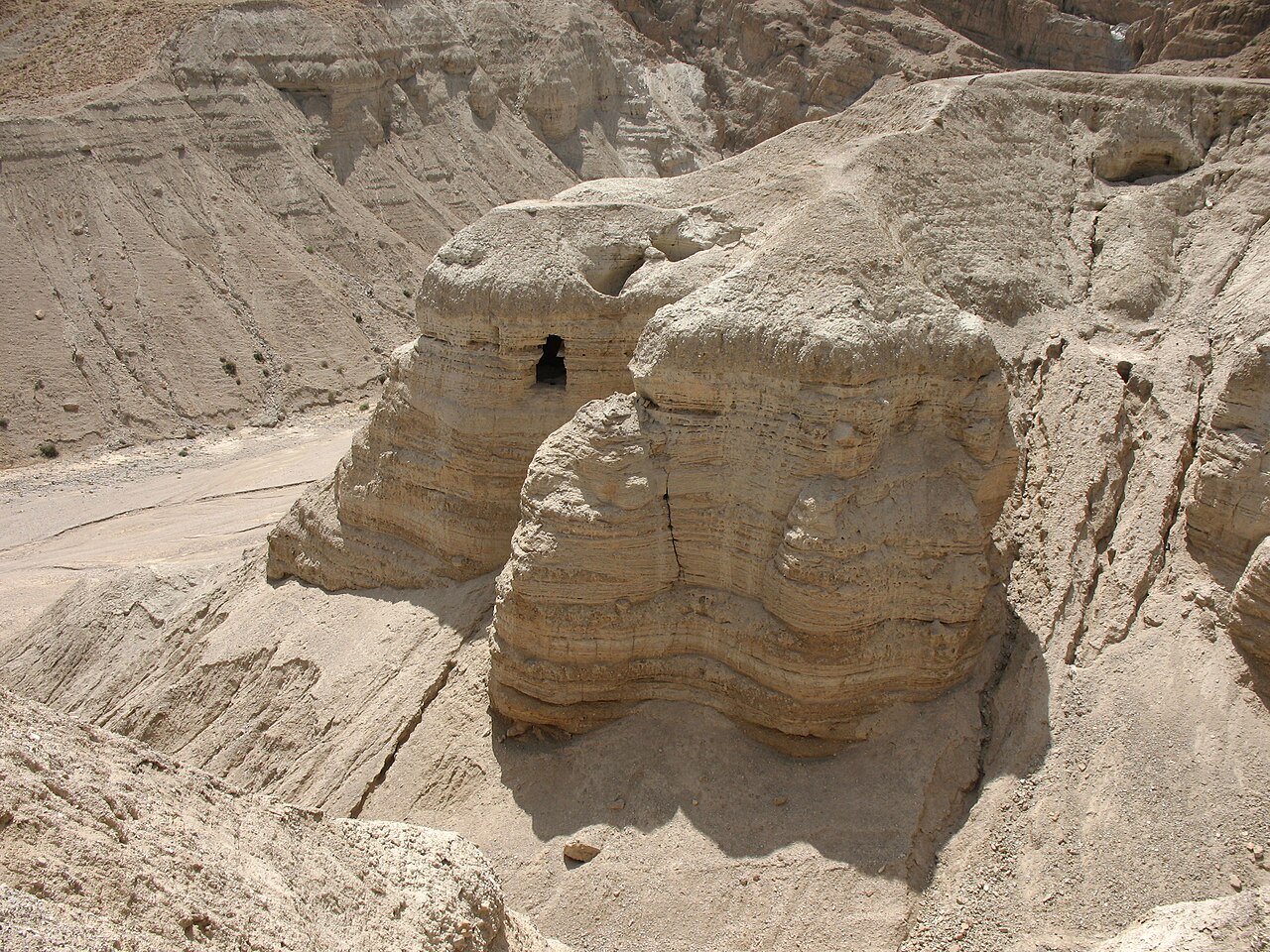
No original survives. Deuteronomy is one of the most frequently copied books among the Dead Sea Scrolls: about 30 to 35 manuscripts depending on how fragments, excerpts and tefillin are counted. Most are small fragments, and some were excerpt scrolls of favorite passages rather than whole books. They date from the 2nd century BC to the 1st century AD.
The Case for the Biblical Account
Scripture's account
Joshua appointed; the law written, placed by the ark, and read every seven years; the Song given as a witness (Deuteronomy 31).
What evidence would we expect?
Copies of Deuteronomy; public reading of the law in later history.
The discoveries
About 30–35 Qumran manuscripts including excerpts and tefillin; Nehemiah 8; Mishnah Sotah 7:8 on Agrippa's reading; Josephus, Antiquities 4.209–211.
Testing the discoveries
Public reading is attested in the Second Temple period. The scope of what Moses wrote cannot be established from evidence.
The strongest reconstruction
Deuteronomy presents itself as a written covenant document meant for public reading, and was so used in the Second Temple period.
What remains possible
That "this law" was the core legal corpus; or the whole book; or the Torah.
What the evidence shows
- Deuteronomy is among the most frequently attested books at Qumran.Source: E. Ulrich et al., Qumran Cave 4.IX: Deuteronomy, Joshua, Judges, Kings, DJD XIV (Oxford, 1995); Leon Levy Dead Sea Scrolls Digital Library (Israel Antiquities Authority) ↗
- The Mishnah describes King Agrippa reading Deuteronomy at hakhel.
- Moses wrote the whole of Deuteronomy as we have it.
- "He will not fail thee, neither forsake thee."
Continue the journey
Connected elsewhere in ScriptureJoshua CommissionedJoshua 1:5–9: "Be strong and of a good courage."More from this lesson
Why this matters to the rest of Scripture
- "Be strong and of a good courage."
- Ezra reads the law at Booths.
- Josiah reads the book of the covenant to all the people.
- "I will never leave thee, nor forsake thee."