Era 4 · Covenant and WildernessDeuteronomy
A Chosen People and a Difficult Command
"The LORD did not set his love upon you… because ye were more in number"
"When the LORD thy God shall bring thee into the land… and hath cast out many nations before thee, the Hittites, and the Girgashites, and the Amorites, and the Canaanites, and the Perizzites, and the Hivites, and the Jebusites… thou shalt smite them, and utterly destroy them; thou shalt make no covenant with them, nor shew mercy unto them: Neither shalt thou make marriages with them." Their altars, pillars, Asherah poles and images are to be destroyed.
"For thou art an holy people unto the LORD thy God… The LORD did not set his love upon you, nor choose you, because ye were more in number than any people; for ye were the fewest of all people: But because the LORD loved you, and because he would keep the oath which he had sworn unto your fathers."
"Know therefore that the LORD thy God, he is God, the faithful God, which keepeth covenant and mercy with them that love him… to a thousand generations." The nations will be removed "by little and little… lest the beasts of the field increase upon thee."
What is herem?
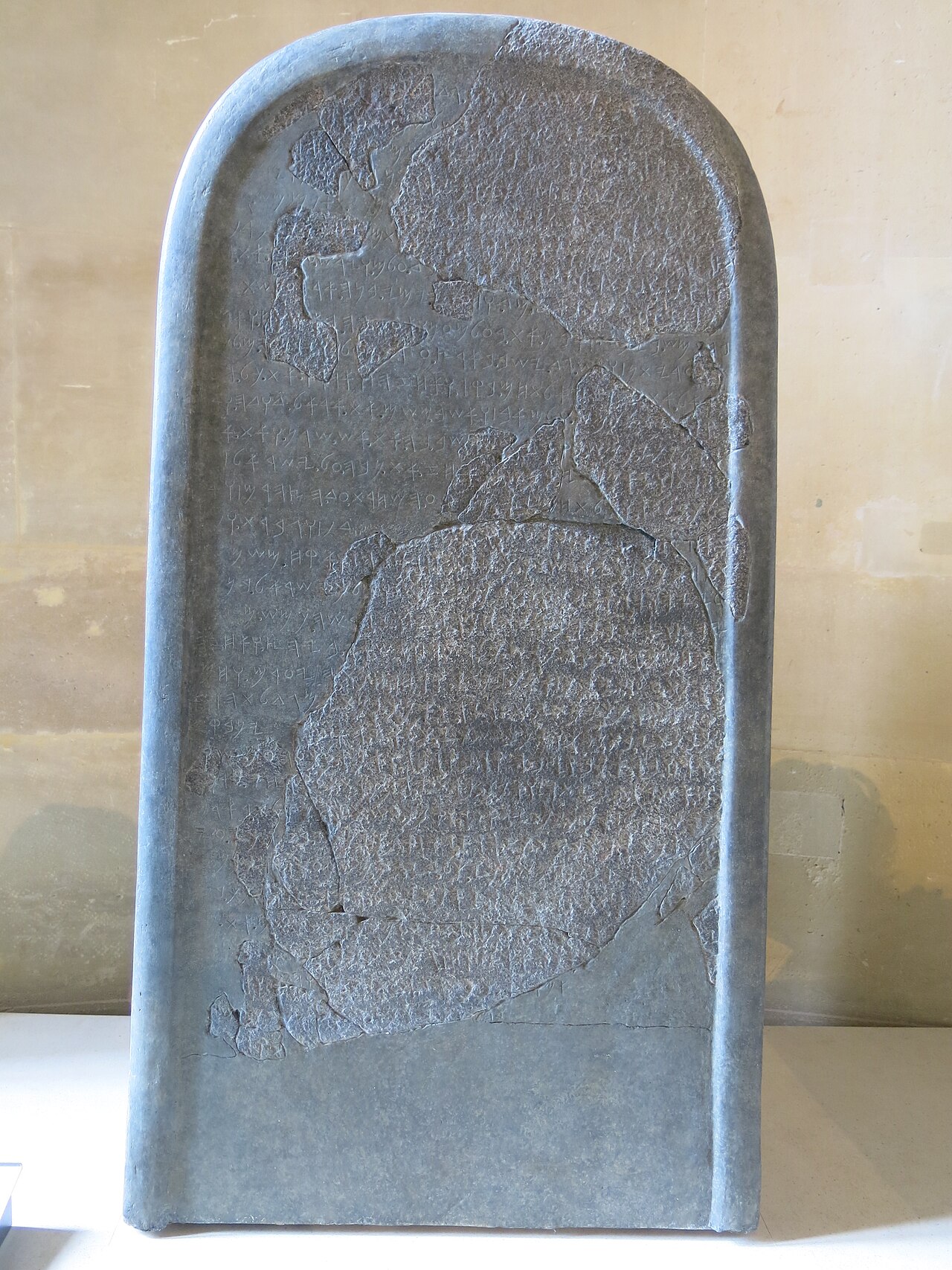
The verb translated "utterly destroy" (haram) means to devote something wholly to God, removing it from human use, usually by destruction. The Moabite king Mesha uses the same word in the 9th century BC: he says he took Nebo from Israel and killed its people because "I had devoted it (haram) to Ashtar-Chemosh." Herem was part of the shared religious vocabulary of war in the region.
How readers have faced it
- As a unique judgment for a specific time and place, tied to the practices Deuteronomy condemns (12:31), and not a general rule of war (compare 20:10–15).
- As idealized war rhetoric: ancient victory texts often claim total annihilation, and the Bible itself shows the same peoples still living in the land (Joshua 15:63; Judges 1–3).
- As a religious command focused on removing worship of other gods: the instructions about altars, pillars and images take most of the chapter.
- As a moral problem to be named: many Jewish and Christian interpreters hold that the text cannot be used to justify violence against any people today, and read it in light of the Bible's later revelation of God's mercy to the nations.
No single explanation removes the moral difficulty. Deuteronomy itself, a few chapters later, commands Israel to "love… the stranger: for ye were strangers in the land of Egypt" (10:19). Both are in the same book.
The Case for the Biblical Account
Scripture's account
Israel is to destroy the seven nations of Canaan and their cult objects; it was chosen out of God's love (Deuteronomy 7).
What evidence would we expect?
Destruction layers in Canaanite cities around Israel's emergence; the language of herem in neighboring cultures.
The discoveries
Herem in the Mesha Stele (9th century BC); destructions at some Canaanite cities in the Late Bronze–Iron Age transition, at different dates and with different causes; continuity at many other sites.
Testing the discoveries
The archaeological questions (Jericho, Ai, Hazor) are separate and belong with Joshua. The herem vocabulary is clearly ancient.
The strongest reconstruction
Deuteronomy uses the shared ancient language of devoted war to demand total separation from the religion of Canaan.
What remains possible
Whether the command was literal policy, rhetoric, or a later idealized program; the Bible's own narratives suggest it was not carried out completely.
What the evidence shows
- The Mesha Stele uses the verb haram for devoting a captured town to a god.Source: Mesha Stele, Louvre AO 5066 ↗
- The Bible says the peoples of Canaan were not all destroyed. Joshua 15:63; Judges 1:21–36.
- Rhetorical readings fully resolve the ethical problem.
- God chose Israel because He loved it, not for its size.
Continue the journey
Connected in this bookAncient Warfare and Its Moral QuestionsDeuteronomy 20:16–18: The rule repeated in the laws of war.More from this lesson
Why this matters to the rest of Scripture
- The rule repeated in the laws of war.
- Jericho devoted.
- Peoples who remained.
- "Love ye therefore the stranger."
- "A chosen generation… an holy nation."