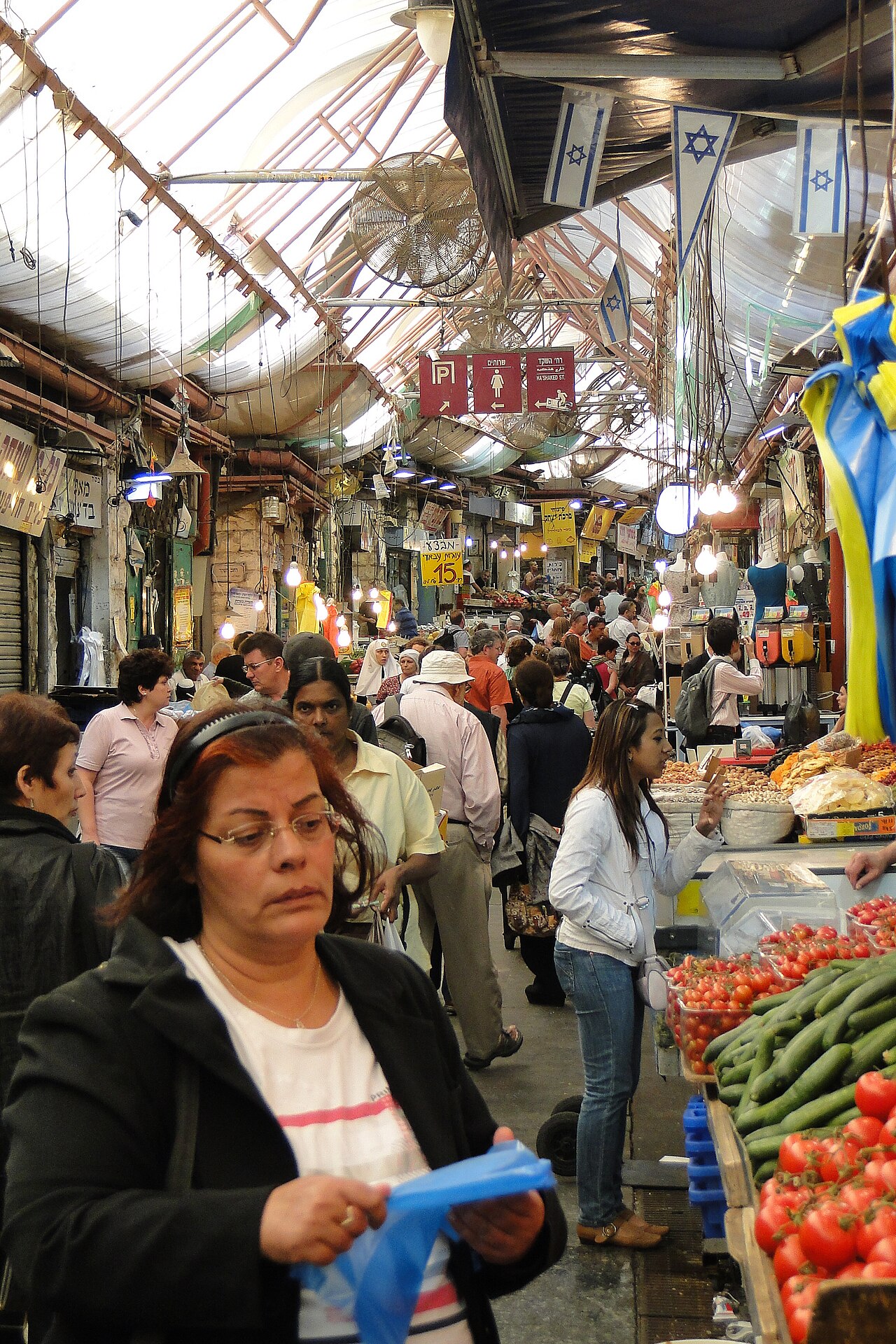
Era 4 · Covenant and WildernessDeuteronomy
Clean Food, Tithes, and the Poor
"The stranger, and the fatherless, and the widow… shall eat and be satisfied"
"Ye are the children of the LORD your God: ye shall not cut yourselves, nor make any baldness between your eyes for the dead." Clean animals are listed: the ox, sheep and goat, the deer and gazelle, any animal that parts the hoof and chews the cud. Fish with fins and scales. A list of forbidden birds. "Ye shall not eat of any thing that dieth of itself: thou shalt give it unto the stranger that is in thy gates… or thou mayest sell it unto an alien." "Thou shalt not seethe a kid in his mother's milk."
"Thou shalt truly tithe all the increase of thy seed." The tithe is eaten "before the LORD thy God, in the place which he shall choose." If the road is long, sell it, carry the money, "and bestow that money for whatsoever thy soul lusteth after, for oxen, or for sheep, or for wine, or for strong drink… and thou shalt eat there before the LORD thy God, and thou shalt rejoice, thou, and thine household, And the Levite."
"At the end of three years thou shalt bring forth all the tithe of thine increase the same year, and shalt lay it up within thy gates: And the Levite… and the stranger, and the fatherless, and the widow, which are within thy gates, shall come, and shall eat and be satisfied."
Deuteronomy 14 and Leviticus 11
The two lists of clean and unclean animals overlap closely; Deuteronomy adds a list of permitted wild animals (deer, gazelle, roebuck, wild goat, ibex, antelope, mountain sheep) and is shorter on insects. Many of the bird and wild-animal names are uncertain, and ancient translations disagree. Archaeozoology shows pig bones are rare at Iron Age highland sites associated with Israel and more common at Philistine sites, though the pattern has exceptions and its meaning is debated.
A kid in its mother's milk
The command appears three times (Exodus 23:19; 34:26; Deuteronomy 14:21). It was once explained by a Ugaritic text thought to describe cooking a kid in milk as a Canaanite rite; later readings of that tablet (KTU 1.23) have undermined the claim. Philo and others read it as compassion; rabbinic law expanded it into the complete separation of meat and dairy. The original reason is not stated.
Selling to the foreigner
Meat of an animal that died naturally may be given to the resident "stranger" (ger) or sold to the "alien" (nokhri). Leviticus 17:15 applies purity rules to both native and ger. The difference reflects which holiness rules applied to which group, not a claim that the foreigner's life mattered less: the same chapter feeds the ger from the tithe.
How many tithes?
Numbers 18 gives the tithe to the Levites; Deuteronomy 14 has the farmer eat it at the sanctuary and give every third year's to the poor; Leviticus 27 calls it "holy unto the LORD." Later Jewish practice counted separate tithes; many scholars see different stages of legislation. The Numbers lesson on tithes compares the three laws.
The Case for the Biblical Account
Scripture's account
Mourning rites, food laws and the tithe (Deuteronomy 14).
What evidence would we expect?
Different dietary patterns in Israelite settlements; mourning practices of cutting among neighbors; tithes to sanctuaries.
The discoveries
Low pig frequencies at many Iron Age highland sites; Ugaritic mourning by gashing (the god El in the Baal cycle); temple tithes in Mesopotamia and Ugarit.
Testing the discoveries
The pig pattern is real but not uniform; it shows a cultural preference, not necessarily the law's enforcement. The kid-in-milk Ugaritic parallel has collapsed.
The strongest reconstruction
Deuteronomy 14 marks Israel off from its neighbors in mourning and diet and turns the tithe into a shared meal and a welfare system.
What remains possible
The original reason for the kid-in-milk law; the relationship of the tithe laws.
What the evidence shows
- Pig bones are rare at many Iron Age Israelite highland sites. With exceptions; interpretation debated.
- A Ugaritic text proves cooking a kid in milk was a Canaanite rite. The reading of KTU 1.23 has been rejected by most specialists.
- The tithe laws of Numbers, Leviticus and Deuteronomy describe one system.
- "Ye are the children of the LORD your God."
Continue the journey
Connected elsewhere in ScriptureClean and Unclean AnimalsLeviticus 11: Clean and unclean animals.More from this lesson
Why this matters to the rest of Scripture
- Clean and unclean animals.
- The kid in its mother's milk.
- The Levites' tithe.
- Peter's vision of the sheet.
- "Purging all meats."