
Era 4 · Covenant and WildernessLeviticus
Clean and Unclean Animals
"Ye shall therefore be holy, for I am holy"
God speaks to Moses and Aaron: "These are the beasts which ye shall eat among all the beasts that are on the earth. Whatsoever parteth the hoof, and is clovenfooted, and cheweth the cud." The camel, the hyrax (coney), the hare and the pig are named as exceptions: they have one sign but not the other.
In the waters, "whatsoever hath fins and scales" may be eaten; everything else is "an abomination unto you." Twenty kinds of birds are forbidden, mostly birds of prey and scavengers: the eagle, vulture, raven, owl, hawk, heron, and the bat. Among insects, only locusts and grasshoppers with jointed legs for leaping may be eaten.
Touching the carcass of an unclean animal makes a person unclean until evening; they must wash. A pot that a dead mouse or lizard falls into must be broken.
The chapter ends with the reason: "For I am the LORD your God: ye shall therefore sanctify yourselves, and ye shall be holy; for I am holy… For I am the LORD that bringeth you up out of the land of Egypt, to be your God: ye shall therefore be holy."
Why these animals?
The anthropologist Mary Douglas (1966) argued that clean animals are those that fit their category perfectly: land animals that walk on hooves and chew the cud like sheep and cattle, fish with fins and scales. Creatures that cross categories were "unclean." Israel's diet mirrored an ordered creation and a people set apart.
Jacob Milgrom noted that the forbidden birds are mostly predators and scavengers, which eat flesh and blood. Limiting meat to a few domestic animals was a way of reverencing life (compare the blood prohibition, 17:11).
Leviticus 20:24–26 links clean food with being separated from the peoples. The diet marked Israel off from its neighbors, especially at shared meals.
A popular explanation since Maimonides: pigs carry parasites, shellfish spoil. Some forbidden foods do carry risks, but so do some permitted ones, and the text never says this. Most interpreters treat health as at most a side effect.
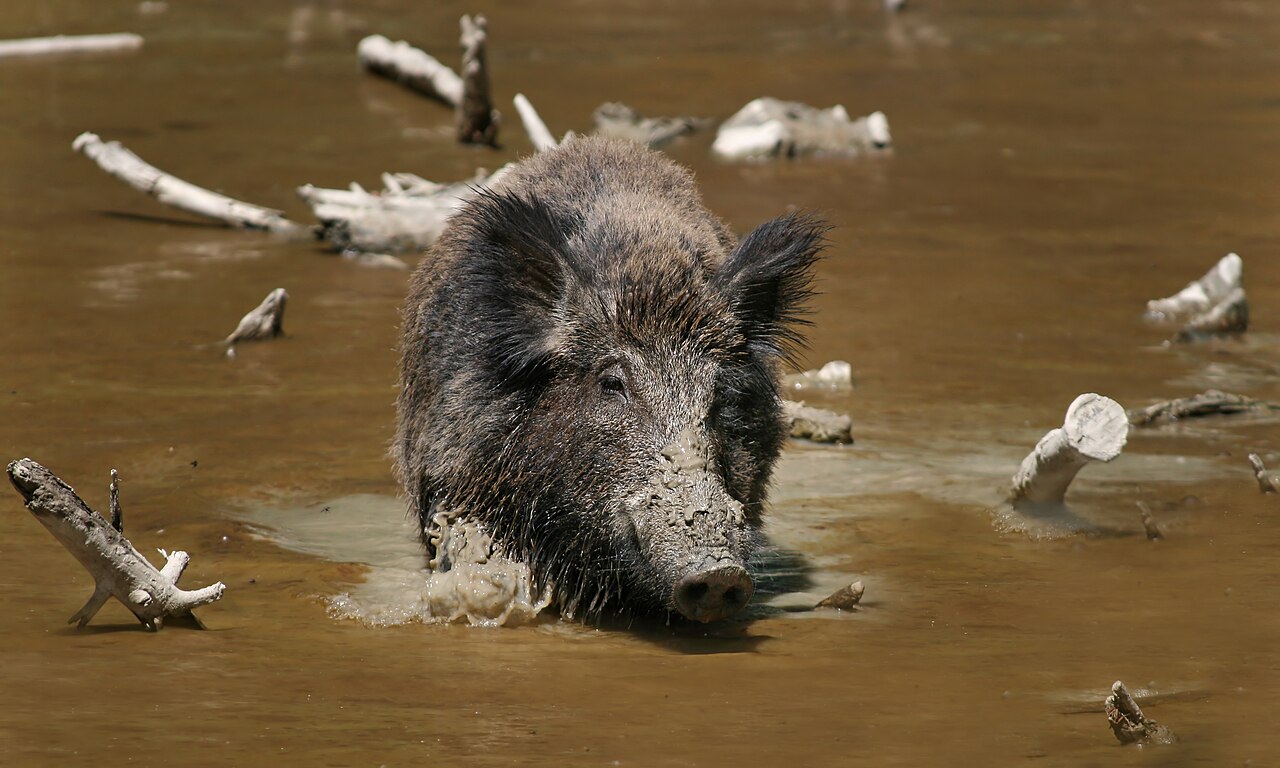
Pigs in the highlands
In the Iron Age I villages of the central hill country (12th–11th centuries BC), the settlements most archaeologists associate with early Israel, pig bones are almost absent, while they are common at Philistine sites on the coast. Israel Finkelstein proposed that avoiding pork was already a marker of Israelite identity. Others caution that pig herding also depends on climate, water and the economy, so the pattern may not be religious at all. Later studies found pigs at some Iron Age sites in the north and in a few places in Judah.
Fish without scales
In 2021 Yonatan Adler and Omri Lernau surveyed fish bones from about 30 sites in the southern Levant. They found that catfish, which have no scales and are forbidden by Leviticus 11, were commonly eaten in Iron Age Judah, including in Jerusalem, and still in the Persian period. Signs of the prohibition being kept appear only later. Adler's broader study (The Origins of Judaism, 2022) argues that the earliest clear evidence for Torah food laws being observed as a system dates to the 2nd century BC.
The Case for the Biblical Account
Scripture's account
God gives Israel the laws of clean and unclean animals as part of holiness (Leviticus 11; Deuteronomy 14).
What evidence would we expect?
Animal bones in Israelite settlements reflecting the restrictions; early texts mentioning them; the restrictions in daily life.
The discoveries
Very few pig bones in Iron I highland villages; catfish and other scaleless fish in Iron Age and Persian Judah; clear observance by the 2nd century BC (Daniel 1, 1 Maccabees 1:62–63) and in the 1st century AD.
Testing the discoveries
Pig avoidance may have economic or cultural causes. The fish evidence suggests that the full system was not widely kept in the monarchy. Absence of observance is not proof that the law did not exist, only that it was not followed by everyone, which the prophets also lament.
The strongest reconstruction
Pork avoidance may be very old in Israel. Widespread observance of the whole system is documented clearly from the Hellenistic period on.
What remains possible
That the laws were given early and widely neglected; that they developed and were written down later; or that customs like pork avoidance were later gathered into a system.
Then and Later
Clean food, then and later
- SinaiLeviticus 11. Clean and unclean animals.
- Iron AgeArchaeology. Few pigs in highland villages; but scaleless fish eaten in Judah.This lesson →
- 6th c. BCDaniel. Daniel refuses the king's food and wine in Babylon.
- 167 BCMartyrdom. Under Antiochus IV, Jews die rather than eat pork.
- 1st centuryJesus and the church. Jesus teaches that what defiles comes from the heart; Peter's vision and the Jerusalem council open table fellowship with Gentiles.
- c. AD 200 onKashrut. The Mishnah and Talmud develop the Jewish dietary laws (kashrut), including separating meat and milk.
- TodayKosher and halal. Millions of Jews keep kosher; Islamic dietary law (halal) also forbids pork.
What the evidence shows
- Pig bones are rare in Iron I highland villages and common at Philistine sites.Source: I. Finkelstein, "Ethnicity and Origin of the Iron I Settlers in the Highlands of Canaan," Biblical Archaeologist 59 (1996); L. Sapir-Hen et al., "Pig Husbandry in Iron Age Israel and Judah," ZDPV 129 (2013)
- Pork avoidance was an Israelite identity marker in Iron Age I.Source: I. Finkelstein, "Ethnicity and Origin of the Iron I Settlers in the Highlands of Canaan," Biblical Archaeologist 59 (1996); L. Sapir-Hen et al., "Pig Husbandry in Iron Age Israel and Judah," ZDPV 129 (2013)
- Scaleless fish were commonly eaten in Iron Age and Persian-period Judah.Source: Y. Adler and O. Lernau, "The Pentateuchal Dietary Proscription against Finfish Lacking Fins and Scales: A Jewish Food Taboo and Its Archaeological Context," Tel Aviv 48:1 (2021)
- The earliest clear evidence for widespread observance of the food laws as a system is from the 2nd century BC.Source: Y. Adler, The Origins of Judaism: An Archaeological-Historical Reappraisal (Yale, 2022)
- The food laws were primarily about health.
- "Be holy; for I am holy."
Continue the journey
Connected elsewhere in ScriptureClean Food, Tithes, and the PoorDeuteronomy 14:3–21: The food laws repeated.More from this lesson
Why this matters to the rest of Scripture
- The food laws repeated.
- Daniel will not defile himself.
- "Thus he declared all foods clean" (as most modern translations render it).
- Peter's vision: "What God hath cleansed, that call not thou common."
- "Be ye holy; for I am holy."
- Paul on food and conscience.