Era 4 · Covenant and WildernessLeviticus
The Sabbath Year and the Jubilee
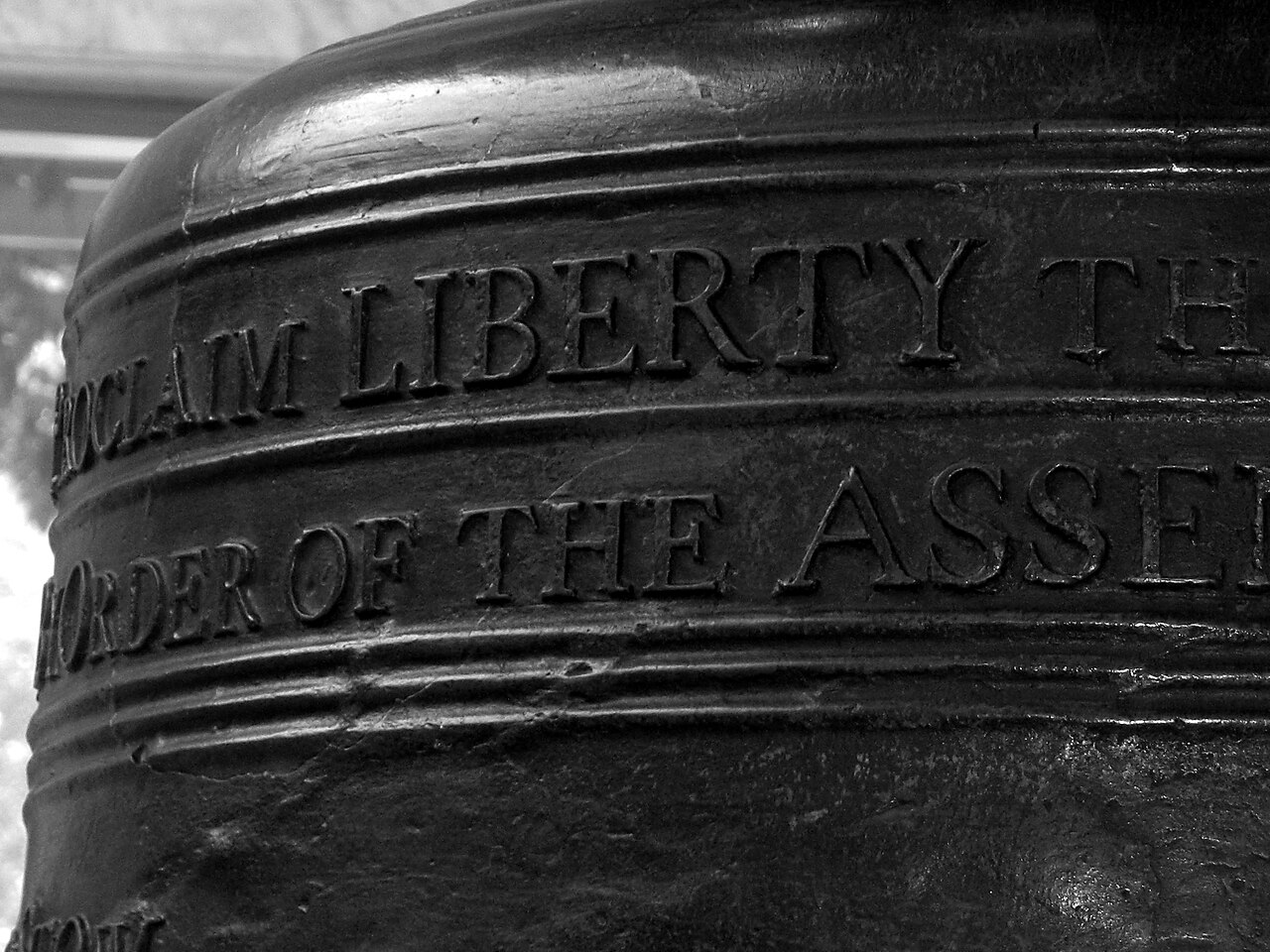
"Proclaim liberty throughout all the land"
"When ye come into the land which I give you, then shall the land keep a sabbath unto the LORD. Six years thou shalt sow thy field… But in the seventh year shall be a sabbath of rest unto the land." What grows by itself is food for everyone, the servants, the hired workers, the foreigners, the animals.
"And thou shalt number seven sabbaths of years unto thee, seven times seven years… Then shalt thou cause the trumpet of the jubile to sound on the tenth day of the seventh month, in the day of atonement… And ye shall hallow the fiftieth year, and proclaim liberty throughout all the land unto all the inhabitants thereof: it shall be a jubile unto you; and ye shall return every man unto his possession, and ye shall return every man unto his family."
Land is never sold permanently; it is leased by the number of harvests until the Jubilee. "The land shall not be sold for ever: for the land is mine; for ye are strangers and sojourners with me." A relative may redeem land that a poor kinsman sold. Houses in walled cities can be redeemed only for a year; village houses go back with the fields.
Will they starve in the seventh year? "I will command my blessing upon you in the sixth year, and it shall bring forth fruit for three years."
Royal release decrees in Babylon
Mesopotamian kings, especially early in their reigns, proclaimed misharum ("justice, straightening"): canceling certain consumer debts, releasing people sold into debt-slavery, and restoring land taken for debt. The Edict of Ammi-saduqa of Babylon (about 1646 BC) survives in detail: it cancels arrears and debts owed by farmers and others, frees family members held for debt, and specifies which commercial loans are not cancelled. Another term, andurarum, "release, freedom," is linguistically related to the Hebrew deror, "liberty," in Leviticus 25:10: the words are cognate, not identical spellings, and the Babylonian decrees were occasional royal acts, not the full Jubilee system of fixed years, land return and rest.
What Leviticus changes
- Babylonian releases came when a king decided; Jubilee comes on a fixed schedule, every fifty years.
- Releases were royal favors; Jubilee is God's law, binding even on kings.
- The reason is theological: "the land is mine."
- It is announced on the Day of Atonement.
Was it ever practiced?
There is good evidence that the sabbatical year was kept in the Second Temple period: 1 Maccabees 6:49, 53 says the defenders of Beth-zur and Jerusalem ran short of food "because it was a sabbath year" (163/162 BC); Josephus mentions sabbatical years; a loan document from Wadi Murabba'at (AD 55/56) promises repayment "even in the year of release." For the Jubilee itself there is no direct evidence of land returning to families on a national scale. Jeremiah 34 records a release of slaves under Zedekiah that was quickly reversed. Rabbinic tradition held that the Jubilee lapsed when the tribes no longer lived in their own lands.
The Case for the Biblical Account
Scripture's account
A sabbatical rest for the land every seventh year and a Jubilee of liberty and land return every fiftieth (Leviticus 25:1–34).
What evidence would we expect?
Ancient debt and land release institutions; evidence of Israel observing the sabbatical and Jubilee years; land-sale documents that reckon to the Jubilee.
The discoveries
The Edict of Ammi-saduqa and other misharum decrees; the Akkadian andurarum, linguistically related to Hebrew deror; the sabbatical year in 1 Maccabees, Josephus and Murabba'at 18; Jeremiah 34's failed release; 11QMelchizedek's Jubilee.
Testing the discoveries
Debt release was a real Bronze Age institution and the sabbatical year was kept later. No document records a Jubilee land return, which may reflect lost records or non-observance.
The strongest reconstruction
Leviticus 25 transforms an ancient royal practice into a fixed, divinely commanded calendar of restoration. Its full observance is not attested.
What remains possible
That it was practiced in some periods; that it was an ideal; or that it adapted older release customs into a vision for Israel's life in the land.
Then and Later
Jubilee, then and later
- c. 1646 BCAmmi-saduqa. A Babylonian king cancels debts and frees debt-slaves by decree.Echoes: debt release →
- SinaiLeviticus 25. Release built into a fifty-year calendar.
- c. 588 BCJeremiah 34. Zedekiah proclaims liberty (deror) to Hebrew slaves; the owners take them back.
- c. 445 BCNehemiah 5. Nehemiah makes nobles return fields and cancel interest.
- Prophetic hopeIsaiah 61. "To proclaim liberty to the captives… the acceptable year of the LORD."
- 1st c. BCQumran. 11QMelchizedek reads Leviticus 25 and Isaiah 61 as a final Jubilee of liberation.
- c. AD 28Nazareth. Jesus reads Isaiah 61 in the synagogue: "This day is this scripture fulfilled in your ears." Many interpreters hear the Jubilee in it; Luke does not say Jesus carried out the land laws of Leviticus 25. The link is theological and literary.
- 1st c. ADProzbul. Hillel allows loans to survive the sabbatical year through a court document, so lenders would not refuse the poor.
- 1300 onwardHoly Years. Popes proclaim Jubilee years of pilgrimage and forgiveness, beginning with Boniface VIII.
- 1752The Liberty Bell. Pennsylvania's State House bell is inscribed "Proclaim LIBERTY Throughout all the Land unto all the Inhabitants Thereof. Lev. XXV. v X." Abolitionists later made it their symbol.
- 2000Jubilee 2000. A worldwide campaign calls for cancelling the debts of the poorest nations, and partly succeeds.
What the evidence shows
- The Edict of Ammi-saduqa canceled certain debts and freed debt-slaves.Source: Edict of Ammi-saduqa (c. 1646 BC); F. R. Kraus, Königliche Verfügungen in altbabylonischer Zeit (1984); tr. J. J. Finkelstein, ANET 526–528
- Hebrew deror ("liberty") is related to Akkadian andurarum ("release").Source: M. Weinfeld, Social Justice in Ancient Israel and in the Ancient Near East (1995)
- The sabbatical year was observed in the 2nd century BC and the 1st century AD.Source: 1 Maccabees 6:49, 53 (the sabbatical year of 163/162 BC); Josephus, Antiquities 14.475; Murabba'at 18 (AD 55/56)
- Israel regularly carried out the Jubilee return of land.Source: M. LeFebvre, "Jubilee law and ancient Near Eastern land-and-debt release" (legal-historical study); see also J. S. Bergsma, The Jubilee from Leviticus to Qumran (2007)
- "The land is mine; for ye are strangers and sojourners with me."
Continue the journey
Echoes Across CivilizationsDebt release and libertyDid other ancient peoples cancel debts and free debt-slaves, like the Jubilee?More from this lesson
Echoes Across Civilizations
Optional: how other ancient peoples told similar stories. Open one to compare, then come back to the lesson.
Debt release and libertySumerian · Babylonian · Assyrian and Nuzi
Did other ancient peoples cancel debts and free debt-slaves, like the Jubilee?
- Sumerian: Reforms of Uruinimgina (Urukagina) Shared literary world
- Babylonian: The Edict of Ammi-saduqa (a misharum decree) Possible historical contact
- Assyrian and Nuzi: Andurarum proclamations Possible historical contact
Why this matters to the rest of Scripture
- Jesus reads Isaiah 61 at Nazareth.
- "To proclaim liberty to the captives."
- A proclamation of liberty broken.
- The year of release for debts.
- Naboth: "The LORD forbid it me, that I should give the inheritance of my fathers unto thee."
- "Until the land had enjoyed her sabbaths."